Tukad Cepung Waterfall is one of Bali’s most extraordinary natural attractions, famous for the magical sunbeams that illuminate the waterfall inside a cave-like canyon during the morning hours. Located in Bangli Regency, about 45 minutes from central Ubud, it offers an experience unlike any other waterfall on the island. Pairing your visit with nearby Ulu Petanu Waterfall, a quieter and greener hidden gem, creates the perfect half-day itinerary for travelers seeking photography, nature, and authentic Bali beyond the crowds.
Table of Contents
There are hundreds of waterfalls scattered across Bali, yet only a handful truly feel magical. Having grown up in Kintamani and spending countless weekends exploring the forests, rivers, and valleys of Bangli, I still remember the first time I stepped into Tukad Cepung Waterfall. It wasn’t the waterfall itself that surprised me first. It was the darkness.
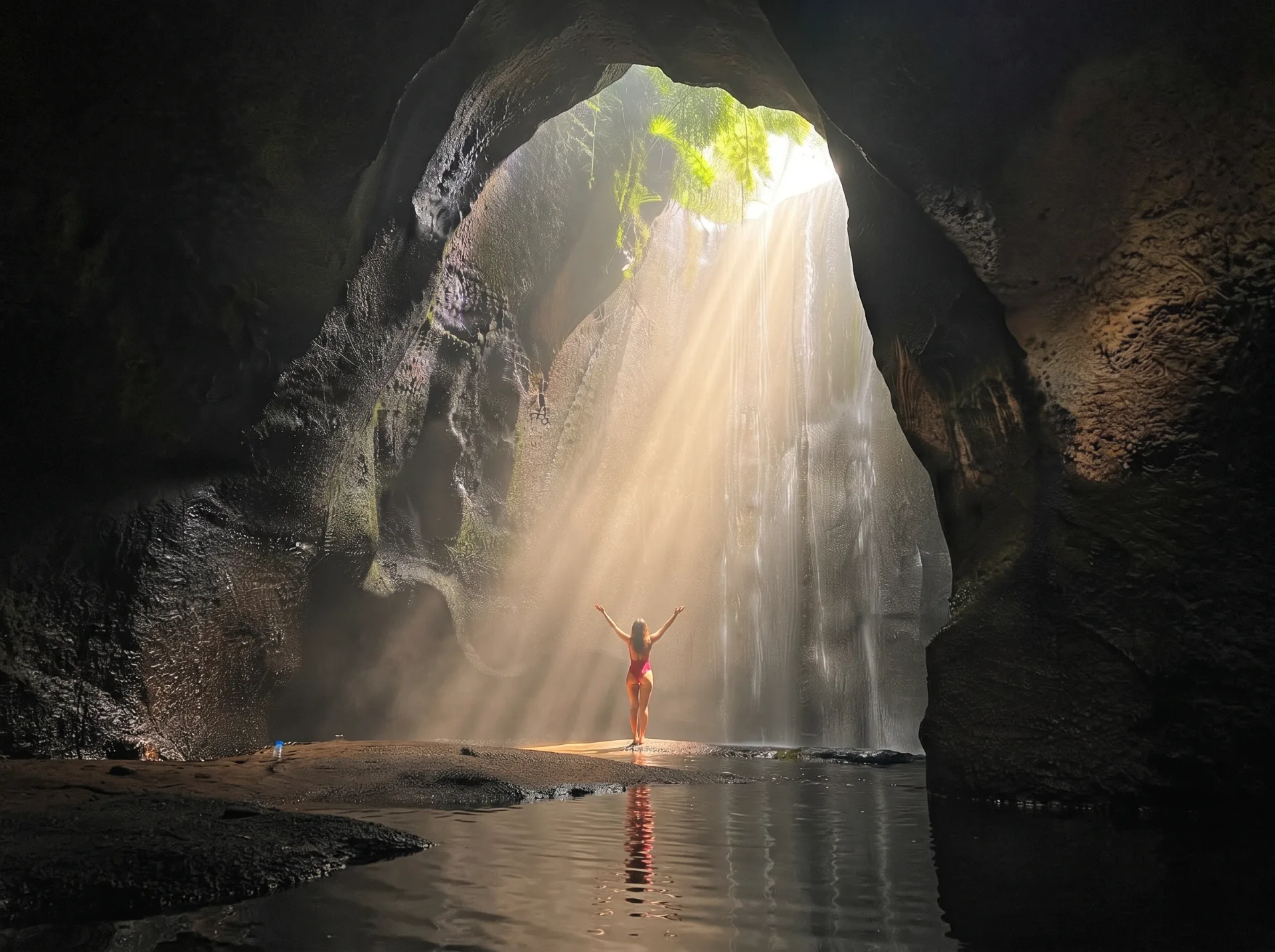
You walk through a narrow river canyon where towering cliffs block the sky above. The sound of flowing water echoes through the stone walls while sunlight barely reaches the ground. Then, suddenly, the canyon opens. A curtain of water falls gracefully from above, and if you arrive at exactly the right moment, brilliant rays of sunlight pierce through the opening in the cliffs, creating what photographers around the world now simply call “the Bali sunbeam.”
Just a short drive away lies another treasure that many visitors overlook: Ulu Petanu Waterfall. While Tukad Cepung has become internationally famous, Ulu Petanu remains peaceful, lush, and wonderfully uncrowded. Together, they create one of the most rewarding waterfall routes in central Bali.
Why Tukad Cepung Waterfall Is Unlike Any Other Waterfall in Bali
Unlike waterfalls that plunge into open jungle pools, Tukad Cepung Waterfall hides inside a naturally formed canyon that almost resembles a cathedral carved by nature.
The waterfall flows through a narrow opening in the limestone cliffs, creating an intimate space where light, shadow, water, and stone constantly interact throughout the day. During the rainy season, the water volume becomes more dramatic, while the dry season reveals more of the surrounding rock formations.
This unusual landscape is exactly why Tukad Cepung has become one of Bali’s most photographed waterfalls. The cave-like setting gives every image a cinematic atmosphere that cannot easily be recreated elsewhere on the island.
Walking into the canyon feels like entering another world. The outside heat disappears, replaced by cool air, dripping water, and the constant sound of rushing streams bouncing off ancient rock walls.
The Secret Behind the Famous Sunbeams
The iconic sunbeam effect is not visible all day.
Many visitors arrive in the afternoon only to discover that the magical light rays have disappeared. Understanding the position of the sun is the key to experiencing Tukad Cepung at its absolute best.
Generally, the famous sunbeams appear between 9:00 AM and 11:00 AM, with the strongest effect usually occurring around 9:30 AM to 10:30 AM.
Several conditions influence the visibility:
- Clear skies without heavy clouds
- Dry season from approximately April to October
- Direct morning sunlight entering the canyon
- Minimal mist after rainfall
Even on sunny days, the beams constantly change as the sun moves across the sky. Sometimes they appear as narrow golden pillars. On exceptional mornings, the entire waterfall seems to glow from within.
Professional photographers often arrive shortly after the entrance opens to secure the best position before larger groups arrive.
What to Expect During the Walk
One reason many visitors underestimate Tukad Cepung is that the waterfall is not immediately visible from the parking area.
The trail begins with a series of concrete stairs descending into the valley. The walk itself is relatively manageable for most travelers, taking approximately 15 to 20 minutes at a relaxed pace.
Eventually, the path reaches a shallow river crossing where visitors continue walking through water that usually reaches ankle level, although it can become deeper after heavy rain.
The final section is the most memorable.
Massive cliffs rise on both sides while sunlight filters through the narrow opening above. The atmosphere becomes increasingly dramatic until the waterfall suddenly appears at the end of the canyon.
Wear sandals or waterproof shoes with good grip, as the rocks near the waterfall are naturally slippery.
Photography Tips for Tukad Cepung Waterfall
For photographers, timing matters more than camera equipment.
Morning sunlight produces the famous rays, while softer light creates beautiful textures on the canyon walls.
A few practical suggestions include using a wide-angle lens to capture the towering cliffs, bringing a microfiber cloth to wipe water droplets from your lens, and wearing darker clothing if you plan to appear in photos since bright colors often reflect excessive light inside the canyon.
Long exposure photography works beautifully here, especially when using a tripod during quieter hours.
However, even smartphone cameras now perform exceptionally well thanks to computational photography, making Tukad Cepung accessible to casual travelers as well.
Best Time to Visit Throughout the Year
The dry season generally offers the most reliable conditions for both hiking and photography.
Between April and October, clearer skies significantly increase the chance of seeing the famous sunbeams.
During the rainy season from November through March, the waterfall becomes more powerful and dramatic, although flash floods occasionally occur after intense rainfall. Local authorities may temporarily close access if river conditions become unsafe.
If your priority is photography, the dry season remains the best choice.
If your priority is experiencing raw tropical nature, the rainy season offers a completely different atmosphere.
Continuing the Journey to Ulu Petanu Waterfall
Only around 20 minutes from Tukad Cepung lies one of Bangli’s quieter natural attractions: Ulu Petanu Waterfall.
Unlike its famous neighbor, Ulu Petanu feels wonderfully untouched.
The road passes through villages, rice terraces, and bamboo groves before reaching a peaceful entrance surrounded by tropical forest.
The atmosphere changes immediately.
Instead of crowds waiting for photographs, you’ll often hear only birds, flowing water, and rustling leaves.
For travelers seeking tranquility after the popularity of Tukad Cepung, Ulu Petanu provides the perfect contrast.
Why Ulu Petanu Waterfall Deserves More Attention
The waterfall itself cascades gracefully down a lush green cliff covered in moss, vines, and tropical vegetation.
The surrounding area is beautifully maintained by the local community while still preserving its natural character.
One feature many visitors appreciate is the comfortable viewing area that allows you to admire the waterfall without navigating difficult terrain.
The water here appears especially clear during the dry season, creating an inviting natural pool beneath the falls.
Although swimming conditions depend on seasonal water flow, many visitors simply enjoy relaxing beside the river while listening to the sounds of the surrounding forest.
Compared to many famous waterfalls in Bali, Ulu Petanu offers a far more peaceful experience.
Combining Both Waterfalls in One Trip
One of the biggest advantages of these two destinations is their proximity.
Starting early in the morning allows travelers to experience the sunbeams at Tukad Cepung before continuing toward Ulu Petanu for a quieter late morning visit.
A suggested itinerary looks like this:
Arrive at Tukad Cepung around 8:30 AM, allowing enough time to descend into the canyon before peak sunlight appears. Spend approximately 90 minutes exploring and photographing the waterfall before driving to Ulu Petanu around late morning. After enjoying the peaceful surroundings there, continue toward nearby cafés or restaurants in Bangli or return to Ubud for lunch.
This route avoids afternoon crowds while maximizing photography conditions.
Entrance Fees and Visitor Information
Both waterfalls are managed by local communities, and entrance fees contribute to maintaining trails, facilities, and environmental conservation.
As with many community-managed attractions in Bali, ticket prices may change over time, so visitors should check the latest information before traveling.
Parking areas, toilets, and changing facilities are available at both locations, although amenities remain intentionally simple to preserve the natural environment.
Carrying cash is recommended since digital payment options may not always be available.
Responsible Tourism Matters
As Tukad Cepung continues to gain international popularity, preserving its beauty becomes increasingly important.
Avoid climbing restricted rock formations simply for photographs. Stay on designated paths, respect local instructions during periods of heavy rain, and never leave litter inside the canyon.
The same respect applies to Ulu Petanu, whose peaceful atmosphere depends largely on visitors behaving responsibly.
Supporting local cafés, purchasing refreshments from village vendors, and hiring local guides when available all contribute directly to the surrounding communities.
Final Thoughts
Many travelers visit Bali searching for beaches, sunsets, or temples. Yet some of the island’s most unforgettable experiences are hidden deep within its valleys.
Tukad Cepung Waterfall offers one of the rarest natural spectacles in Indonesia, where sunlight transforms an ordinary waterfall into something almost spiritual. Arriving at the right time rewards visitors with golden rays that seem to descend directly from the sky, creating a scene that feels almost surreal.
Just beyond the crowds, Ulu Petanu Waterfall reminds us that Bali still holds quiet corners waiting to be discovered. Its calm atmosphere, emerald surroundings, and gentle cascade provide the perfect balance after the dramatic beauty of Tukad Cepung.
For travelers who want more than another photo stop, combining these two waterfalls offers a deeper appreciation of Bangli’s remarkable landscape. One reveals the power of light inside stone, while the other celebrates the peaceful rhythm of Bali’s forests. Together, they create a journey that captures two very different sides of the island, both equally unforgettable.