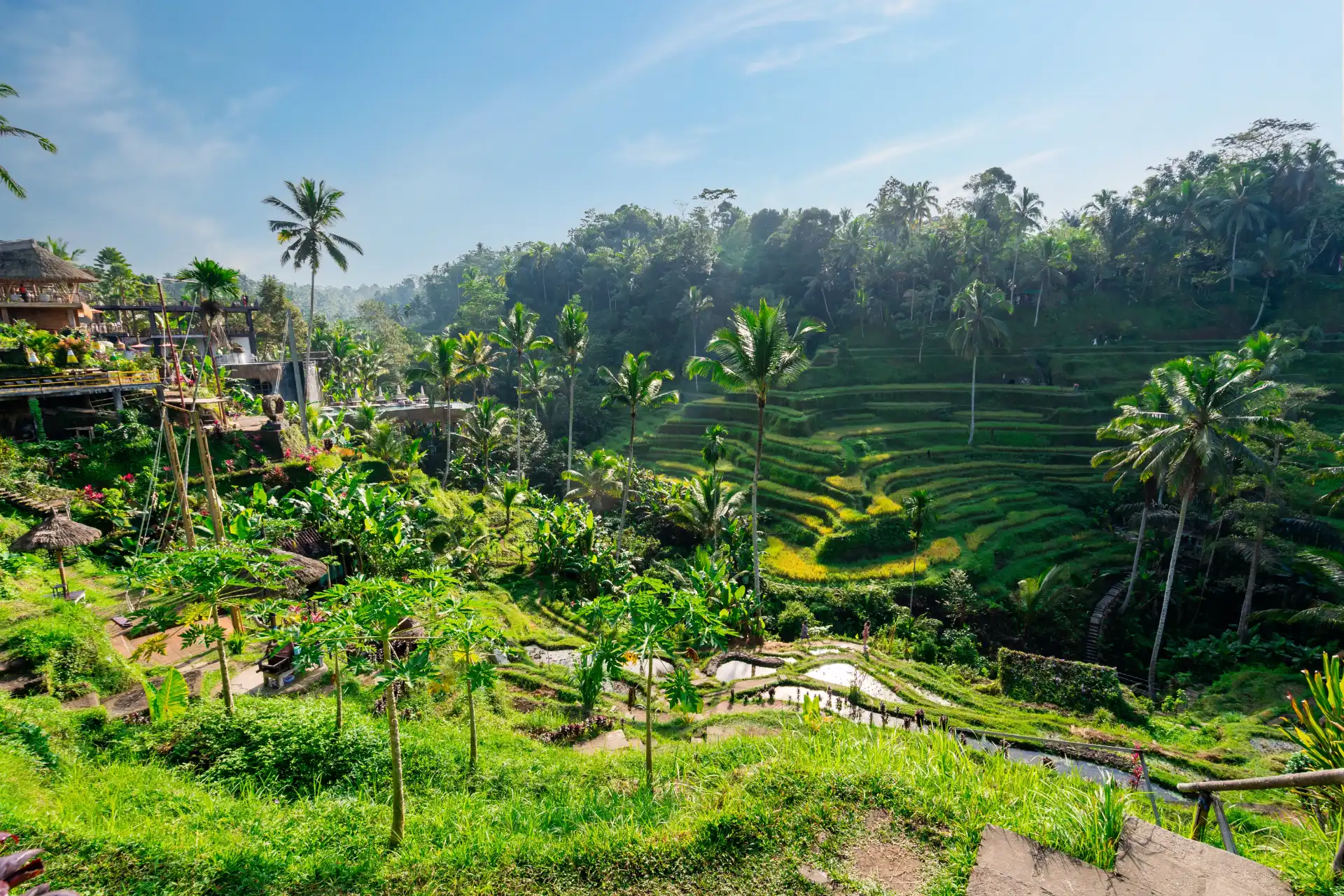
Alas Harum Bali is one of the most popular attractions in Ubud, combining dramatic rice terraces, giant jungle swings, panoramic viewpoints, coffee experiences, and numerous creative photo installations in one destination. Located in Tegallalang, only about 20 minutes north of central Ubud, Alas Harum Bali offers visitors an easy way to experience Bali’s famous rice landscapes while enjoying modern attractions designed for photography and adventure. This guide covers everything you need to know, including ticket prices, the best photo spots, opening hours, the best visiting time, and practical tips to avoid long queues.
Discovering Alas Harum Bali
If you ask locals around Ubud about the most photographed destination in the area, Alas Harum Bali will almost always be part of the conversation.
Born and raised in Kintamani, I have watched Bali’s tourism evolve over decades. Rice terraces have always been part of our daily life, long before they became world-famous through Instagram. Farmers tended these landscapes every morning, following the traditional Subak irrigation system that has sustained Balinese agriculture for centuries.
What makes Alas Harum Bali interesting is how it blends authentic rice terraces with carefully designed visitor experiences. Rather than simply walking through the fields, guests can enjoy giant swings, sky bikes, glass platforms, bird nests, sculptures, and elevated viewpoints that showcase the beauty of Tegallalang from multiple angles.
For travelers who have limited time in Ubud, Alas Harum Bali offers many experiences in one convenient location.
Where is Alas Harum Bali?
Alas Harum Bali is located in Tegallalang Village, Gianyar Regency, approximately 10 kilometers north of central Ubud.
The drive takes around 20 to 30 minutes from Ubud depending on traffic.
Estimated travel times include:
- Ubud Palace: 20 minutes
- Sanur: 1 hour 15 minutes
- Seminyak: 1.5 hours
- Canggu: 1.5 to 2 hours
- Nusa Dua: around 2 hours
- Kintamani: around 1 hour
Because the attraction sits along one of Bali’s busiest tourism routes, many visitors combine it with nearby destinations such as Tegallalang Rice Terrace, Tirta Empul Temple, Kintamani, or the coffee plantations surrounding the area.
Why Has Alas Harum Bali Become So Popular?
Unlike traditional viewpoints where visitors simply admire the scenery, Alas Harum Bali encourages interaction.
The entire complex has been designed around experiences.
Instead of one viewing platform, there are dozens.
Instead of a single swing, there are multiple swings with different heights.
Instead of one photo opportunity, every corner has been carefully landscaped for photography.
This combination appeals to different types of travelers.
Couples enjoy romantic photos overlooking the jungle.
Families appreciate the safe walking paths and cafés.
Content creators love the variety of backgrounds.
Adventure seekers try the giant swings and sky cycling attractions.
Meanwhile, those wanting a quieter experience can simply relax with a cup of locally produced Balinese coffee while overlooking the terraces.
Ticket Prices at Alas Harum Bali
One question travelers ask most often is whether one ticket covers everything.
The answer is no.
The entrance ticket provides access to the rice terrace area, walking paths, viewpoints, and several photo opportunities. Premium attractions such as the famous jungle swings, flying fox, sky bike, and other activities require separate tickets.
Prices may change seasonally, but visitors should expect several ticket categories depending on the experiences they choose.
Common ticket options include standard entrance, individual swing packages, activity bundles, and photography packages.
Because prices are occasionally updated, it is recommended to check the official website or official social media before your visit.
Opening Hours
Alas Harum Bali generally opens daily from morning until early evening.
Most visitors arrive between 10 AM and 3 PM, making these the busiest hours.
The attraction is open throughout the year, including weekends and most public holidays.
The Famous Jungle Swing Experience
No attraction has contributed more to the popularity of Alas Harum Bali than its jungle swings.
Suspended above lush green valleys, the swings create the illusion of flying over endless rice terraces.
Staff securely fasten visitors using professional safety harnesses before each ride.
Several swing heights are available, allowing visitors to choose according to their comfort level.
Even if you are nervous about heights, many first-time visitors say the initial fear quickly transforms into excitement once the swing begins moving across the valley.
Professional staff are experienced in helping visitors pose naturally while ensuring safety remains the priority.
The Best Photo Spots at Alas Harum Bali
Photography is one of the biggest reasons people visit Alas Harum Bali.
Fortunately, the destination offers far more than just swings.
Giant Bird Nest
One of the earliest Instagram-famous attractions remains among the most popular.
The woven nest sits high above the terraces, creating the impression of floating over the jungle.
Morning light produces soft shadows and vibrant green backgrounds.
Glass Platform
The transparent platform allows visitors to stand above the rice terraces while creating dramatic perspectives.
It works particularly well for wide-angle photography.
Sky Bike
Cycling along a suspended cable above the valley creates unforgettable photographs.
Although it looks adventurous, the bicycles are attached securely with multiple safety systems.
Dancing Bridge
The hanging bridge gently moves as visitors cross it, creating cinematic images surrounded by tropical vegetation.
Gorilla Sculpture
One of Alas Harum Bali’s signature landmarks is the enormous gorilla sculpture.
The detailed artwork has become one of the destination’s most recognizable photo locations.
Rice Terrace Walkways
Sometimes the simplest photographs become the most memorable.
Walking along the narrow pathways between emerald rice fields allows photographers to capture authentic Balinese landscapes beyond the constructed attractions.
The Creative Instagrammable Spots
Alas Harum Bali continues introducing new installations almost every year.
Visitors may discover oversized hearts, bamboo sculptures, artistic gates, decorative platforms, giant swings shaped like birds, flower installations, and uniquely designed viewing decks.
Unlike many attractions where photo spots are crowded together, Alas Harum spreads them throughout the property.
This encourages visitors to explore slowly rather than rushing from one location to another.
Coffee Plantation Experience
Many visitors overlook one of the quieter parts of Alas Harum Bali.
The coffee plantation introduces guests to Bali’s coffee-growing traditions.
Visitors can observe coffee plants, learn about roasting techniques, and sample different varieties including Balinese Arabica and Robusta.
Some tasting packages also include herbal teas and chocolate beverages.
Although civet coffee is sometimes available, travelers who are concerned about animal welfare may wish to ask staff about sourcing practices before purchasing.
The Rice Terraces and the Subak Tradition
Beyond the photography, the rice terraces themselves deserve attention.
The landscape surrounding Alas Harum reflects the ancient Subak irrigation system, recognized by UNESCO as part of Bali’s Cultural Landscape.
Water flows through interconnected channels managed collectively by local farming communities.
This cooperative approach has shaped Balinese agriculture for centuries and demonstrates the philosophy of harmony between people, nature, and spirituality.
Even while enjoying modern attractions, visitors should remember they are walking through a living agricultural landscape that continues supporting local families.
How to Avoid Long Queues
One of the biggest complaints during peak season is waiting for the swings.
Fortunately, avoiding long lines is relatively easy with proper planning.
Arriving shortly after opening provides the best experience.
Between 8:00 AM and 9:30 AM, temperatures remain comfortable, the light is ideal for photography, and visitor numbers are significantly lower.
Weekdays are noticeably quieter than weekends.
If your schedule allows, Tuesday through Thursday usually offers the smoothest experience.
During July, August, Christmas, New Year, and major Indonesian holidays, expect longer waiting times throughout the day.
If your priority is swing photography, purchase the activity ticket immediately after entering rather than waiting until later.
Most visitors explore the gardens first before joining the swing queue, allowing early arrivals to finish before the crowds build.
Hiring a private driver also gives flexibility to arrive before tour buses.
Most organized tours reach Alas Harum around mid-morning.
What Should You Wear?
Comfortable clothing makes a significant difference.
Flowing dresses remain popular for photography because they create elegant movement during swing rides.
Bright colors such as red, yellow, white, or royal blue contrast beautifully with the green rice terraces.
Comfortable footwear is equally important.
Although many paths are paved, some sections involve stairs and uneven surfaces.
Bring sunglasses, sunscreen, drinking water, and a hat if visiting during midday.
Nearby Attractions Worth Combining
Alas Harum Bali fits easily into a full-day itinerary around central Bali.
Many travelers continue to Tegallalang Rice Terrace for a more traditional landscape experience before visiting Tirta Empul Temple, famous for its sacred purification pools.
Others continue north toward Kintamani to enjoy panoramic views of Mount Batur and Lake Batur.
Art lovers often return to central Ubud in the afternoon to explore galleries, local markets, or enjoy dinner overlooking rice fields.
Because the destinations are relatively close together, combining two or three attractions creates an efficient day trip.
Is Alas Harum Bali Worth Visiting?
Some travelers wonder whether Alas Harum Bali is simply another Instagram attraction.
After visiting multiple times, I believe the answer depends on your expectations.
If you are looking for untouched wilderness with complete solitude, this is not the place.
Alas Harum is designed as a tourism destination, complete with cafés, attractions, and professionally managed experiences.
However, if you want to enjoy Bali’s iconic rice terraces while experiencing some of the island’s most creative photography installations in one location, it delivers excellent value.
Families, honeymooners, solo travelers, and photographers can all find something enjoyable here.
The combination of scenic landscapes, accessible facilities, adventure activities, and Balinese hospitality makes it one of the easiest places to experience the beauty of Tegallalang without requiring extensive hiking.
Final Thoughts
Alas Harum Bali represents a modern interpretation of one of Bali’s oldest landscapes. The emerald rice terraces remain the heart of the experience, while thoughtfully designed attractions invite visitors to see them from fresh perspectives. Whether you come for the iconic jungle swing, creative photo spots, or simply to enjoy a peaceful coffee overlooking the valley, the destination offers far more than a quick Instagram stop.
As someone who grew up in Bali, I always encourage visitors to look beyond the camera lens. Spend a little extra time walking through the terraces, notice the intricate Subak irrigation channels, greet the local farmers if you meet them, and appreciate the living culture behind the scenery. Those moments often become the memories that last far longer than the photos.
Frequently Asked Questions
Is Alas Harum Bali suitable for children?
Yes. Children can enjoy the gardens and viewpoints, although certain adventure activities have age and height restrictions.
How long should I spend at Alas Harum Bali?
Most visitors spend between two and four hours exploring the attraction.
Can I visit without using the swing?
Absolutely. Many guests visit solely for the rice terraces, cafés, and scenic viewpoints.
What is the best time for photography?
Early morning offers softer light, fewer crowds, and cooler temperatures.
Do I need to book in advance?
For regular admission, advance booking is usually unnecessary. During peak holiday periods, booking activity packages in advance may help reduce waiting times.