
Introduction: Deconstructing the “Togog” Misconception
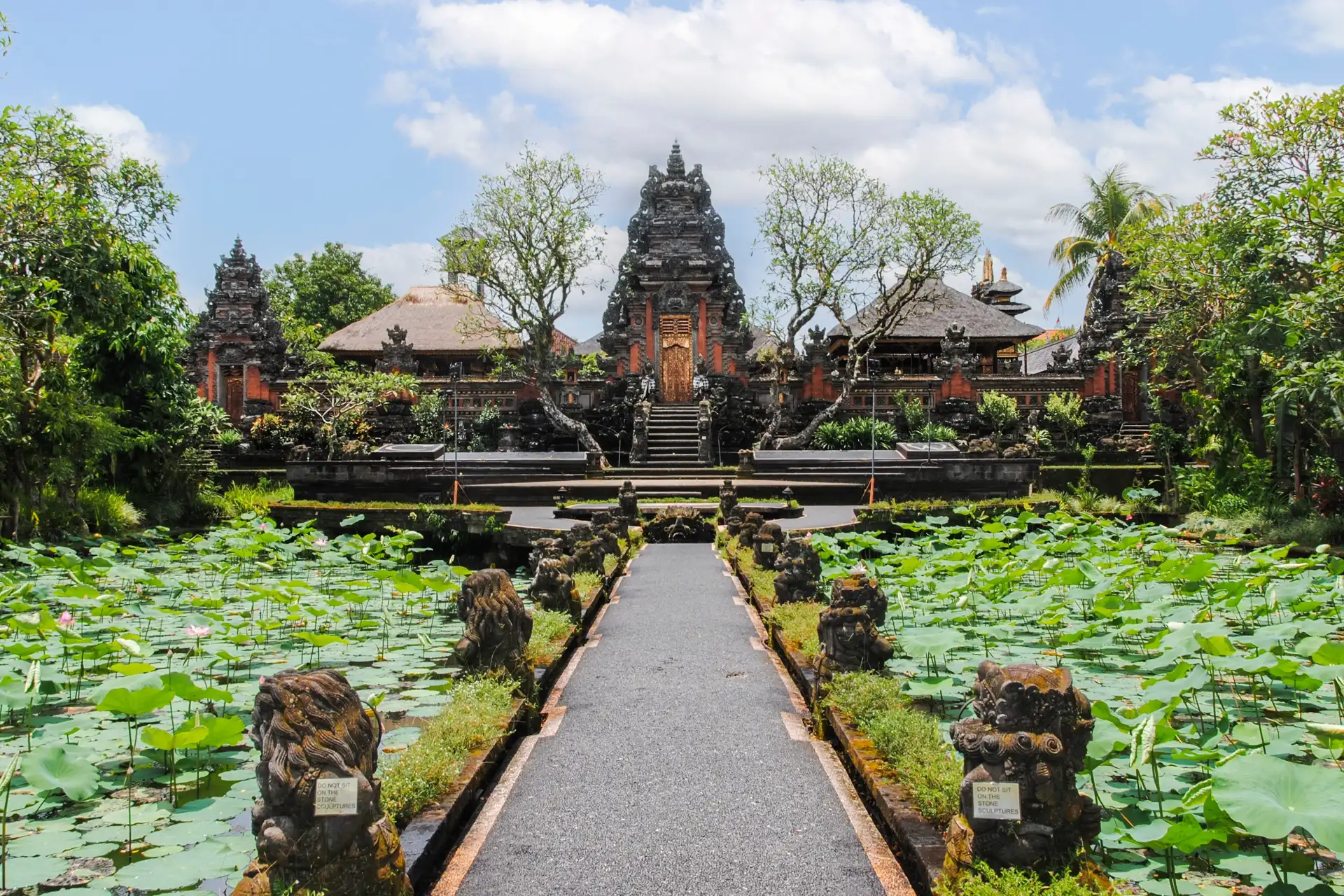
To the casual traveler strolling through the lush pathways of Ubud, the coastal village roads of Canggu, or the ancient stone courtyards of Besakih, Bali appears as an open-air sculpture museum. Statues carved from volcanic tuff (paras stone), dark basalt, weathered teak, or fragrant sandalwood are omnipresent. They guard grand split gates (Candi Bentar),crouch beneath moss-covered banyan trees, reside inside ornate wooden shrines, and greet guests in luxury resort lobbies.
However, a fundamental cultural misunderstanding occurs when visitors refer to all these carved physical forms under a single umbrella term: Togog.
In daily Balinese, the word togog simply translates to a statue or decorative figurine. Yet, in the complex, highly stratified world of Balinese Hinduism (Agama Hindu Dharma), treating every stone or wooden carving as a mere “togog” ignores centuries of theological distinction, spiritual consecration, and architectural intent. A statue in Bali is rarely a simple piece of art; it is a carefully calibrated balance between physics and metaphysics, aesthetic craft and divine vessel.
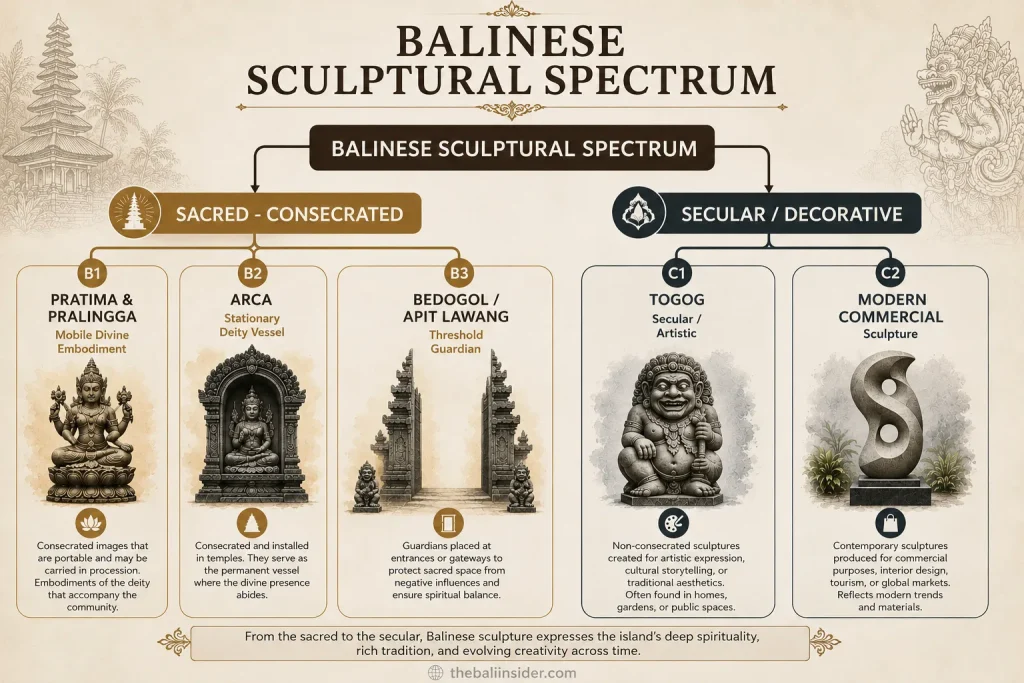
To truly understand Bali’s visual and spiritual landscape, one must learn the native vocabulary that classifies these statues.The divine spectrum ranges from ultra-sacred, consecrated temporary physical bodies for gods (Pratima) to permanent altar representations (Arca), dualistic threshold guardians (Bedogol or Apit Lawang), and finally, un-consecrated artistic expression (Togog).
Understanding these differences transforms a trip to Bali from simple sightseeing into an immersive journey through sacred geography.
Section 1: Pratima and Pralingga – The Highly Sacred Consecrated Vessels
At the pinnacle of Bali’s sculptural hierarchy are the Pratima (and its closely related form, the Pralingga). These are not public monuments, nor are they decorative art. They are ultra-sacred, mobile physical bodies crafted specifically to serve as temporary physical residences (sthana) for the gods, ancestral spirits (Pitara), or divine manifestations (Bhatara) during major temple festivals (Odalan).
Theological Importance & Metaphysical Concept
In Balinese Hindu theology, the supreme Godhead (Ida Sang Hyang Widhi Wasa) and the elevated ancestral spirits exist in the formless realm (Niskala). Humans live in the visible, material realm (Sekala). Because human senses cannot directly interact with the formless divine, ritual tradition bridges this gap by invoking the deity into a physical form during special occasions.
The Pratima acts as that metaphysical bridge. When a temple holds its anniversary ritual (Odalan), priests perform the Pasupati ceremony—a sacred rite of consecration that infuses divine energy into the physical object. During this period,the Pratima is no longer considered wood, gold, or stone; it is treated as the living presence of the deity.
Storage in the Inner Sanctum (Utamaning Nista / Utama Mandala)
Because of their immense spiritual purity, Pratima are kept strictly hidden from public view for most of the year. They are stored inside the Utama Mandala (the most sacred inner courtyard of a Balinese temple complex), safely locked within elevated shrines such as the Meru (tiered roof tower) or Gedong Pasimpan.
No tourist, layperson, or unpurified individual is ever permitted to touch or view a stored Pratima. Only authorized high priests (Pedanda) or temple keepers (Sutri / Pemangku) who have undergone ritual purification (Mewinten) may access the inner sanctum to clean, clothe, or move these sacred objects.
Materials Used: Noble Woods and Precious Metals
Because a Pratima serves as a dwelling for the divine, the materials chosen for its construction must possess intrinsic spiritual purity (Suci):
- Sandalwood (Cendana): Prized for its natural fragrance and cooling spiritual properties, sandalwood is the most traditional medium for carving human-form or anthropomorphic Pratima.
- Majegau Wood: A rare, sacred wood endemic to Bali, traditionally reserved exclusively for sacred structures and deity vessels.
- Precious Metals (Gold & Silver): Many high-status temples feature Pratima made of solid gold, beaten silver, or Pancadatu—a sacred five-metal alloy consisting of gold, silver, copper, iron, and lead or brass, symbolizing the five elemental directions and cosmic balance.
- Coin Statues (Pratima Uang Kepeng / Pis Bolong): Intricately woven statues made from hundreds of ancient Chinese copper coins bound with sacred string, symbolizing earthly wealth transformed into spiritual devotion.
Rare Public Appearances: The Melasti Ceremony
The only time a visitor or member of the public will ever glimpse a Pratima is during major religious processions,particularly the Melasti ritual, which takes place several days before Nyepi (the Balinese Day of Silence).
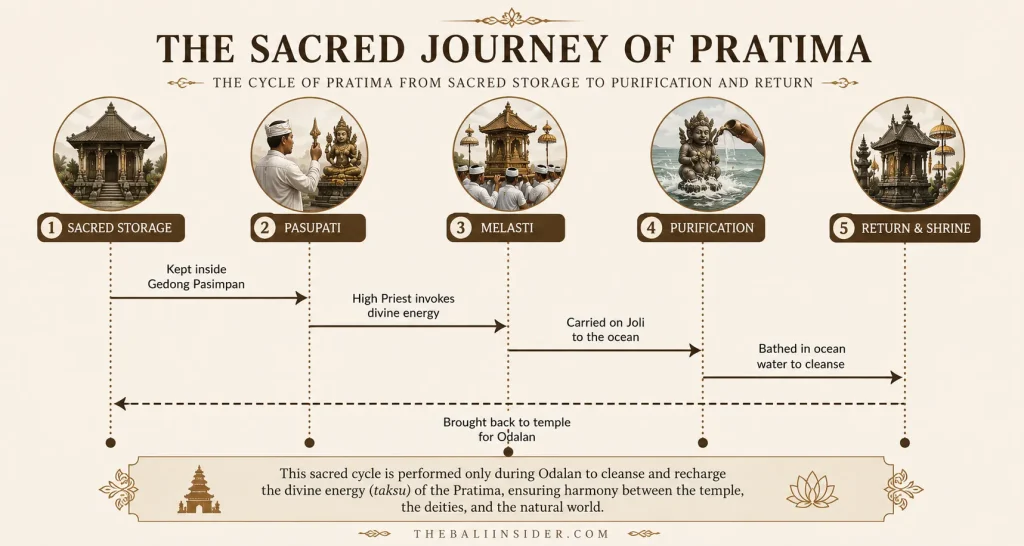
During Melasti, thousands of villagers dressed in white carry their temple’s Pratima in ornate wooden litters (Joli or Tandu) down to the ocean, sacred lakes, or holy rivers. The statues are wrapped in sacred yellow, white, or checkered Poleng cloth, shaded by ceremonial umbrellas (Pajeng). At the water’s edge, the high priests perform purification rites to cleanse both the sacred heirlooms and the universe of negative spiritual energy (Malas).
Section 2: Arca – Permanent Temple Deities
While a Pratima is a mobile vessel brought out primarily for festivals, the Arca represents a permanent, immovable physical representation of a deity or celestial guardian stationed directly within temple grounds.
Key Differences Between Pratima and Arca
Understanding the distinction between Pratima and Arca is central to mastering the vocabulary of types of Balinese statues:
| Feature | Pratima | Arca |
| Mobility | Fully mobile; carried in processions (Melasti). | Permanent, static, often cemented or built into place. |
| Material | Sandalwood, gold, silver, Pancadatu, sacred coins. | Volcanic stone (Paras), Andesite stone, heavy teak. |
| Location | Hidden in locked inner shrines (Gedong). | Positioned visibly on open altars (Pelinggih). |
| Visibility | Exposed only during high festival rites. | Visible daily to temple devotees and visitors. |
| Function | Temporary vessel for divine spirit invocation. | Architectural focus point for daily prayer and focus. |
Placement on Altars (Pelinggih)
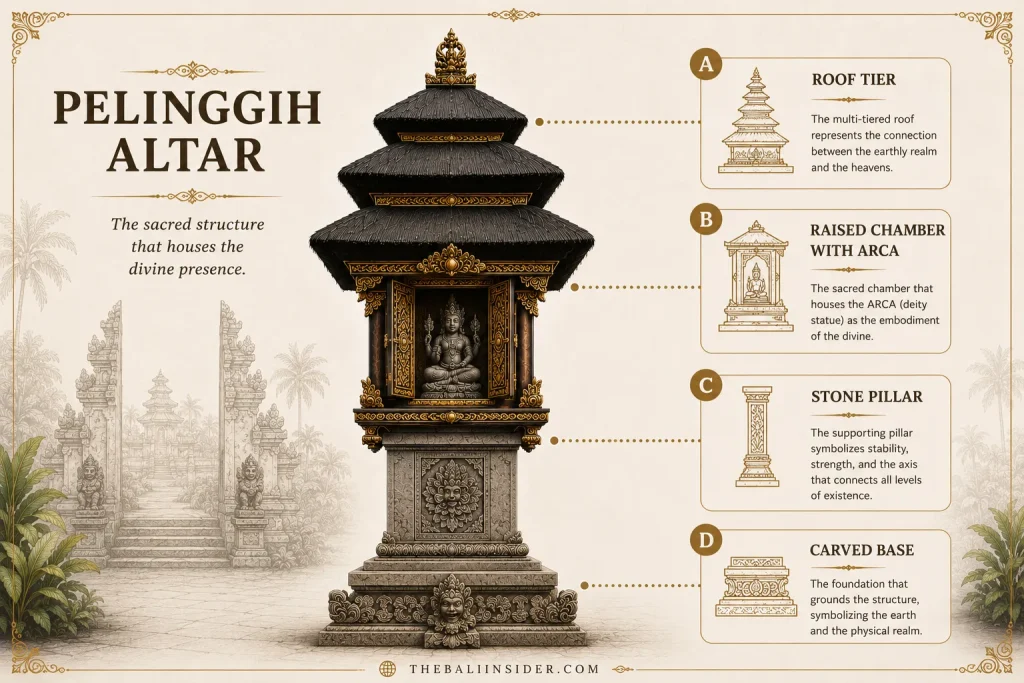
An Arca is anchored directly onto an altar pavilion known as a Pelinggih. In Balinese architecture, the Pelinggih serves as the seat or resting place for specific manifestations of God (such as Bhatara Brahma, Bhatara Vishnu, or Bhatara Shiva),celestial guardians, or historical mythical kings (Raja Purwa).
When devotees enter a temple to offer their daily prayers (Mebanten), they direct their focus, incense smoke, and holy water towards the Pelinggih housing the Arca. The Arca serves as a focal point (Nirmana) for concentration during meditation and prayer, helping the devotee focus their thoughts on the specific divine virtues associated with that deity.
Role in Everyday Temple Worship
Unlike Pratima, which require complex Pasupati rites every time they are brought forth, an Arca remains permanently empowered once installed. Every morning and evening, temple caretakers (Pemangku) lay fresh flower offerings (Canang Sari), pour fresh water, and burn stick incense at the base of the Arca.
The Arca is frequently draped in a sacred waistcloth (Kamben) and tied with a yellow sash (Senteng). The cloth is not merely decorative; it signifies that the stone has been ritualized and pulled out of the mundane, unformed world into a state of dedicated sacred service.
Section 3: Bedogol (Apit Lawang) – Guardians of the Threshold
When walking through any traditional Balinese street, village, or hotel entrance, you will almost certainly pass between two menacing stone statues standing guard on either side of the doorway. These gatekeeper statues are known as Bedogol,or more formally, Apit Lawang.
Architectural Purpose at Gates and Entryways
The word Apit means “to sandwich” or “flank,” and Lawang means “door” or “gate.” Thus, Apit Lawang translates directly to “the statues flanking the gate.”
In Balinese spatial design—governed by the traditional architectural canon Asta Kosala Kosali—the entrance of any property (whether a sacred temple or a residential family compound/Pekarangan) is a vulnerable portal. It is the boundary line where the public outer realm (Nista Mandala) transitions into the private, sacred inner realm (Utama Mandala).
Bedogol statues are positioned at this exact threshold to act as cosmic filters. They do not prevent physical humans from entering; rather, they regulate the unseen energetic realm, ensuring that negative spiritual energies, malevolent spirits (Bhuta Kala), and destructive intentions are stopped at the door.
Symbolic Pairs: The Concept of Dwarapala, Nandiswara, and Mahakala
Bedogol are almost always created and installed in duality pairs, reflecting the core Balinese philosophical concept of Rwa Bhineda—the absolute necessity of balance between opposing cosmic forces (light and dark, good and evil, positive and negative).
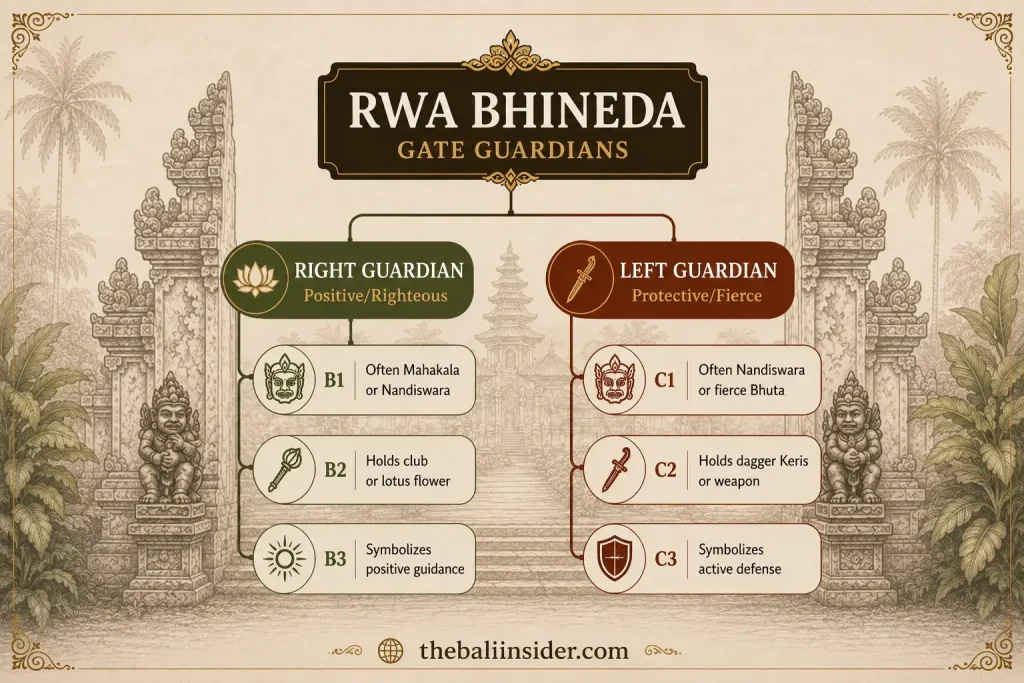
The most common figures chosen for Bedogol pairs include:
- Dwarapala: Monstrous giant guardians derived from Vedic epic traditions. They feature bulging eyes, sharp fangs,curly hair, and hold heavy maces or clubs (Gada). Their intimidating appearance is deliberate: it frightens away lower-level disruptive spirits (Bhuta Kala).
- Nandiswara and Mahakala: In Shivaite temples, the gatekeepers are often Nandiswara (standing on the right,displaying a calm demeanor) and Mahakala (standing on the left, displaying a fierce, protective expression).
- Ganesha Pairs: Occasionally, twin figures of the elephant-headed deity Ganesha are used at residential entrances to provide wisdom and remove obstacles for all who enter.
Warding Off Negative Cosmic Forces (Bhuta Kala)
Before a pair of Bedogol can fulfill their duty as threshold protectors, they undergo a specific ritual known as Ngulapin or Maspati. During this rite, a priest offers sacrifices (Caru) to the earthly spirits, requesting that they inhabit or empower the stone sentinels to protect the household.
Once consecrated, the Bedogol are wrapped around their waist with Kain Poleng—the iconic black-and-white checkered cloth of Bali.
Cultural Insight: The black-and-white checks of Kain Poleng do not symbolize the victory of good over evil. Instead, they symbolize Rwa Bhineda: the eternal coexistence of light and darkness in the world. The cloth reminds anyone passing through the gate to maintain emotional and spiritual balance.
Section 4: Togog and Artwork – Decorative and Commercial Sculptures
Having explored the sacred realms of Pratima, Arca, and Bedogol, we arrive at the category that encompasses secular sculpture: Togog.
The Evolution of Secular Statues in Modern Bali
Historically, prior to the 1920s and 1930s, virtually all wood carving and stone masonry in Bali was tied directly to religious patronage. Sculptors (Pangus) worked for royal courts (Puri) or village temples (Pura).
However, during the early 20th century—influenced by Western artistic exchanges involving figures like Walter Spies,Rudolf Bonnet, and Dutch artist Pit Maha movements in Ubud and Mas village—Balinese carving underwent a dramatic evolution. Artists began liberating their chisels from strict iconography to capture scenes of daily life, folklore, nature,and pure abstract aesthetics.
Today, a Togog refers specifically to any statue or carving created primarily for artistic expression, decorative architectural enhancement, or commercial trade.
Key Characteristics of Togog Artwork
- Lack of Consecration (Without Pasupati): A Togog does not undergo any Pasupati ritual. It holds no divine spirit (Yantra or Sthana) and requires no daily offerings (Canang Sari) or sacred clothing.
- Freedom of Subject Matter: While temple statues must follow strict canonical proportions (Asta Kosala Kosaliand Ikonografi Hindu), a artist carving a Togog has complete freedom. Subjects range from elegant traditional dancers, rice farmers, and wildlife (owls, frogs, eagles) to modern abstract expressions.
- Commercial & Residential Placement: These sculptures adorn private gardens, international hotel lobbies, art galleries, spa entrances, and private residences worldwide.
- Material Diversity: Togog are commonly sculpted from soft volcanic ash stone, grey concrete casts, teak wood,hibiscus wood (Kayu Waru), mahogany, and crocodile wood (Kayu Lami).
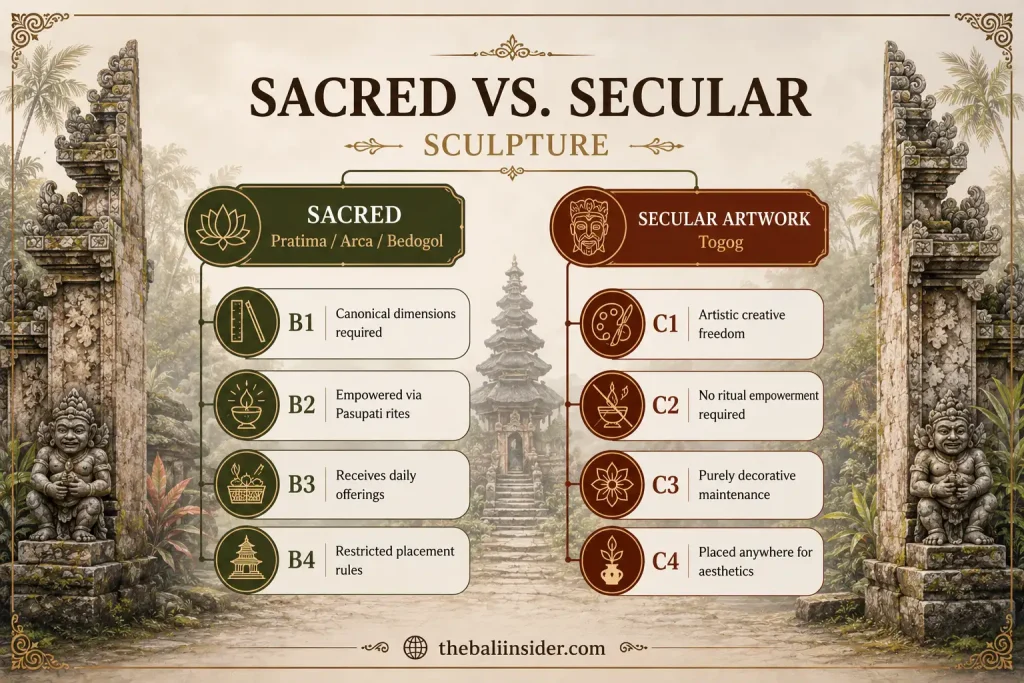
Section 5: Detailed Comparative Analysis
To help you easily differentiate between the various types of Balinese statues you will encounter across the island, the table below breaks down their materials, placements, sacredness levels, and ritual requirements:
| Type of Statue | Primary Materials | Traditional Placement | Sacredness Level | Ritual & Consecration Requirement |
| Pratima / Pralingga | Sandalwood, Majegau wood, Gold, Silver, Pancadatu, Sacred Coins (Pis Bolong) | Hidden in locked inner shrines (Gedong Pasimpan) in the Utama Mandala | Ultra-Sacred(Lowest Divine Vessel) | Requires full Pasupaticonsecration by a High Priest (Pedanda); washed in Melastirites; daily devotion. |
| Arca | Volcanic Tuff (Paras), Black Andesite Stone, Teak Wood | Anchored permanently on open temple altars (Pelinggih) | High Sacred(Static Deity Seat) | Requires initial Pasupati and temple inauguration rites (Melaspas); draped in ceremonial sash; receives daily offerings. |
| Bedogol (Apit Lawang) | Grey Volcanic Stone, Carved Sandstone, Cast Concrete | Flanking both sides of gates (Candi Bentar or Kori Agung) and doorways | Medium-High(Protective Guardian) | Requires threshold activation (Ngulapin) and Caru offerings; traditionally wrapped in Kain Poleng (checkered cloth). |
| Togog & Modern Art | Teak, Mahogany, Hibiscus Wood, Cast Cement, Marble | Gardens, hotel lobbies, art galleries, private living spaces | Secular / Decorative(Non-Sacred) | No ritual or Pasupatirequirement. Can be handled, moved, and sold freely as commercial art. |
Section 6: Respectful Interaction for Visitors
Because statues are such an integral component of Balinese religious life, interacting with them incorrectly can cause deep unintentional offense to local community members (Banjar). Whether you are exploring a famous temple like Lempuyang or simply walking past a village family compound, follow these essential guidelines:
1. Recognizing Sacred Clothing (Kain Poleng and Sashes)
If you see a statue wrapped in a black-and-white checkered cloth (Kain Poleng), a yellow cloth, or tied with a red or white sash, treat it as an active sacred object. This cloth signals that the stone or wood has been ritually consecrated and currently houses protective spiritual energy.
- Never touch, lean against, or sit on a cloth-draped statue.
- Never place sunglasses, hats, or trash on the base of a draped statue.
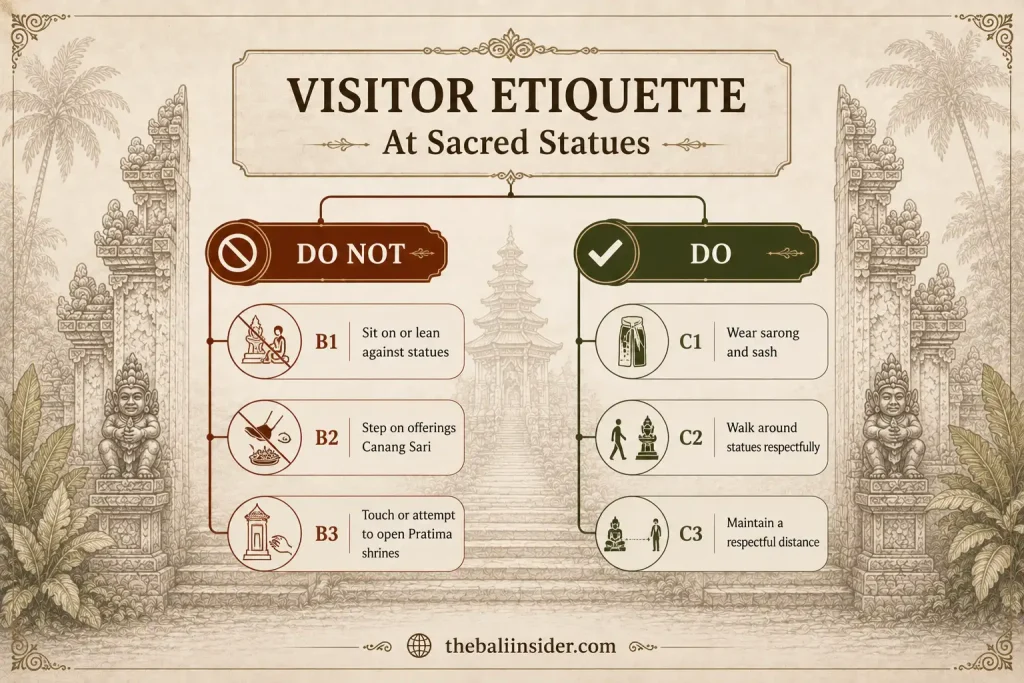
2. Mind the Offerings (Canang Sari and Segehan)
At the base of Bedogol gate statues and Arca altars, you will almost always see small palm-leaf trays filled with flowers,rice, and burning incense (Canang Sari or ground-level Segehan).
- Watch your step when walking through doorways or temple gates. Accidentally stepping on a fresh offering is considered disrespectful. If you accidentally step on an old, extinguished one, simply pause and whisper a quiet apology (“Suksma” or “Maaf“).
3. Photography Guidelines
- Arca & Bedogol: Photography is generally permitted, provided you remain at a respectful distance and do not obstruct devotees who are praying. Never pose in a way that mimics or mocks the posture of the statue.
- Pratima: If you are fortunate enough to witness a Melasti ocean procession, you may photograph the procession from a respectful distance. Never attempt to get up close to flash a camera directly into a Pratima litter, and never stand higher than the priest carrying the divine vessel.
4. Dress Code Requirements
When entering any temple area (Pura) where Arca or Pratima reside, strict dress codes apply to all visitors regardless of background:
- Wear a Sarong (Kamen) covering your legs below the knees.
- Tie a Temple Sash (Selendang) around your waist to symbolically divide your upper (pure) body from your lower (earthly) body.
- Ensure your shoulders are covered.
Read more about Balinese traditional attire
Conclusion & Next Steps in Exploring Balinese Culture
The world of Balinese sculpture is far richer and more nuanced than simple souvenir shop displays might suggest. What appears to an untrained eye as merely an antique stone carving could be a Bedogol actively guarding a family lineage from spiritual intrusion, an Arca providing a focus point for daily village prayers, or—in its rarest form—a sacred Pratima holding the divine spirit during a cosmic festival.
By learning to distinguish between these categories, you begin to see Bali not as a passive tropical background, but as a living, breathing spiritual landscape where every gate, altar, and carving plays an active role in maintaining universal harmony (Tri Hita Karana).
Want to dive deeper into the spiritual meanings, mythologies, and iconographies carved into Bali’s stone sentinels?
Read our foundational Balinese Statues Meaning & Cultural Heritage to explore the mythological stories of the ancient stone carving villages.
Reference
