
Overview
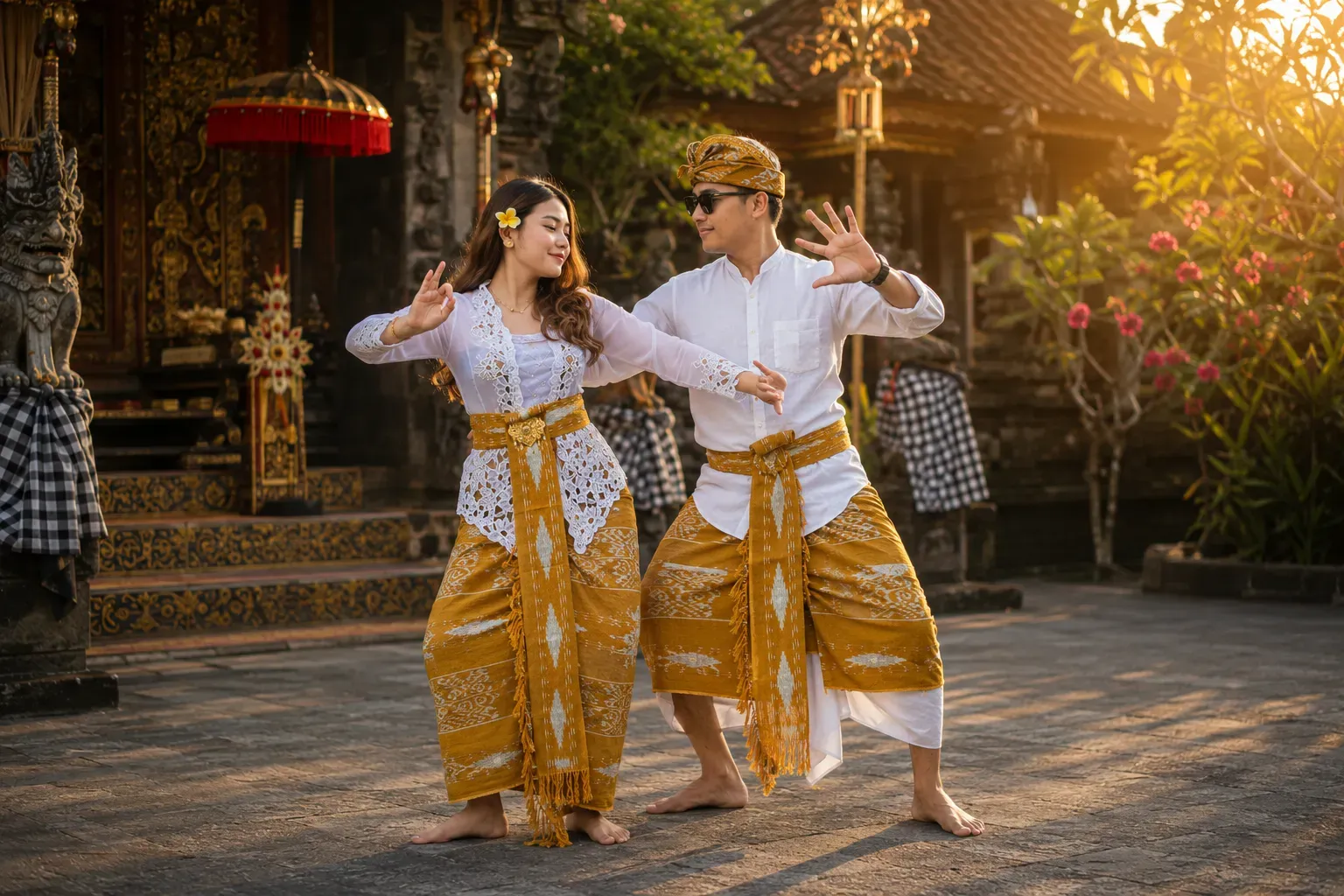
Balinese traditional attire (Busana Adat Bali) is a sacred costume reflecting the Tri Hita Karana philosophy. For women, key elements include the Kebaya, Kamen (wrapped left-to-right), Senteng (selendang with a knot on the right), and Pusung hair arrangement with Sumpang flowers. For men, components consist of the Udeng (headscarf symbolizing controlled thoughts), Baju Safari/Kemeja, Kamen (wrapped with a kancut fold), and Kampuh (saputan). Under Pergub Bali No. 79/2018, this attire is mandatory every Thursday, Purnama, Tilem, and the Provincial Anniversary (August 14) for all office workers and institutions across Bali.
Table of Contents
Bali is not merely a destination defined by its pristine coastlines and iconic volcanic backdrops; it is a living, breathing landscape of profound spirituality, deep-rooted traditions, and visual poetry. One of the most striking manifestations of this enduring heritage is the daily sight of locals adorned in their elegant traditional costume. Known locally as Busana Adat Bali, this attire is far more than a stylistic choice. It represents an intricate language of devotion, social respect, and cosmic harmony, woven tightly into the fabric of contemporary Balinese life.
For visitors and cultural enthusiasts, understanding the nuances of Balinese traditional attire opens a gateway into the island’s collective soul. From the exact direction a fabric is wrapped to the specific placement of a floral ornament, every single element carries a distinct philosophical weight rooted in Hinduism. This comprehensive guide serves as the ultimate pillar content to decipher the anatomical elements, deep symbolic meanings, and modern regulations surrounding Balinese traditional attire for both men and women.
The Philosophy Behind the Attire: Tri Hita Karana
To fully grasp why Balinese traditional attire is structured the way it is, one must look at the overarching philosophy of Tri Hita Karana—the three causes of prosperity, which include harmony with God (Parahyangan), harmony among humans (Pawongan), and harmony with nature (Palemahan). Traditional garments act as a physical tool to prepare the human body and mind for sacred entry into temples and communal spaces, separating the profane world from the divine.
The human body itself is viewed as a miniature universe (Buana Alit), divided into three distinct spiritual zones: Utama Angga (the sacred head region), Madya Angga (the intermediate torso region), and Nista Angga (the lower extremity region representing the grounded earthly self). The attire applied to each zone serves to honor, protect, or control the spiritual energies inherent within them.
Anatomy of Balinese Traditional Attire for Women
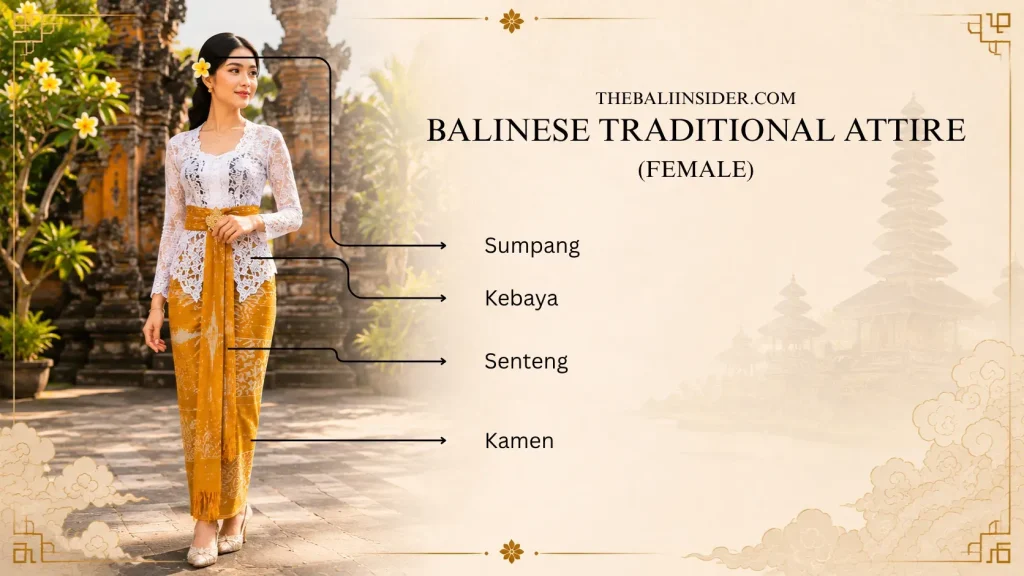
The traditional costume for Balinese women emphasizes elegance, neatness, and grace, mirroring the profound role women play as caretakers of ritual, family, and offering preparation. The standard ensemble consists of several mandatory pieces:
Kebaya
Balinese women generally wear a form-fitting kebaya, usually with long sleeves or three-quarter lengths. The fit is meticulously tailored to the individual body shape to ensure it is tight yet completely neat, elegant, and respectful (sopan). While modern fashions introduce a vibrant spectrum of colors and intricate lace patterns for weddings and festivals, white or yellow kebayas remain the standard for temple prayers, symbolizing purity and wisdom.
Kamen (Kain Bawahan)
This is the lower structural cloth wrapped securely around the waist extending down to the ankles. For women, the technique of wrapping the kamen is highly specific: it is wrapped in a circular fashion from left to right. This directional pattern is not accidental; it represents the preservation of gentle, receptive, and nurturing energies. The fabric must be bound exceptionally tight to ensure absolute immobility and modesty while the wearer carries out demanding physical and ceremonial tasks throughout the day.
Senteng (Selendang)
A vital accessory tied around the waist over the kebaya. The senteng or sash holds immense spiritual significance. It is traditionally tied with a visible knot positioned cleanly on the right side of the hip. This right-side knot explicitly symbolizes the embrace of dharma (righteousness, truth, and goodness) and serves as a symbolic physical boundary separating the sacred upper torso from the lower, more earthly impulses of the body.
Tatanan Rambut (Hair Arrangement)
Hair is viewed as an extension of one’s spiritual aura and must always be neatly arranged. For adult or married women, the hair is beautifully styled into a traditional bun or tied with absolute neatness, a structure traditionally referred to as Pusung. Leaving hair loose and untamed during ceremonies is highly discouraged, as neat hair denotes an ordered, disciplined mind.
Sumpang (Floral Accents) Optional
The visual crown of the attire is completed by placing a fresh, aromatic frangipani flower (bunga kamboja) or a sacred bunga sandat tucked gently behind the ears. This placement acts as a sensory offering to the deities and an outward symbol of natural purity.
Anatomy of Balinese Traditional Attire for Men

Balinese traditional attire for men balances structural form with spiritual mindfulness. It is designed to facilitate dynamic movement during community work (ngayah) while keeping the mind centered. The ensemble includes:
Udeng (Destar)
The iconic Balinese headscarf is arguably the most sacred component of male attire. Worn around the head, the udeng features an asymmetrical upward knot in the center of the forehead. This knot symbolizes a highly focused, pure, and controlled mind (pikiran yang suci dan terkendali). It serves as a constant reminder for men to govern their thoughts wisely, pulling negative impulses upward toward divine consciousness.
Baju (Shirt)
The upper body is covered with either a formal Baju Safari (a structured, pocketed button-up shirt unique to Bali), a crisp white collared kemeja, or a dedicated traditional short/long-sleeved shirt. White is overwhelmingly preferred for temple visits and religious holy days, signifying a clean slate and inner purity.
Kamen
Like women, men wear a lower cloth wrapped around the waist, but the wrapping mechanism is distinctly inverted. Men wrap the kamen from left to right (counter-clockwise), leaving an intentional fold at the front that allows an excess trail of fabric to drape elegantly down between the legs toward the ground. This draped fabric is known as the Kancut. The kancut symbolizes masculinity, respect toward the earth, and an energetic grounding to ensure stability in actions.
Kampuh (Saput/Saputan)
A distinct secondary layer of cloth tied on top of the kamen. The kampuh is wrapped in an opposing direction from right to left, usually covering the upper half of the inner cloth. It often features contrasting colors or intricate gold-leaf motifs (prada) and serves as a symbolic layer that balances the dual forces of the universe (Rwa Bhineda)—the dark and the light, the masculine and the feminine.
Selendang
Depending on the specific level of formality and the exact nature of the event, a small sash or selendang is sometimes wrapped tightly over the kampuh to keep the entire waist unit perfectly secure during active movements.
The Evolution of Daily Wear: Pergub Bali No. 79 Tahun 2018
While historically reserved purely for temple ceremonies, life milestones, and village gatherings, traditional Balinese attire has undergone a significant institutional revival in recent years. Visitors to the island will notice a striking cultural phenomenon: on specific days of the week, thousands of office workers, bank tellers, hotel staff, and school children navigate their modern daily routines while fully dressed in traditional Balinese attire.
This practice is legally rooted in the Peraturan Gubernur (Pergub) Bali Nomor 79 Tahun 2018. This specific gubernatorial regulation mandates the absolute use of traditional Balinese attire for all government employees, educational institutions, and private sector businesses operating within the province on specific designated days.
You will consistently witness this vibrant display of cultural identity across the island on the following occasions:
- Every Thursday (Hari Kamis): A weekly institutional mandate aimed at fostering cultural pride and supporting local textile artisans.
- Hari Purnama (Full Moon): A holy day celebrated every month when cosmic energies are believed to be filled with healing light and blessings.
- Hari Tilem (New Moon): A crucial monthly day of reflection and purification meant to cleanse the inner self of negative influences.
- Bali Province Anniversary (Hari Jadi Provinsi Bali): Celebrated annually on August 14th, where the entire island unites in full ceremonial attire to honor its historical foundation.
This progressive policy ensures that the younger generation remains deeply connected to their ancestral heritage. It transforms traditional attire from museum artifacts into a living, evolving element of modern socioeconomic life in Bali.
Conclusion
For travelers exploring the Island of the Gods, understanding the anatomical rules and legal mandates behind Balinese traditional attire enhances the depth of your travel experience. When visiting holy temples, adopting this attire—such as tying a simple senteng or wrapping a kamen correctly—is the highest form of respect you can show to the local community. By honoring these threads, you do not just observe Bali’s beauty; you step gracefully into its eternal spiritual rhythm.
