
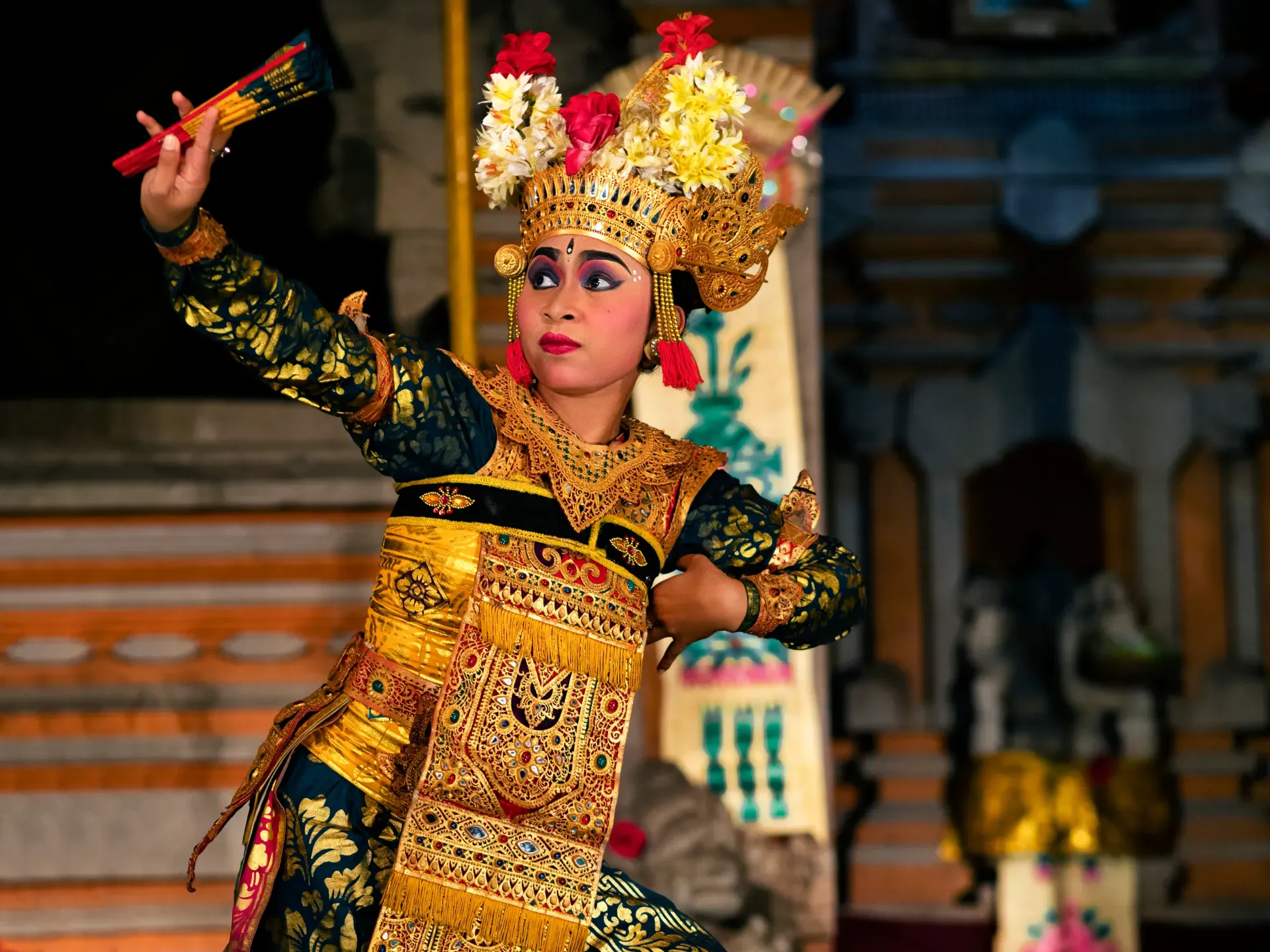
If you want to look past the beach clubs and surf breaks to find the true, beating heart of Balinese soul, there is one place you absolutely cannot skip: the Art Center Bali Denpasar.
Whether you are a first-time visitor wanting to understand the complex island traditions or a seasoned traveler looking for deep cultural immersion, this sprawling complex is where Bali’s past, present, and future dance together. Literally.
Below is our complete guide to exploring this iconic landmark, what secrets it holds, and how you can experience it like a true insider.
Quick Facts
Forgot your long-form reading glasses? Here is the fast track data on what you need to know before you head out:
- What it is: A massive, 14-hectare cultural complex built to preserve, develop, and showcase Balinese art and performance.
- The Name Confusion: “Art Center Bali” and “Taman Werdhi Budaya” are the exact same place.
- Location: Jl. Nusa Indah No.1, Sumerta Kelod, Kec. Denpasar Tim., Kota Denpasar, Bali 80236.
- Travel Time: Approximately 1 hour and 40 minutes by car from Ngurah Rai International Airport (DPS), heavily dependent on Denpasar’s notorious traffic.
- Best Time to Visit: Mid-June to mid-July during the annual Bali Arts Festival (Pesta Kesenian Bali), though the grounds and museums are open year-round.
1. What Exactly is an “Art Centre” in Bali?
When Western travelers hear the word “Art Center,” they usually picture a modern, quiet white-walled gallery with abstract paintings and minimal lighting. In Bali, an art centre is an entirely different beast.
An art centre here is a living, breathing cultural ecosystem. It is a dedicated public space designed not just to hang art on a wall, but to keep centuries-old traditions from fading away. Established in 1973 by Bali’s legendary former governor, Ida Bagus Mantra, the complex was envisioned as a sanctuary where masters of music, dance, carving, and painting could pass down their knowledge to the younger generation while sharing it with the world.
Instead of quiet hallways, you will find open-air pavilions, the echoes of bronze gamelan (traditional percussion orchestras) bouncing off sandstone walls, and manicured tropical gardens that serve as backdrops for dramatic historical reenactments.
2. Clearing Up the Confusion: Art Center Bali vs. Taman Werdhi Budaya
Let’s solve a common issue right out of the gate so you don’t get lost on Google Maps: Art Center Bali and Taman Werdhi Budaya Art Centre are the exact same place.
Locals and long-term expats will often refer to it simply as “Art Center” (pronounced by locals as ‘Art Senter’). However, its official, elegant Indonesian name is Taman Werdhi Budaya.
- Taman means garden or park.
- Werdhi means development or growth.
- Budaya means culture.
Put it all together, and the name translates to the “Garden for Cultural Development.” If you are booking a Grab, a Gojek, or directing a private driver, entering either name will get you to the exact same gate on Jalan Nusa Indah.
3. What to Expect When You Visit
The complex is huge, covering roughly 14 hectares of land. To make sure you don’t miss the best spots, we have broken down what to expect into three distinct categories:
A. Show-Stopping Balinese Architecture
The moment you walk through the gates, you are treated to a masterclass in Undaqi (traditional Balinese architecture). Built entirely out of local red brick and volcanic gray sandstone, the buildings are heavily adorned with intricate carvings depicting scenes from Hindu epics like the Ramayana and Mahabharata.
The complex is divided into distinct zones connected by stone bridges arching over lotus-filled rivers. Keep your eyes open for the grand Candi Bentar (split gateways) and the towering Kori Agung (main doorways), which make for some of the most striking architectural photos on the island.
B. Grand Theaters & Historic Stages
The Art Center is famous for its performance spaces, ranging from intimate arenas to massive amphitheaters.
- Panggung Terbuka Ardha Candra (Ardha Candra Amphitheater): This is the jewel in the crown. It is a massive open-air amphitheater shaped like a half-moon that can seat up to 6,000 spectators. The stage backdrop is a towering, castle-like temple structure that looks absolutely magical when lit up at night.
- Gedung Kriya: An indoor theater space utilized for contemporary plays, acoustic setups, and shadow puppet (wayang kulit) forums.
- Panggung Terbuka Ksirarnawa: Another large, semi-outdoor pavilion used for traditional dance competitions and musical performances.
C. Exhibitions, Galleries & Museums
If you want to view static arts, head directly to the Mahudara Mandara Museum. Inside, you will find a curated timeline of Bali’s artistic evolution.
The galleries hold rare collections of:
- Classic Painting Styles: From the traditional, crowded religious styles of Kamasan to the modern, nature-focused influences of the Ubud and Sanur schools.
- Wooden and Stone Sculptures: Masterpieces carved by legends from Mas and Ubud, showcasing incredibly delicate details worked from single blocks of wood.
- Textiles and Artifacts: Rare Kain Songket (gold-threaded cloth) and traditional masks used in sacred temple ceremonies.
4. Location & How to Get There
The Art Center is nestled inside the capital city of Denpasar, away from the typical tourist enclaves of Seminyak or Canggu.
Getting There From Ngurah Rai International Airport
If you are landing and heading straight to the capital, you should budget at least 1 hour and 40 minutes by car to get there from the airport.
While the distance isn’t massive on paper, you have to cross right through the central nervous system of Denpasar’s commuter traffic. If you travel during morning peak hours (7:30 AM – 9:00 AM) or evening rush hours (5:00 PM – 7:00 PM), that time can easily stretch past two hours.
Insider Tip: If you are traveling solo and light, hiring a motorbike taxi via Grab or Gojek can cut that travel time nearly in half, as bikes can easily filter through stagnant car traffic.
5. The Ultimate Time to Visit: Pesta Kesenian Bali (PKB)
While the complex is an oasis of calm during most of the year, it transforms completely from mid-June to mid-July. This is when the annual Bali Arts Festival (Pesta Kesenian Bali) takes over the entire property.
For a solid month, villages from every corner of Bali send their absolute best musicians, dancers, craftsmen, and cooks to compete and perform. The energy is electric. You can watch legendary Gamelan Gong Kebyar battles (where two orchestras face off on stage trying to outplay each other), sample rare Balinese street food that is hard to find in tourist towns, and buy authentic crafts directly from rural artisans.
If your travel dates line up with the festival, visiting the Art Center isn’t just recommended—it is mandatory.
Insider Tips for Your Visit
- Dress Modestly: While it is not an active temple, it is a highly respected civic and cultural space. Wear clothing that covers your shoulders and knees out of respect.
- Stay Hydrated: Denpasar runs significantly hotter and more humid than the elevated regions of Ubud. Bring a reusable water bottle; there are plenty of small local stalls (warungs) just outside the gate selling cold drinks.
- Combine with a Denpasar Tour: Make a day of it! Combine your trip to the Art Center with a visit to the nearby Bajra Sandhi Monument (a stunning monument to Balinese struggles throughout history) and a stop at a traditional local market like Pasar Badung.
Experience the Real Bali
The beaches of the south are beautiful, but the soul of the island lives in its art. Spending a morning or an evening exploring the grand stone architecture and quiet museum halls of Taman Werdhi Budaya gives you a deep appreciation for the culture that keeps this island so magical.
Are you ready to explore the cultural side of the Island of the Gods?
