
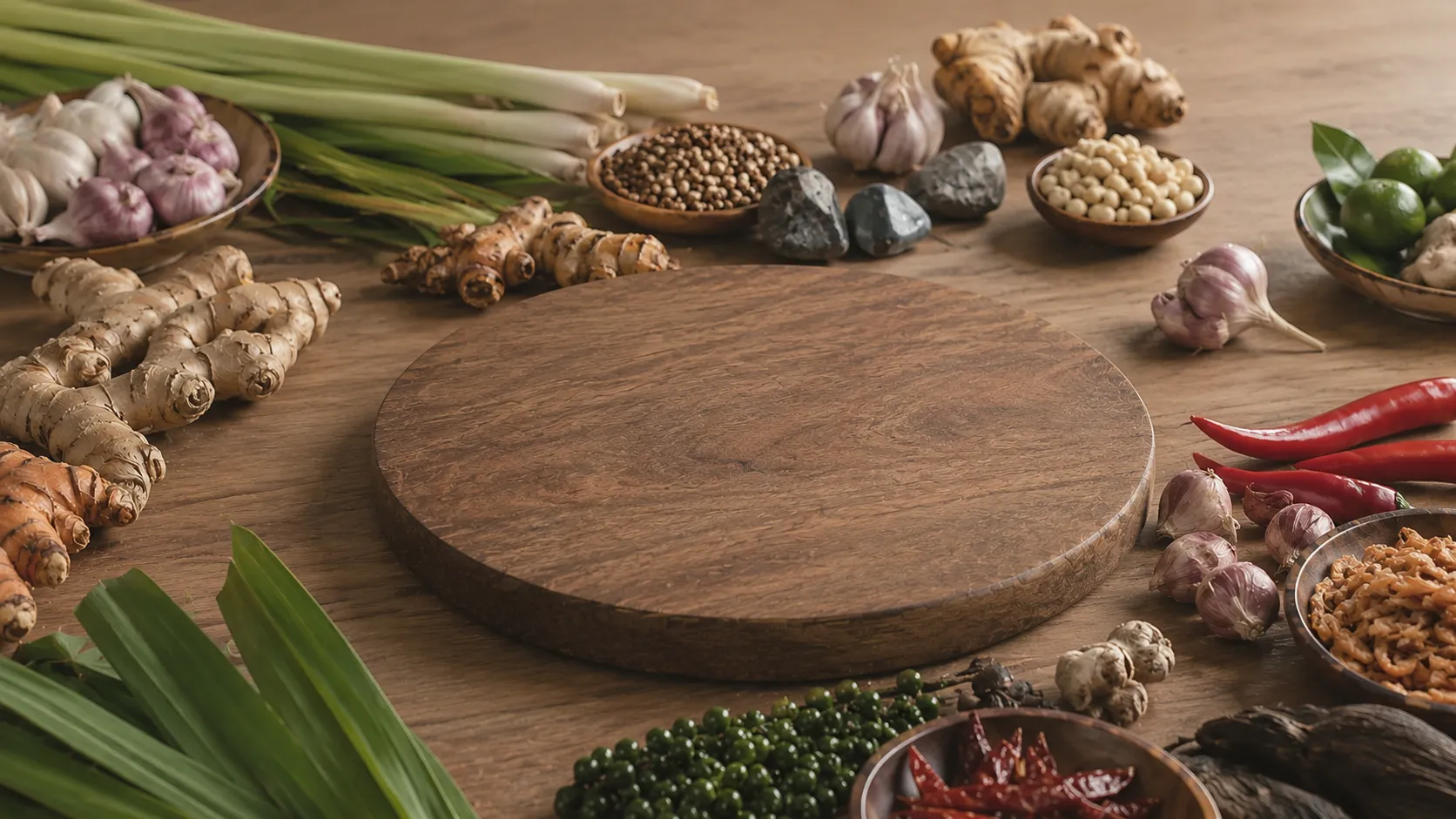
Basa Genep is the foundational spice paste of Balinese culinary arts, embodying a philosophy of taste balance rather than rigid measurements. Historically rooted in local agriculture, it combines key ingredients like galangal, shallots, garlic, chilies, kencur, ginger, and turmeric. This multi-purpose paste can be ground, chopped, or finely minced (rajang) before being fried, serving as the flavorful backbone for iconic dishes like sate lilit, lawar, and jukut ares.
The Heartbeat of Balinese Kitchens
Step into a traditional Balinese kitchen early in the morning, and you will be greeted by a rhythmic, comforting sound: the steady thud-thud of a heavy stone pestle meeting a mortar, or the rapid, rhythmic click of a sharp knife against a wooden chopping board. This is the daily ritual of preparing Basa Genep (alternatively spelled basa gede), the foundational spice paste that forms the culinary backbone of the Island of the Gods.
In Balinese, genep literally means “complete” or “full.” It is an apt name for a spice blend that encapsulates the rich, vibrant, and complex flavors of Bali. Without it, iconic dishes like lawar, sate lilit, and jukut ares would lose their distinctive identity. Basa Genep is more than just a recipe; it is a cultural heritage, an intuitive art form, and a sensory expression of Balinese life.
A Brief History and Philosophy: Balance Over Precision
The history of Basa Genep is deeply intertwined with the landscape of Bali and the ancient trade routes of Southeast Asia. For centuries, the fertile volcanic soil of Bali has yielded an abundance of aromatic roots, rhizomes, and pungent bulbs. Local communities learned to combine these indigenous crops not just for flavor, but also for their natural preservation qualities and medicinal benefits—aligning closely with traditional holistic wellness concepts.
Unlike Western culinary traditions that rely on strict, standardized measurements, authentic Balinese cooking is guided by intuition, experience, and the philosophy of balance. There is no single, rigid formula for Basa Genep; every village, and often every household, boasts its own subtle variation.
The secret lies in the interplay of flavors. The cook tastes and adjusts dynamically, ensuring that no single root or aromatic overwhelms the others. It is a harmonious dance of sharp, earthy, pungent, and spicy notes where the human touch and instinct act as the ultimate scale.
The Anatomy of the Spice Blend
While variations exist across the island, a widely embraced and versatile version of this foundational paste relies on seven essential elements. Each plays a specific role in creating the ultimate flavor profile:
- Galangal (Lengkuas): Providing a sharp, earthy, and slightly pine-like top note, this rhizome often acts as a major structural pillar of the paste.
- Shallots (Bawang Merah): Used generously to deliver a sweet, savory, and deeply aromatic base flavor.
- Garlic (Bawang Putih): Added in moderation to provide a sharp, pungent undertone that rounds out the sweetness of the shallots.
- Chilies (Cabai): Adjusted entirely to taste, chilies introduce the vibrant heat and warmth that Balinese cuisine is famous for.
- Aromatic Ginger (Kencur): A potent, unique rhizome with a fierce, camphor-like flavor. Because of its intensity, it is used sparingly to avoid overpowering the blend.
- Ginger (Jahe): Added in a controlled amount to bring a clean, sharp, and warming zest to the background.
- Turmeric (Kunyit): Used in a limited quantity to impart a beautiful golden hue and a subtle, warm, woodsy bitterness.
Processing Techniques: From Traditional to Modern
The method chosen to process these raw ingredients significantly influences the final texture and character of the dish.
- The Traditional Ulek Technique: Using a heavy stone mortar and pestle (batu ulek) is the time-honored way. This crushing action releases the essential oils and juices gently, creating a rich, deeply integrated paste.
- The Rajang Technique: For certain dishes, the ingredients are not crushed but micro-minced with a heavy knife. This artisanal chopping method creates a beautiful, rustic texture where individual bits of spice pop with flavor upon every bite.
- The Modern Chopper: For efficiency and speed, a food processor or chopper is widely utilized today. It quickly breaks down the tough fibers of the rhizomes into a uniform consistency, perfect for modern cooking paces.
Once the ingredients are perfectly processed into a cohesive blend, the final crucial step is frying. Sautéing the mixture in oil cooks out the raw bitterness of the roots, awakens the aromatics, and transforms the raw paste into a fragrant, glossy, golden seasoning ready for use.
Culinary Applications: Bringing Balinese Icons to Life
Once your Basa Genep is fried and fragrant, it becomes an incredibly versatile base that can be adapted into numerous traditional culinary masterpieces:
1. Lawar
This legendary Balinese dish is a finely chopped salad made from a mixture of vegetables (like long beans or young jackfruit), minced meat, and grated coconut. Basa Genep binds these diverse textures together, infusing the raw and cooked elements with a profound savory depth. read more about Lawar
2. Sate Lilit
Unlike skewed meats, sate lilit consists of minced fish, chicken, or pork wrapped around lemongrass sticks or bamboo skewers. The meat is heavily kneaded with Basa Genep and rich coconut milk before being grilled over charcoal. The paste ensures the meat stays incredibly flavorful and aromatic under the open flame.
3. Jukut Ares
A comforting, traditional Balinese soup made from the tender inner stalk of a young banana stem, usually simmered with pork ribs or chicken. Basa Genep is stirred into the simmering broth, cutting through the richness of the meat and infusing the porous banana stem with a warm, spicy flavor.
Conclusion
Basa Genep is a profound reminder that cooking is an art form driven by senses, intuition, and heritage rather than strict formulas. By mastering the delicate balance of these seven core ingredients, you unlock the true culinary magic of Bali right in your own kitchen.
Are you ready to elevate your cooking with the authentic flavors of Bali? Grab your mortar and pestle or chopper, source these fresh aromatics, and try crafting your own intuitive batch of Basa Genep today. Leave a comment below sharing which Balinese dish—lawar, sate lilit, or jukut ares—you are going to cook first!
