
When travelers think about Ubud, they often imagine lush rice terraces, yoga studios, and cozy cafés tucked between tropical gardens. While those experiences certainly define modern Ubud, the true soul of this cultural town lies much deeper. As someone who was born and raised in the highlands of Bali, not far from Ubud itself, I have always believed that understanding Bali means walking through its sacred forests and ancient temples.
Table of Contents
This guide combines two of central Bali’s most fascinating destinations into a relaxing one-day itinerary: Sacred Monkey Forest Sanctuary in the heart of Ubud and Gunung Kawi Temple in nearby Tampaksiring. Together, they offer an incredible journey through Bali’s living culture, ancient architecture, spiritual traditions, and spectacular natural scenery.
If you only have one day to explore beyond Ubud’s cafés and boutiques, this itinerary delivers one of the most rewarding cultural experiences on the island.
Although only about 30 minutes apart by car, these two attractions represent different chapters of Balinese history.
The Sacred Monkey Forest Sanctuary introduces visitors to Bali’s philosophy of harmony between humans, nature, and the spiritual world. Meanwhile, Gunung Kawi Temple transports travelers back nearly a thousand years to the era of Bali’s ancient kings.
The journey also naturally follows the rhythm of the day:
- Morning: cooler weather and active monkeys
- Midday: scenic drive through rural villages
- Afternoon: peaceful exploration of ancient temple grounds
- Evening: return to Ubud for dinner
The combination offers a balance between wildlife, history, spirituality, photography, and nature without feeling rushed.
Morning: Begin at Sacred Monkey Forest Sanctuary
The best time to visit Sacred Monkey Forest Sanctuary is between 8:30 AM and 10:00 AM, shortly after opening.
The morning air remains cool, the forest is quieter, and the macaques are generally calmer before visitor numbers increase.
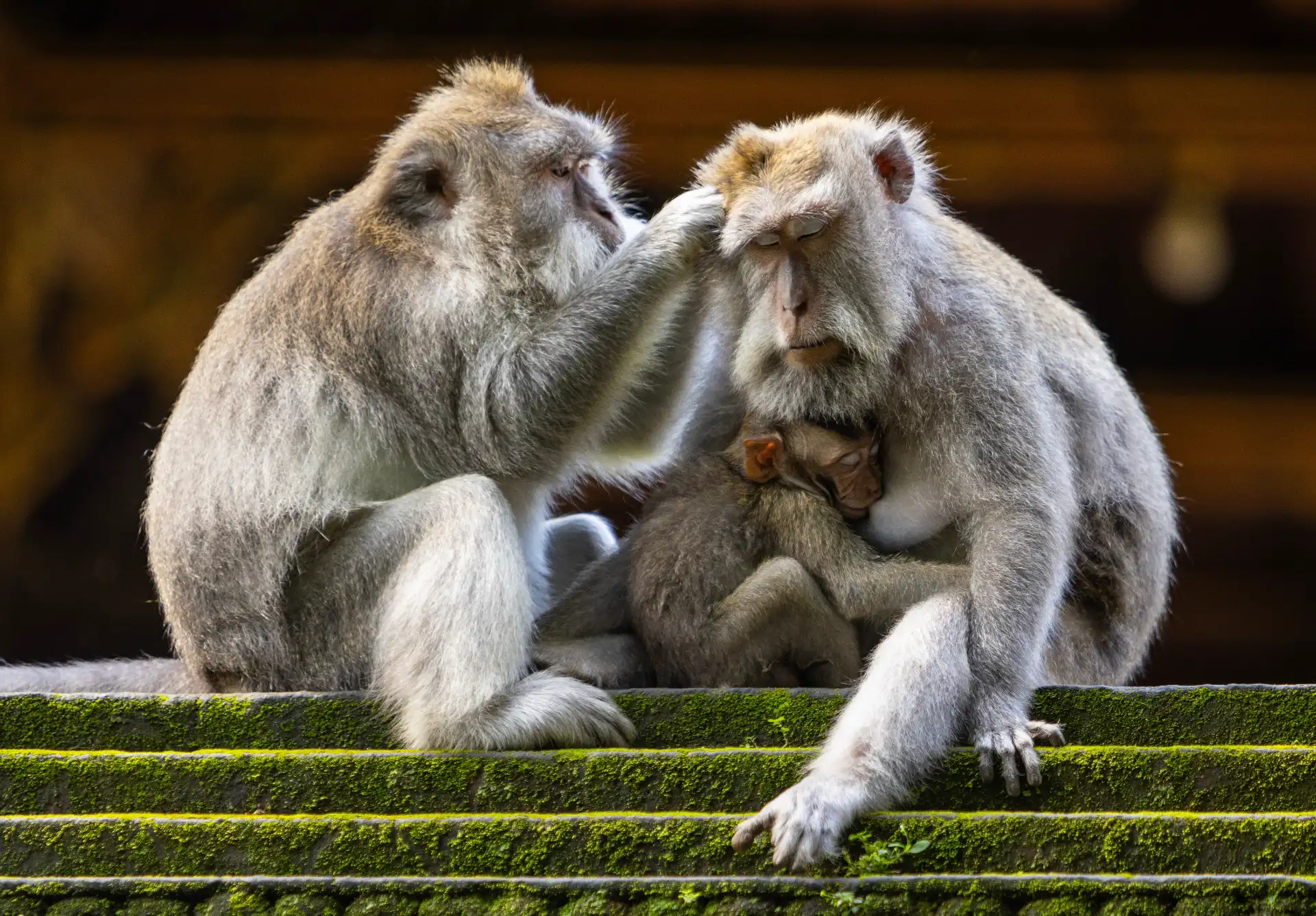
Unlike a typical zoo or wildlife park, Monkey Forest is a protected conservation area covering more than 12 hectares of tropical forest in central Ubud.
More than 1,200 long-tailed macaques live freely here among towering banyan trees, moss-covered statues, and centuries-old temples.
Walking beneath the enormous tree canopy immediately creates a feeling that you have entered another world.
Sunlight filters through giant roots and hanging vines while temple gates appear hidden among lush vegetation.
It is one of the few places where nature and Balinese spirituality coexist so naturally.
More Than Just Monkeys
Many first-time visitors expect Monkey Forest to be simply a place to see monkeys.
In reality, the sanctuary functions as an important spiritual landscape.
Inside the forest stand three sacred temples dating back to the 14th century:
- Pura Dalem Agung Padangtegal
- Holy Spring Temple
- Prajapati Temple
These temples continue to host religious ceremonies for the local community.
Although visitors cannot enter the temple interiors unless participating in ceremonies, simply walking through the temple courtyards offers an appreciation for classic Balinese architecture.
Stone guardians covered with moss appear almost alive beneath the rainforest canopy.
How to Interact Safely with the Monkeys
The monkeys are wild animals.
Although accustomed to people, they should always be respected.
Here are several important guidelines:
- Avoid bringing plastic bags.
- Keep sunglasses inside your bag.
- Secure hats and loose accessories.
- Never feed the monkeys.
- Do not stare aggressively into their eyes.
- Stay calm if a monkey approaches.
Monkey Forest staff patrol throughout the sanctuary and quickly assist visitors whenever necessary.
Photography is welcome, but maintaining a respectful distance produces both better images and safer interactions.
Hidden Photography Spots
Beyond the famous monkey portraits, several beautiful locations often go unnoticed.
One favorite area features the old stone bridge crossing a jungle stream.
The staircase surrounded by ancient banyan roots creates dramatic compositions, especially when soft morning light filters through the leaves.
The moss-covered dragon carvings near Pura Dalem Agung also provide excellent opportunities for atmospheric photography.
If you’re patient, you may capture monkeys naturally interacting with temple architecture rather than posing artificially.
Coffee Break Before Leaving Ubud
After approximately two hours inside Monkey Forest, consider stopping at one of Ubud’s nearby cafés.
This provides time to cool down before driving toward Tampaksiring.
Many cafés along Monkey Forest Road serve Balinese coffee, fresh tropical fruit, and light breakfasts.
Avoid eating inside the sanctuary itself, as food naturally attracts curious monkeys.
Scenic Drive to Gunung Kawi Temple
From Monkey Forest, the drive to Gunung Kawi Temple takes approximately 30–40 minutes, depending on traffic.
The route gradually leaves Ubud’s busy streets and enters the quieter countryside.
One of my favorite parts of this journey is watching the landscape slowly transform.
Boutiques disappear.
Rice fields become wider.
Small family compounds replace commercial buildings.
Local farmers work the terraces just as generations before them have done.
For travelers wanting to experience the slower pace of Bali, this drive is part of the adventure itself.
Arrival at Gunung Kawi Temple
Unlike many famous temples in Bali, Gunung Kawi does not immediately reveal itself.
Visitors first descend several hundred stone steps into a lush river valley.
The walk itself is unforgettable.
Palm trees sway overhead.
Small shrines appear beside the pathway.
The sound of flowing water replaces vehicle traffic.
Rice terraces line both sides of the valley, creating one of Bali’s most picturesque temple approaches.
The descent requires moderate fitness, but the scenery makes every step worthwhile.
Remember that everything you walk down must eventually be climbed back up.
The Ancient Royal Monuments
Dating to the 11th century, Gunung Kawi is considered one of Bali’s oldest archaeological sites.
Its most famous feature consists of ten enormous shrines carved directly into towering cliff faces.
These rock-cut monuments are believed to honor members of the ancient Balinese royal family connected to King Anak Wungsu and his father, King Udayana.
Standing before these massive carvings creates a remarkable sense of scale.
Unlike freestanding temples, these shrines emerge directly from solid volcanic rock, demonstrating extraordinary craftsmanship.
Even today, historians continue studying their exact historical significance.
The Spiritual Atmosphere
What makes Gunung Kawi particularly memorable is its peaceful atmosphere.
Compared with some of Bali’s more crowded temples, visitors often find moments of genuine quiet here.
Local worshippers still come to pray.
Incense drifts gently through temple courtyards.
The Pakerisan River flows beside the complex, adding a calming soundtrack throughout the visit.
Many travelers say Gunung Kawi feels less like a tourist attraction and more like discovering a hidden piece of Bali’s living history.
That impression remains true today.
Walking Through the Rice Terraces
Beyond the main temple complex, narrow footpaths continue through beautiful rice terraces and traditional villages.
Few visitors explore beyond the primary monuments.
Those who do are rewarded with peaceful landscapes that reflect rural Bali at its finest.
Small irrigation canals feed emerald-green paddies.
Farmers greet visitors with warm smiles.
Children occasionally play beside village temples after school.
These quiet scenes often become travelers’ favorite memories because they reveal everyday Balinese life beyond the popular tourist circuit.
Cultural Etiquette at Gunung Kawi Temple
Respect remains essential when visiting active religious sites.
Visitors should:
- Wear a Balinese traditional attire and sash.
- Dress modestly.
- Speak quietly.
- Never climb on sacred structures.
- Follow instructions from temple attendants.
- Avoid entering restricted prayer areas.
Women during menstruation traditionally do not enter temple grounds according to Balinese Hindu customs.
Understanding these traditions helps preserve the sanctity of the site.
Suggested One-Day Itinerary
- 8:30 AM – Arrive at Sacred Monkey Forest Sanctuary
- 10:30 AM – Coffee and light breakfast in Ubud
- 11:30 AM – Drive toward Tampaksiring
- 12:15 PM – Lunch overlooking rice fields
- 1:30 PM – Explore Gunung Kawi Temple
- 3:30 PM – Walk surrounding rice terraces
- 4:30 PM – Return to Ubud
- 6:00 PM – Dinner in central Ubud
This schedule allows enough flexibility without rushing either destination.
Practical Travel Tips
Transportation
Renting a scooter suits experienced riders, but hiring a private driver is often more comfortable for a full-day itinerary.
Roads between Ubud and Tampaksiring are generally well maintained.
What to Bring
- Reusable water bottle
- Comfortable walking shoes
- Sunscreen
- Light rain jacket
- Camera
- Small cash for entrance tickets
- Insect repellent
Best Season
The dry season from April to October offers clearer skies and safer walking conditions.
However, visiting during the rainy season has its own charm, with greener forests and dramatic mist surrounding the temples.
Early mornings remain the best time year-round.
Responsible Tourism Matters
Both Sacred Monkey Forest Sanctuary and Gunung Kawi Temple are not merely attractions. They are places where Balinese culture continues to thrive.
The forest protects native wildlife while preserving important temples used by local communities.
Gunung Kawi remains an active place of worship nearly one thousand years after its construction.
Visitors help preserve these places by respecting local customs, minimizing waste, supporting local businesses, and following conservation guidelines.
Small actions, such as carrying a reusable water bottle or avoiding disturbing wildlife, contribute to protecting Bali’s cultural heritage for future generations.
Frequently Asked Questions
How long should I spend at Sacred Monkey Forest Sanctuary?
Most visitors spend between 1.5 and 2 hours exploring the forest, temples, and walking trails.
Is Gunung Kawi Temple suitable for children?
Yes, but parents should remember that the site involves climbing several hundred stairs. Bring water and take breaks when needed.
Can both attractions be visited in one day?
Absolutely. They are close enough to comfortably combine into a relaxed full-day cultural itinerary from Ubud.
Are guides available?
Yes. Local guides are available at both attractions and provide valuable historical and cultural insights that enrich the experience.
Is this itinerary suitable during the rainy season?
Yes. Bring an umbrella or rain jacket, wear shoes with good grip, and allow extra travel time.
Discover the Timeless Spirit of Ubud
A day spent between Sacred Monkey Forest Sanctuary and Gunung Kawi Temple is far more than a sightseeing trip. It is an invitation to experience two different faces of Bali that have endured for centuries. One reveals the island’s deep connection with nature through a sacred forest where macaques roam beneath ancient banyan trees. The other opens a window into Bali’s royal past, where monumental shrines carved into volcanic cliffs continue to inspire awe after nearly a millennium.
As someone who grew up in Bali’s highlands, I have learned that the island’s greatest treasures are rarely measured by how famous they are, but by how they make you feel. The quiet rustle of leaves in Monkey Forest, the echo of the Pakerisan River at Gunung Kawi, and the scent of incense drifting through ancient temple courtyards remind us that Bali is more than a destination. It is a living culture where history, spirituality, and nature remain deeply intertwined.
If you are seeking an authentic day beyond the typical tourist checklist, this journey through Ubud’s heritage offers an experience that stays with you long after you leave the island.
