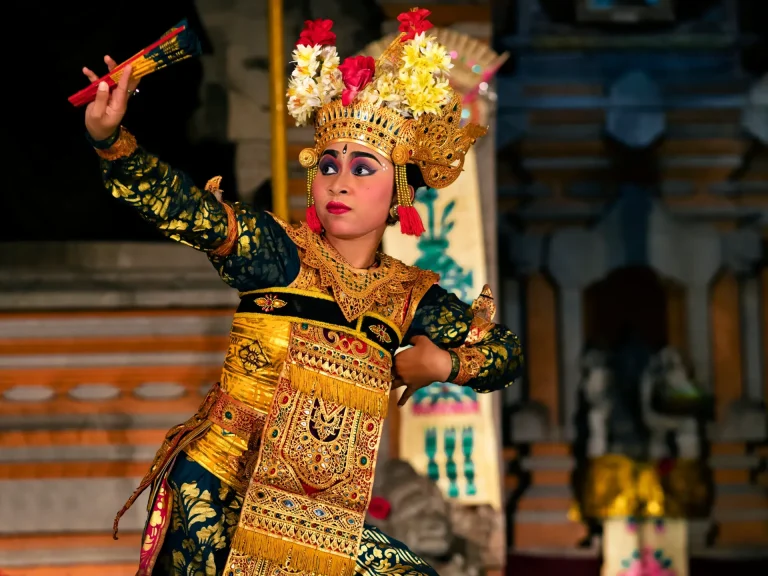
Planning to visit Pura Besakih? Bali’s Mother Temple is the island’s largest and holiest Hindu temple complex, located on the southwestern slopes of Mount Agung. This guide explains everything you need to know before visiting Pura Besakih, including its history, temple etiquette, dress code Balinese traditional attire, entrance fees, local guides, the best time to visit, and how to respectfully experience one of Bali’s most spiritually significant destinations while enjoying spectacular mountain views.
There are many beautiful temples across Bali, but Pura Besakih occupies a place unlike any other. For Balinese Hindus, this is not simply another tourist attraction or photogenic landmark. It is the spiritual heart of the island, often referred to as the Mother Temple because it represents the highest religious center for Balinese Hinduism.
Growing up in Kintamani, I always saw Mount Agung dominating the eastern horizon. Every major religious ceremony seemed somehow connected to the sacred mountain, and conversations about Besakih were filled with reverence. Long before international travelers discovered the temple, generations of Balinese families had made pilgrimages here to pray, celebrate important ceremonies, and honor their ancestors.
Today, thousands of visitors arrive every day to experience the remarkable architecture, breathtaking mountain scenery, and profound spiritual atmosphere. Yet the true beauty of Pura Besakih lies not only in its dramatic stone gates or panoramic landscapes, but also in understanding why this sacred place continues to shape Balinese identity.
Where is Pura Besakih?
Pura Besakih is located in Besakih Village, Rendang District, Karangasem Regency, approximately 60 kilometers from Ubud and around two hours from Denpasar depending on traffic.
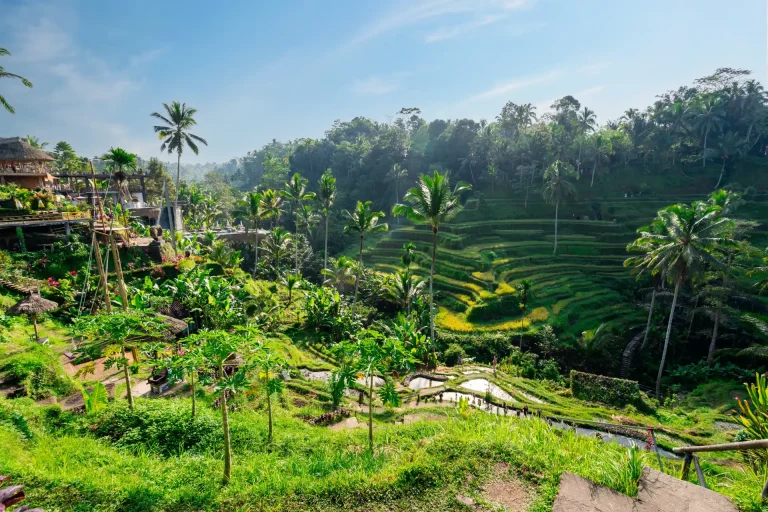
The temple complex sits at an elevation of approximately 1,000 meters above sea level on the southwestern slope of Mount Agung, Bali’s tallest and most sacred volcano. This elevated location provides cooler temperatures compared to southern Bali while offering magnificent views across forests, rice terraces, and villages stretching toward the coast.
Its strategic location is no coincidence. According to Balinese Hindu cosmology, mountains are considered the dwelling place of the gods, making Mount Agung the most sacred point on the island.
The History Behind Bali’s Mother Temple
The origins of Pura Besakih date back over one thousand years, although archaeological evidence suggests the site was already regarded as sacred long before formal temple structures were established.
Historical records associate the temple with the Hindu sage Rsi Markandeya, who is believed to have introduced Hindu teachings to Bali during the eighth century. Legend says he meditated on Mount Agung and established one of the island’s earliest places of worship here after planting five sacred metals beneath the ground as spiritual foundations.
Over centuries, additional shrines were constructed, eventually forming the vast temple complex visitors see today.
Unlike many temples consisting of a single courtyard, Pura Besakih is actually a collection of more than 80 individual temples spread across the mountainside. Each temple serves different religious functions and communities while remaining connected as one integrated spiritual complex.
More Than One Temple
One of the biggest surprises for first-time visitors is realizing that Pura Besakih is not a single building.
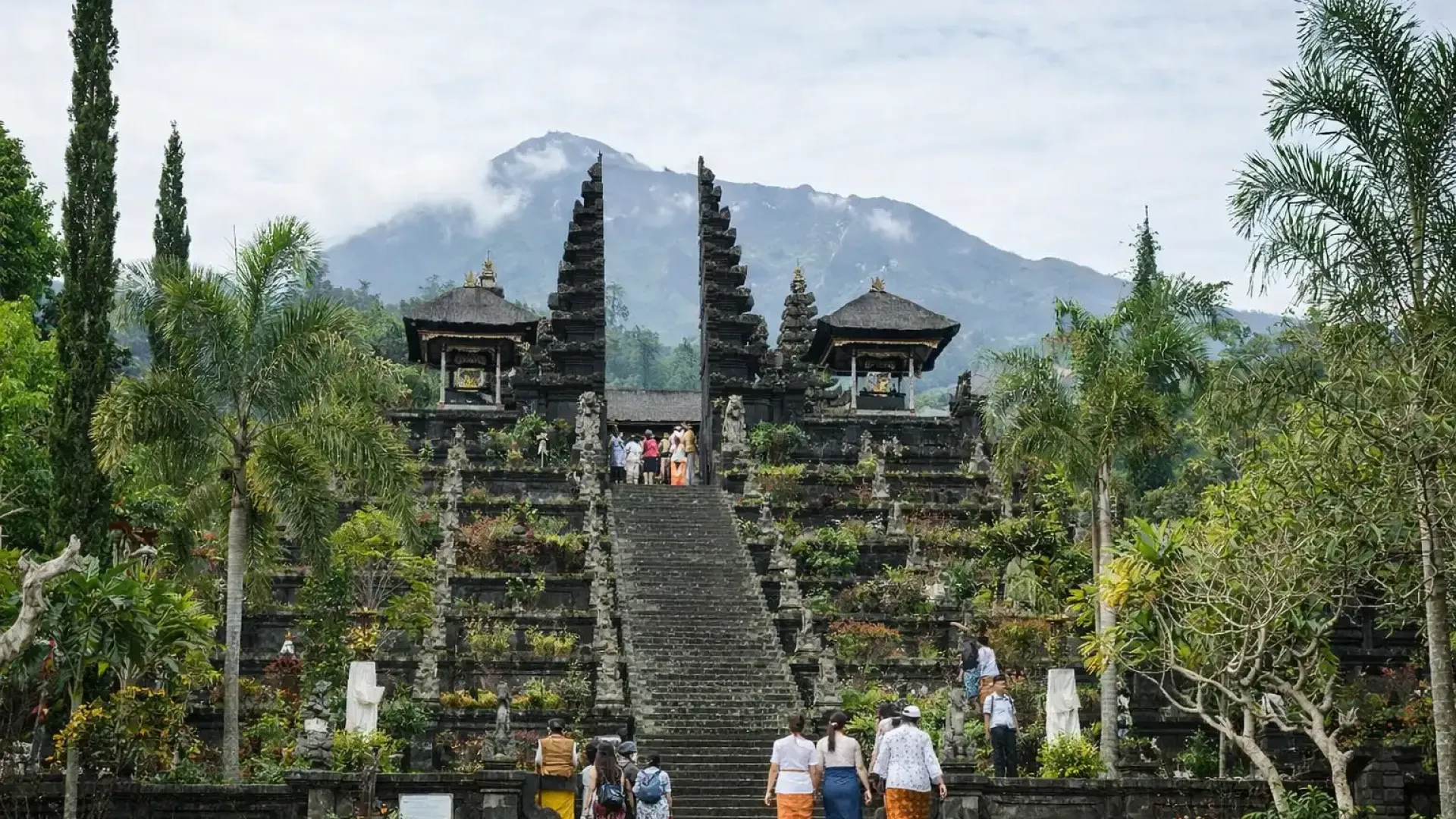
The complex includes numerous temples arranged on ascending terraces, symbolizing the spiritual journey toward the divine. The most important among them is Pura Penataran Agung Besakih, recognizable by its grand stairway leading toward Mount Agung.
Other significant temples include:
- Pura Kiduling Kreteg
- Pura Batu Madeg
- Pura Gelap
- Pura Basukian
- Pura Dalem Puri
- Pura Ulun Kulkul
- Several clan temples maintained by different Balinese communities
Each temple has its own ceremonies, guardians, and spiritual significance throughout the Balinese calendar.
The Spiritual Connection with Mount Agung
One cannot fully appreciate Pura Besakih without understanding Mount Agung.
For Balinese Hindus, Mount Agung represents the cosmic center of Bali. It is believed to be the earthly home of the gods and the axis connecting heaven, earth, and humanity.
The temple’s orientation directly faces the mountain, and nearly every important shrine aligns toward its summit. During clear mornings, the view of Mount Agung towering above the temple creates one of Bali’s most unforgettable landscapes.
Interestingly, during the devastating 1963 eruption of Mount Agung, lava flows reportedly stopped just meters away from the main temple complex despite destroying nearby villages. Many Balinese interpret this event as evidence of the temple’s sacred protection.
Dress Code and Temple Etiquette
Respecting local customs is essential when visiting Pura Besakih.
Although the temple welcomes international visitors, it remains an active place of worship where ceremonies take place almost daily.
Visitors should wear modest clothing that covers the shoulders and knees. Shorts, revealing tops, or beachwear are considered inappropriate.
A traditional sarong and selendang (waist sash) are required before entering the sacred areas. These are typically included with the entrance ticket or available to borrow at the entrance.
Some important etiquette to remember includes:
- Speak quietly throughout the temple.
- Never climb onto shrines or sacred structures.
- Avoid pointing your feet toward altars.
- Do not interrupt people praying.
- Photography is generally permitted, but avoid using flash during ceremonies.
- Women who are menstruating are traditionally asked not to enter temple grounds according to Balinese Hindu customs.
- Follow instructions from temple attendants at all times.
Showing genuine respect often results in warmer interactions with local worshippers and guides.
Are Local Guides Required?
For many years, visitors often encountered unofficial guides insisting their services were mandatory.
Fortunately, management of Pura Besakih has improved significantly following major redevelopment projects.
Today, entrance tickets are managed through an organized visitor center, and licensed guides are available for travelers who wish to gain deeper insight into the temple’s history, symbolism, and architecture.
Hiring a guide is highly recommended, especially for first-time visitors. Without explanation, many temple features may simply appear as beautiful stone structures. A knowledgeable guide can reveal the meanings behind ceremonial gateways, shrines, guardian statues, and Balinese cosmology.
The experience becomes far richer when you understand what you’re seeing rather than simply taking photographs.
The Best Time to Visit Pura Besakih
Early morning is by far the best time to visit.
Arriving between 8:00 and 10:00 AM provides several advantages. The mountain is often clearer before clouds develop, temperatures remain comfortable, and visitor numbers are still relatively low.
Afternoons can become busier, especially during holiday seasons, while cloud cover frequently obscures Mount Agung.
During major Balinese ceremonies, the temple becomes extraordinarily vibrant. Visitors are welcome to observe respectfully from designated areas but should avoid interfering with religious activities.
What Makes the Architecture Unique?
Unlike many coastal temples in Bali, Pura Besakih features dramatic terraced architecture that naturally follows the mountain’s slope.
Visitors ascend a long series of staircases leading through magnificent split gates known as Candi Bentar, eventually reaching elaborately decorated shrines topped with traditional Meru towers.
These multi-tiered black-roof structures symbolize sacred mountains, with the number of tiers representing different levels of spiritual significance.
Intricate volcanic stone carvings cover many gateways, depicting mythological creatures, protective spirits, and symbolic floral motifs that reflect centuries of Balinese craftsmanship.
Practical Visitor Information
Pura Besakih is open daily throughout the year, although access to certain areas may be restricted during important religious ceremonies.
The visitor center provides parking, toilets, information services, and transportation assistance within the complex.
Because the temple sits on a mountainside, comfortable walking shoes are highly recommended. There are numerous staircases, uneven stone paths, and gentle uphill walks throughout the site.
The climate is cooler than southern Bali, but sunscreen, drinking water, and a light jacket remain useful, particularly during the rainy season.
Nearby Attractions Worth Combining
Many travelers combine Pura Besakih with several destinations in eastern and central Bali for a full-day cultural journey.
Popular nearby attractions include Tirta Gangga Water Palace, Tukad Cepung Waterfall, Penglipuran Village, Bukit Jambul, and Kintamani. This route showcases the quieter, more traditional side of Bali, away from the island’s busy beach resorts.
Those interested in photography will especially appreciate the changing scenery, from volcanic landscapes to terraced rice fields and traditional villages.
Why Pura Besakih Leaves a Lasting Impression
Some places impress because they are beautiful. Others remain memorable because they carry meaning far beyond what the eye can see.
Pura Besakih belongs to the second category.
Even as tourism continues to evolve across Bali, the Mother Temple remains first and foremost a sacred sanctuary where generations of Balinese continue to gather in prayer. The daily offerings, the scent of incense drifting through mountain air, the rhythmic sound of ceremonial gamelan, and the silhouette of Mount Agung together create an atmosphere that cannot be replicated elsewhere on the island.
As someone who grew up with Mount Agung always visible on the horizon, visiting Besakih has never felt like checking off another destination. Each visit offers a reminder that Bali’s greatest treasures are not only its beaches or waterfalls, but also the living traditions that continue to shape everyday life.
If you approach Pura Besakih with curiosity, patience, and respect, you will leave with more than beautiful photographs. You will gain a deeper appreciation of Bali’s spiritual heritage and understand why this extraordinary temple has remained the island’s most sacred place for over a millennium.
SEO Keywords
Primary Keyword: Pura Besakih
Related Keywords: Pura Besakih Bali, Besakih Temple, Bali Mother Temple, Pura Besakih dress code, Pura Besakih entrance fee, Mount Agung temple, Besakih Temple guide, things to know before visiting Pura Besakih, Bali temple etiquette, Karangasem attractions.
Suggested URL Slug
/visiting-pura-besakih-guide