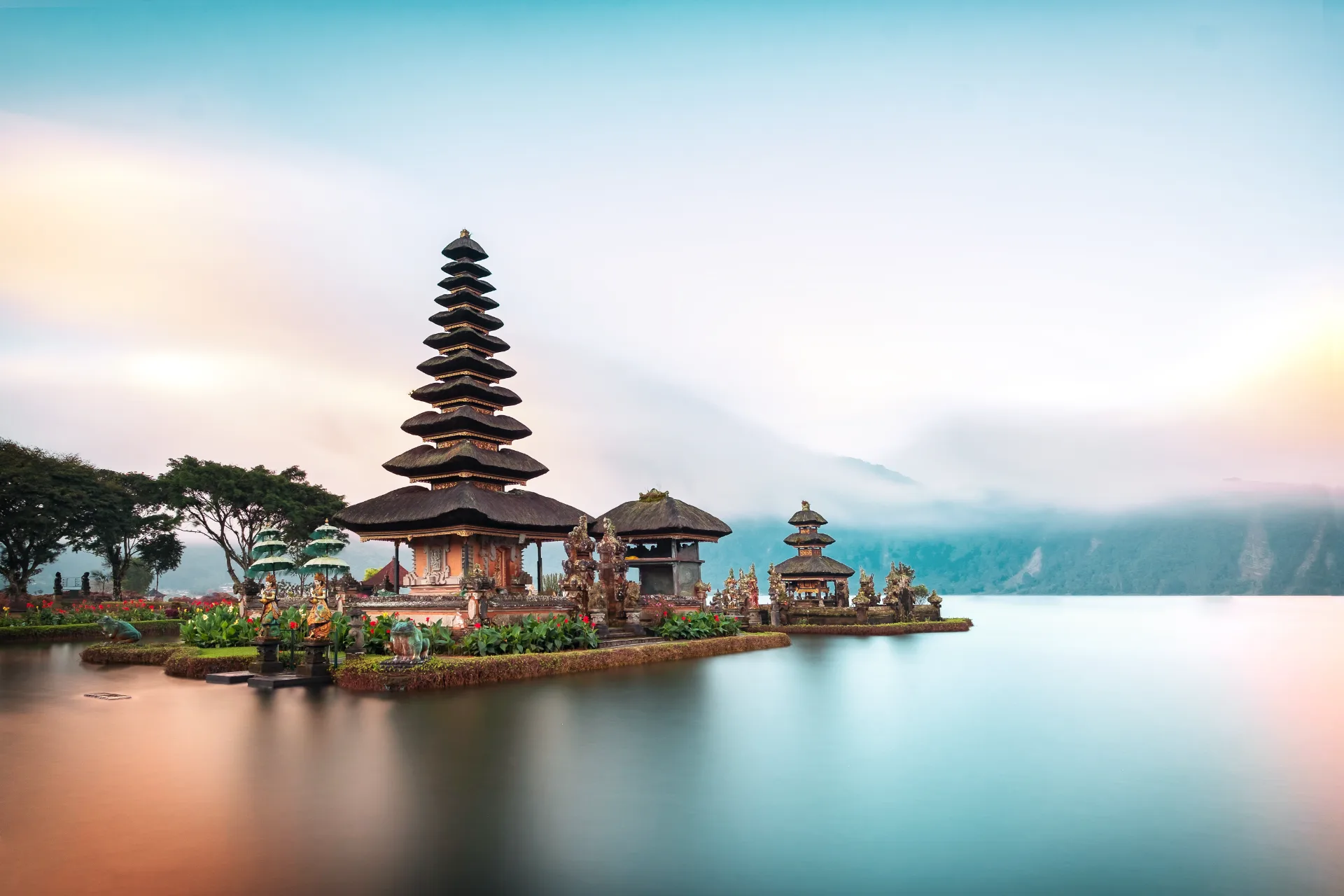
Ulun Danu Beratan Temple is one of Bali’s most iconic landmarks, famous for its seemingly floating shrine on the tranquil waters of Lake Beratan in Bedugul. Built in the 17th century to honor Dewi Danu, the Balinese goddess of lakes and water, the temple remains an active place of worship while welcoming visitors from around the world. The best time to visit is early morning when mist drifts across the lake, creating a magical atmosphere perfect for photography. Besides exploring the temple grounds, visitors can rent traditional boats on the lake and enjoy the cool mountain climate. As a sacred site, respectful clothing, quiet behavior, and proper etiquette are essential throughout your visit.
Table of Contents
Pura Ulun Danu Beratan Temple, the Floating Icon of Bali
There are countless temples across Bali, but very few have become as instantly recognizable as Ulun Danu Beratan Temple. If you’ve ever searched for images of Bali, chances are you’ve already seen its elegant multi-tiered shrine rising from the calm waters of Lake Beratan, surrounded by misty mountains.
As someone who grew up in Bali, I have visited this temple countless times over the years. Yet every visit feels different. Some mornings the lake is covered in a thick blanket of fog, making the temple appear to float between heaven and earth. On brighter days, the surrounding mountains reflect perfectly across the lake, creating one of the island’s most photogenic landscapes.
Unlike many tourist attractions that lose their charm after repeated visits, Ulun Danu Beratan continues to reveal new moods depending on the weather, the season, and even the time of day.
The History Behind Ulun Danu Beratan Temple
The history of Ulun Danu Beratan Temple dates back to the 17th century during the reign of the Mengwi Kingdom. The temple was established by King I Gusti Agung Putu and dedicated to Dewi Danu, the goddess of lakes, rivers, and freshwater.
For centuries, Lake Beratan has served as one of Bali’s most important water sources. Water flowing from this highland lake nourishes rice terraces across much of central Bali through the traditional Subak irrigation system, a UNESCO-recognized cultural landscape.
Because water is considered sacred in Balinese Hinduism, the temple became an important spiritual center where farmers prayed for abundant harvests and balanced rainfall. Even today, local communities regularly hold ceremonies here, making the temple a living place of worship rather than simply a historical monument.
Its spiritual role explains why visitors often encounter offerings, traditional ceremonies, or priests conducting rituals throughout the day.
Why Is It Called the Floating Temple?
One of the biggest misconceptions is that the temple actually floats.
In reality, the famous shrine known as Meru sits on a small natural land formation extending into Lake Beratan. During periods when the lake level rises, the surrounding water completely surrounds the temple, creating the illusion that it is floating.
Early morning fog enhances this illusion dramatically. As clouds drift across the lake and hide the shoreline, the temple seems suspended above the water.
This magical appearance has made Ulun Danu Beratan Temple one of Bali’s most photographed destinations and a symbol frequently featured on postcards, travel magazines, and tourism campaigns.
The Best Time to Visit Ulun Danu Beratan Temple
Timing can completely transform your experience.
If your goal is photography, arriving early is highly recommended. Between 7:00 AM and 9:00 AM, the air remains cool, the crowds are minimal, and gentle mist often rolls across Lake Beratan.
The fog usually appears after cool nights, especially during Bali’s dry season from June to August. On these mornings, sunlight gradually filters through the clouds, creating soft natural lighting that photographers love.
Later in the day, especially after 10:00 AM, tour buses begin arriving from Ubud, Kuta, Seminyak, and Nusa Dua. The temple gardens become much busier, making it harder to capture unobstructed photographs.
Rainy season mornings can also be surprisingly beautiful. While occasional showers occur, dramatic clouds often create a more atmospheric backdrop than clear blue skies.
Photography Tips for Capturing the Temple
One reason photographers return repeatedly is because the scenery changes by the minute.
Morning mist creates a dreamy atmosphere with soft contrasts that work beautifully for portraits and landscape photography alike. Bringing a wide-angle lens allows you to capture both the temple and the surrounding volcanic mountains.
If you’re using a smartphone, switch to HDR mode during sunrise to preserve details in both the bright sky and the darker temple structures.
Patience is often rewarded. Sometimes the mist completely hides the temple for several minutes before slowly revealing it again, creating unforgettable moments that can’t be planned.
If possible, stay for at least two hours rather than rushing through your visit.
Renting a Boat on Lake Beratan
Many visitors overlook one of the most enjoyable experiences available at Ulun Danu Beratan Temple: exploring Lake Beratan by boat.
Several boat operators offer traditional wooden boats as well as motorboats departing from designated docks near the temple complex.
A short ride across the lake provides perspectives impossible to capture from land. Looking back toward the temple, you’ll see the iconic Meru framed by mountains and forests, giving a completely different appreciation of its setting.
On calm mornings, the lake resembles a mirror, producing stunning reflections that photographers often seek.
Boat rides are weather dependent. During periods of heavy rain or strong winds, operators may temporarily suspend services for safety.
Before renting a boat, always confirm the duration, route, and pricing directly with the operator.
More Than Just a Temple Complex
Many first-time visitors are surprised by how spacious the grounds actually are.
Beautiful landscaped gardens surround the temple, filled with colorful flowers, sculptures, and walking paths overlooking the lake. Families often spend hours enjoying the peaceful environment.
Nearby, visitors can also find small cafés serving warm Balinese coffee, local snacks, and Indonesian dishes while enjoying panoramic lake views.
The cool mountain climate makes this area noticeably different from southern Bali. Temperatures frequently range between 18°C and 24°C, so bringing a light jacket is advisable, especially during early mornings.
Visitor Etiquette at Ulun Danu Beratan Temple
Although Ulun Danu Beratan Temple welcomes tourists, it remains an active religious site where ceremonies are regularly performed.
Respectful behavior is essential throughout your visit.
Visitors should wear modest clothing that covers shoulders and knees. While casual attire is generally acceptable within the public areas, revealing clothing should be avoided.
If a ceremony is taking place, observe quietly from a respectful distance without interrupting worshippers or blocking their pathways.
Avoid climbing temple structures or stepping into restricted sacred areas marked for religious use only.
Photography is welcome throughout most of the complex, but never use drones without permission, and always avoid intrusive close-up photography during prayers.
Offerings placed on the ground should never be stepped on or moved, even if they appear small.
Keeping voices low helps preserve the peaceful atmosphere appreciated by both worshippers and fellow travelers.
Nearby Attractions Worth Combining
Because Ulun Danu Beratan Temple sits in Bali’s Bedugul highlands, it’s easy to combine your visit with several nearby attractions in a single day.
The colorful Bedugul Traditional Market offers fresh strawberries, tropical fruits, spices, flowers, and local souvenirs. The cool climate makes strawberries particularly famous in this region.
Just a short drive away, the Bali Botanic Garden provides expansive walking trails, towering tropical trees, and one of Indonesia’s largest botanical collections.
Coffee lovers can also stop at nearby plantations serving locally grown Arabica coffee cultivated in Bali’s mountain regions.
Together, these destinations create a relaxing escape from Bali’s beaches while showcasing the island’s cooler highland landscapes.
Practical Travel Tips
The journey from Ubud generally takes around one and a half hours, while travelers staying in Seminyak, Kuta, or Canggu should expect approximately two hours depending on traffic. Hiring a private driver remains the most convenient transportation option, although organized day tours are widely available.
Parking is available near the entrance, and facilities include clean restrooms, restaurants, souvenir shops, and spacious walking paths suitable for families. Because temperatures are significantly cooler than in southern Bali, comfortable walking shoes and a light jacket will make your visit much more enjoyable.
Why Ulun Danu Beratan Temple Continues to Inspire
There is a reason why Ulun Danu Beratan Temple has become one of Bali’s defining landmarks. It is not simply because of its beauty, but because it embodies the harmony between nature, spirituality, and daily life that defines Balinese culture.
The temple reminds visitors that water is more than a resource. It is a sacred gift sustaining communities, agriculture, and tradition across the island. Watching morning mist drift across Lake Beratan while local devotees quietly present offerings creates an experience that feels both timeless and deeply authentic.
Whether you come to photograph the famous floating shrine, enjoy a peaceful boat ride, or learn about Bali’s living Hindu traditions, Ulun Danu Beratan Temple offers far more than a picturesque backdrop. It is a place where history, faith, and nature meet in remarkable balance, leaving many travelers with memories that linger long after they have left Bali’s cool mountain highlands.