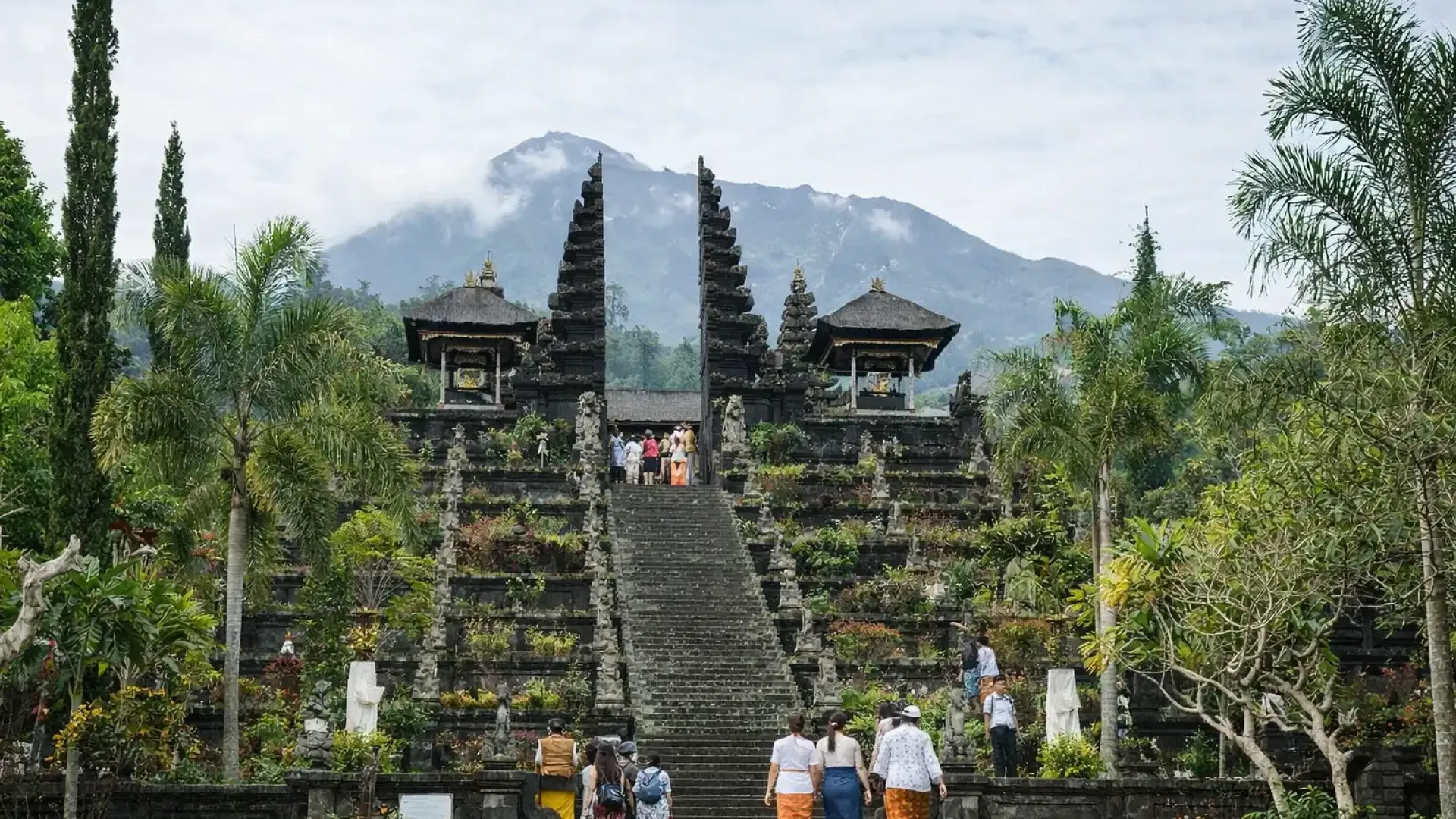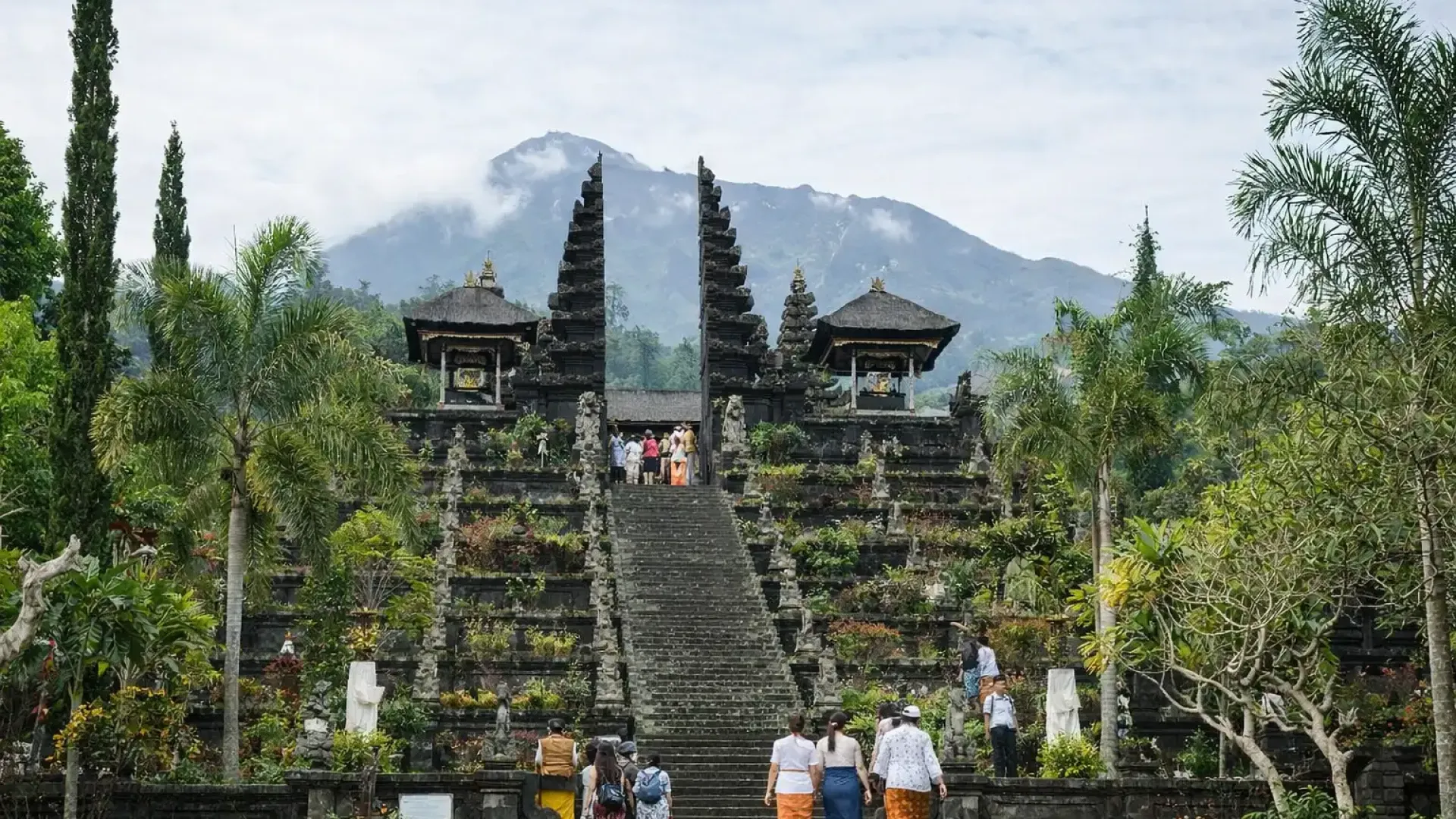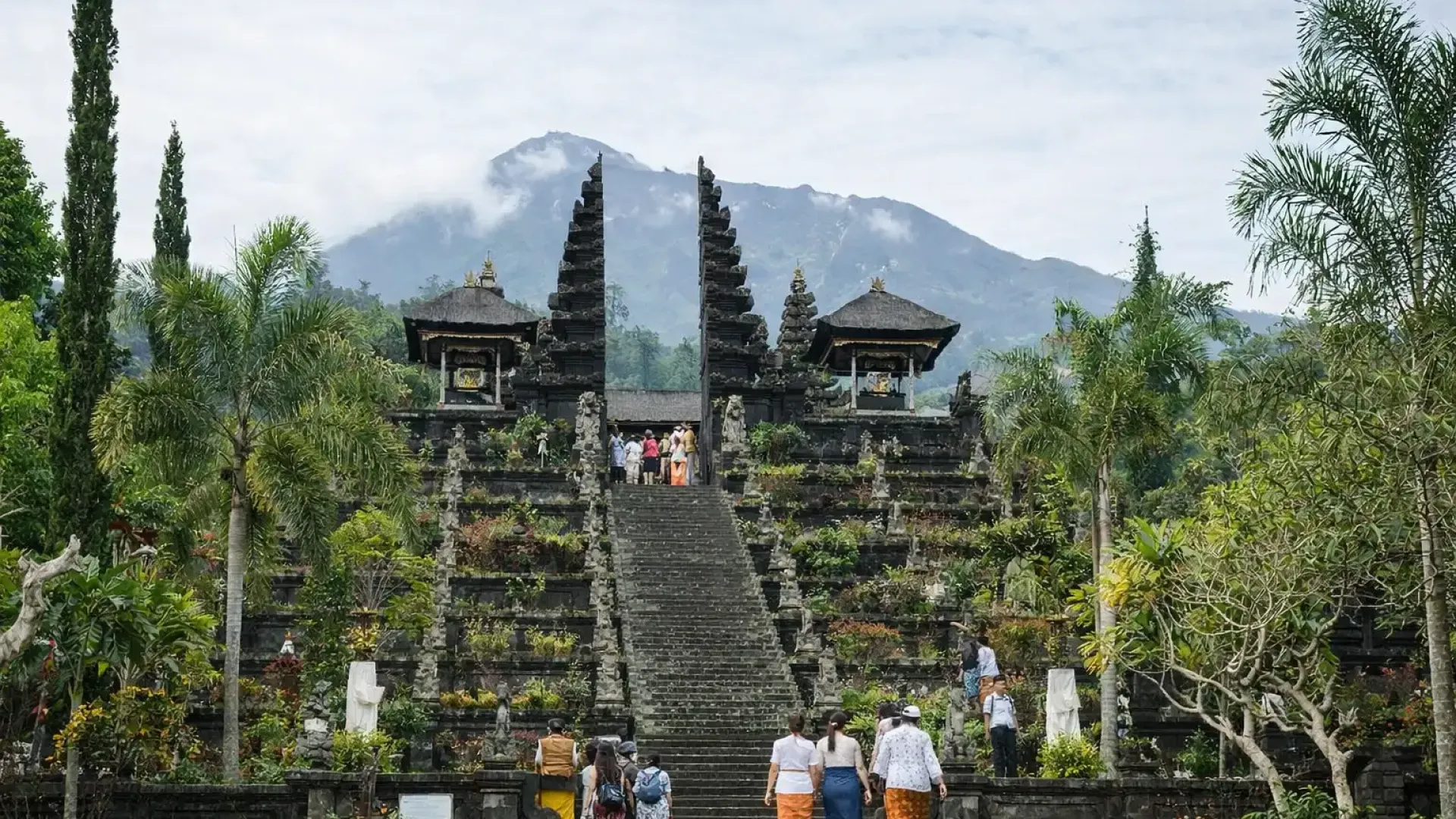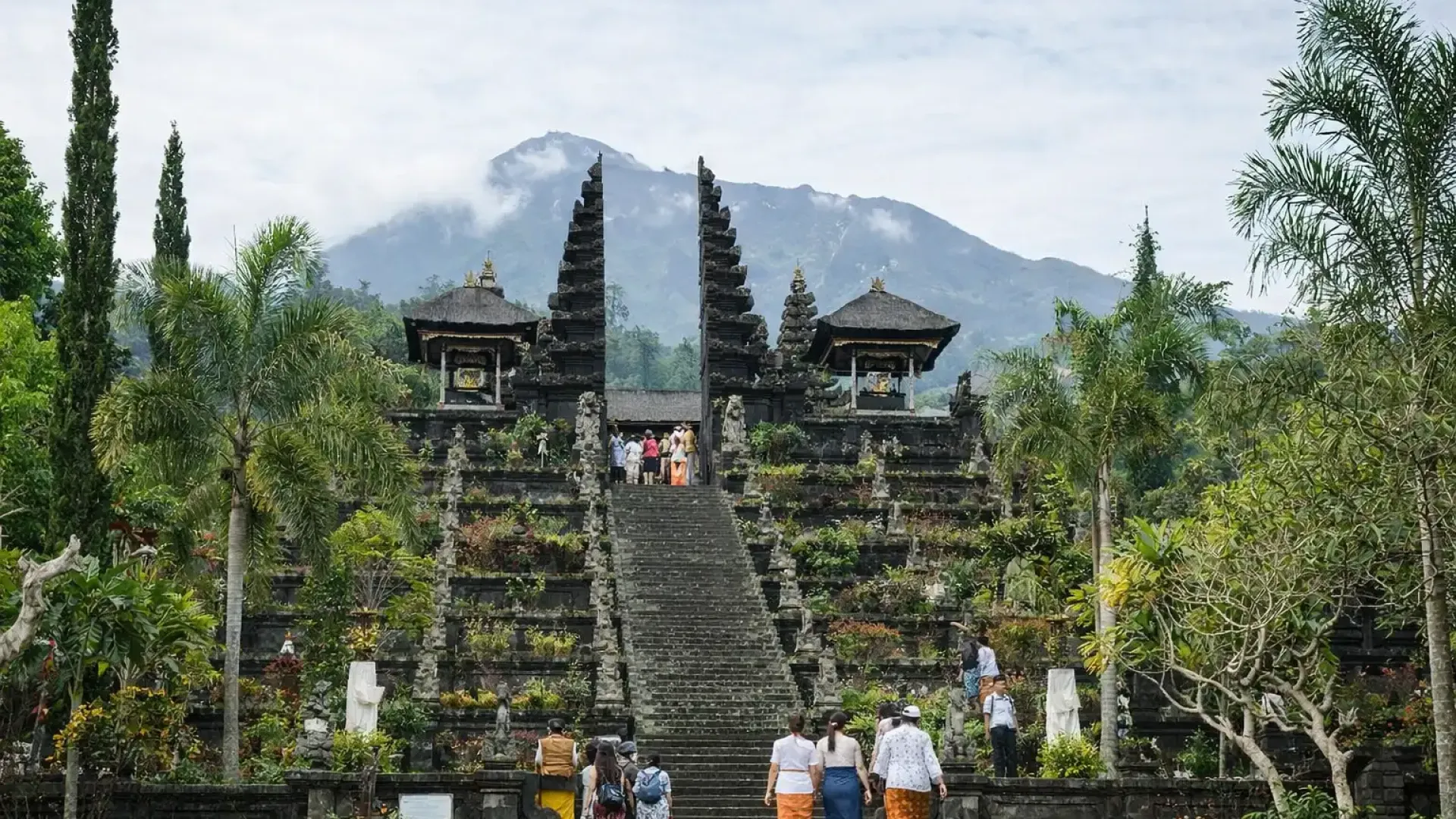
Besakih Temple is more than Bali’s most sacred site. It is also one of the most visually dramatic temple complexes on the island. With Mount Agung rising majestically behind layered shrines, ancient staircases, and stone gates, the Bali Mother Temple offers photo opportunities that feel cinematic rather than staged.
As a Balinese local, I often tell travelers this: Besakih photographs best when you slow down. The beauty here is not just symmetry, but scale, silence, and sacred space.
This guide highlights the top 10 Instagrammable spots at Pura Besakih, plus tips on timing, angles, and respectful photography.
1. The Main Split Gate with Mount Agung
This is the iconic shot everyone dreams of.
- Best taken in the morning when Mount Agung is clear
- Stand slightly off-center for depth
- Use wide-angle for dramatic scale
📍 Near the upper temple complex
👉 For spiritual context, read Why Pura Besakih is the Spiritual Heart of Bali
2. Panoramic View from the Upper Courtyard
From higher terraces, Besakih opens into vast stone courtyards with layered temples stretching downward.
- Ideal for drone-style composition (without flying drones)
- Showcases the full scale of the complex
- Early morning mist adds atmosphere
3. The Long Sacred Staircase
The stone staircases leading upward symbolize spiritual ascent.
- Shoot from below for leading lines
- Include people in sarongs for scale
- Late afternoon light works best
4. Penataran Agung Temple Axis
The main axis of Pura Besakih creates natural symmetry.
- Perfect for minimalist compositions
- Vertical shots work best here
- Keep people minimal to preserve sacred mood
5. Side Gates and Stone Guardians
Often overlooked, side gates offer quieter, more intimate frames.
- Ideal if main areas are crowded
- Focus on textures and carvings
- Black-and-white edits work beautifully
👉 Want fewer people in your shots? See How to Visit Pura Besakih Without the Crowds
6. Mount Agung Framed Between Shrines
This is a photographer’s favorite moment.
- Wait for clouds to part
- Use temple roofs to frame the volcano
- Golden hour creates soft contrast
📍 Look for natural gaps between temples
⛰️ Featuring Mount Agung
7. Ceremonial Moments (From a Distance)
Balinese ceremonies add life and meaning to photos.
- Capture movement, not faces
- Respect boundaries
- Never interrupt rituals
👉 For deeper cultural insight, read The Most Sacred Ceremonies at Pura Besakih
8. Sarong Details & Textures
Sometimes the story is in the details.
- Offerings on stone steps
- Flowing sarongs against dark stone
- Incense smoke drifting through light
These shots feel authentic and timeless.
9. Sunset Silhouettes
Late afternoon brings dramatic contrast.
- Temple silhouettes against the sky
- Mount Agung fading into shadow
- Ideal for moody, editorial edits
👉 Pair this with itinerary planning in Besakih Temple Day Trip Guide
10. Wide Landscape from the Outer Temple Area
Before leaving, turn around.
- Capture the entire complex from afar
- Show its relationship with the mountain
- Best for storytelling captions
This shot reminds viewers that Besakih is not a single temple, but a spiritual landscape.
Best Time for Photography at Besakih Temple
Best hours:
- 08:00–10:00 AM (clear skies, fewer crowds)
- 16:00–17:30 PM (soft light, fewer tour buses)
Avoid midday harsh sunlight unless shooting architecture details.
What You Need for a Photo-Friendly Visit
- Sarong and sash (included with ticket)
- Comfortable shoes for stairs
- Water and sun protection
- Polite firmness with local guides regarding tips
Facilities like shuttle buses and buggies make carrying gear easier, especially from the parking area.
Conclusion: Beauty with Respect
Besakih Temple rewards photographers who approach with patience and respect. The most powerful images here are not rushed snapshots, but moments where architecture, mountain, and belief align naturally.