While the southwestern beach towns of Seminyak, Canggu, and Uluwatu dominate modern travel itineraries with beach clubs and sunset cocktail lounges, travelers seeking the profound historical heartbeat of Bali must look eastward to Semarapura, the compact capital of Klungkung Regency. For more than two centuries, this modest town was the political and spiritual nucleus of the entire island—the supreme court where the royal Dewa Agung presided as paramount monarch over all Balinese kings.
Semarapura is an ideal destination for a walkable cultural heritage day trip. Within a compact one-kilometer perimeter in the city center, travelers can uncover epic colonial battles, explore royal palace ruins, marvel at rare archaeological antiquities, and savor fiery traditional street food found nowhere else on the island. This curated walking tour guides you step-by-step through the monuments, museums, royal pavilions, and culinary institutions of historic Klungkung.
1. The Historic Milestone: The Puputan Klungkung of 1908
To understand the soul of Semarapura, one must confront the profound historical memory of April 28, 1908. By the early 20th century, the Royal Netherlands East Indies Army had subjugated northern Bali, Lombok, and Badung. The last independent sovereign refusing colonial vassalage was the Dewa Agung of Klungkung, Dewa Agung Jambe II.
When Dutch naval gunboats and artillery bombarded Semarapura, the royal court chose not surrender, but Puputan—the ritual fight-to-the-death sacrifice to preserve royal honor and spiritual purity. Dressed in immaculate white ceremonial robes, scented with sandalwood, and armed with heirloom gold-hilted kris daggers, the King, his queens, princes, noble courtiers, and hundreds of loyal subjects marched directly out of the palace gates into the barrage of Dutch rifles and machine guns. The slaughter brought an end to over five centuries of unbroken royal Gelgel-Klungkung dynasty rule. Today, Semarapura honors this sacrifice not as a defeat, but as the supreme declaration of Balinese sovereignty and courage.
2. Step-by-Step Walking Itinerary (Half-Day Route)
This compact 4-hour walking circuit covers approximately 2.5 kilometers of easy flat walking along paved sidewalks and tree-lined town squares.
| Time Slot | Destination / Stop | Highlights & Experiences | Approx. Duration |
|---|---|---|---|
| 08:30 - 09:30 AM | Monumen Puputan Klungkung | 28-meter hero monument, historical dioramas, panoramic city view gallery. | 60 mins |
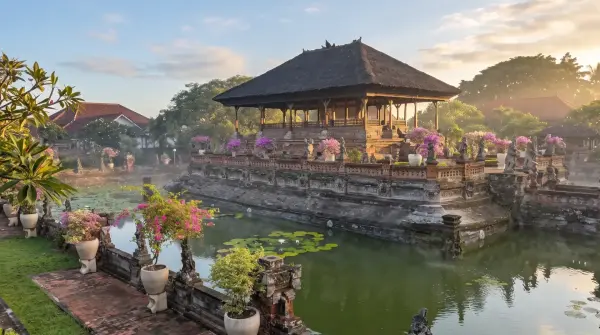
| 09:30 - 11:00 AM | Kerta Gosa & Bale Kambang | Royal hall of justice, moated floating pavilion, classical Kamasan ceiling murals. | 90 mins |
| 11:00 - 11:45 AM | Museum Semarajaya | Dutch-colonial school building, royal heirlooms, prehistoric sarcophagi, Emilio Ambron art. | 45 mins |
| 11:45 - 12:45 PM | Pasar Seni Semarapura | Traditional market, Balinese Endek ikat textiles, ceremonial brassware, fresh tropical fruit. | 60 mins |
| 12:45 - 01:45 PM | Authentic Culinary Lunch | Feast on fiery Serombotan Klungkung and authentic regional suckling pork or satay. | 60 mins |
3. Stop 1: Monumen Puputan Klungkung
Located in the central town square (*Puputan Square*), this monumental stone structure rises 28 meters into the tropical sky, designed in classical Balinese temple-tower architecture (*Lingga-Yoni*). The monument is divided into three vertical realms corresponding to Balinese tripartite cosmology:
- The Base (Bhur Loka): Features detailed carved dioramas illustrating the events leading up to the 1908 battle, from the initial dispute over opium ship customs to the final confrontation on the town square.
- The Middle Chamber (Bwah Loka): A quiet memorial sanctum housing historical text inscriptions and portraits of national heroes.
- The Summit Gallery (Swah Loka): Visitors can climb the interior spiraling staircase to an open-air viewing gallery offering 360-degree views across the red-tiled roofs of Semarapura toward Mount Agung in the north.
4. Stop 2 & 3: Kerta Gosa and Museum Semarajaya
Directly across the street from the monument lies the royal judicial complex of Kerta Gosa and Taman Gili. Take your time admiring the painted ceilings of Bale Kerta Gosa and the floating Bale Kambang pavilion before crossing into the adjacent Museum Semarajaya.
Housed in a charming Dutch-colonial administrative school built in the 1920s, Museum Semarajaya displays a fascinating collection of Balinese and colonial heritage:
- Royal Regalia: Gilded ceremonial palanquins (*joli*), antique ceremonial spears, and sacred kris daggers forged by the royal master metalsmiths (*Empu*).
- Prehistoric Antiquities: Megalithic stone sarcophagi and burial urns unearthed in nearby Klungkung villages, dating back to 500 BCE.
- The Emilio Ambron Gallery: A dedicated wing displaying vibrant oil paintings and sketches by Italian artist Emilio Ambron, who lived in Bali between 1938 and 1940 capturing royal ceremonies before World War II.
- Salt and Textile Artifacts: Exhibitions detailing the historical importance of Kusamba salt making and traditional weaving guilds.
5. Stop 4: Pasar Seni Semarapura (Traditional Art & Textile Market)
Just a 3-minute stroll eastward from Kerta Gosa brings you to Pasar Seni Semarapura (Klungkung Traditional Art Market). Unlike the tourist markets in Ubud or Kuta, this is a living, working local market where Balinese families from across the regency shop for ceremonial necessities.
Semarapura is the historical epicenter for Tenun Ikat Endek—the traditional Balinese handwoven tie-dye textile. Inside the upper floors of the market, dozens of textile stalls showcase intricate silk and cotton Endek fabrics, royal gold-thread *Songket* brocades, and ceremonial sash belts (*selendang*). Buying textiles here directly from regional merchants ensures authentic artisan quality at wholesale prices without middleman markups.
6. Culinary Highlights: Savoring Authentic Klungkung Gastronomy
No heritage exploration is complete without tasting the distinctive culinary specialties of Klungkung. Semarapura cuisine is famous for bold, spicy, and earthy flavor profiles:
Serombotan Klungkung (The Signature Dish)
Klungkung’s most famous gastronomic export is Serombotan—a nutrient-rich vegetable dish consisting of blanched water spinach (*kangkung*), long beans (*kacang panjang*), round sprouts, and small round eggplants. What elevates the dish into legendary status is its dual dressing:
- Sambal Nyuh: Roasted, finely shredded coconut tossed with grilled chili, garlic, shrimp paste, and kaffir lime.
- Bumbu Koples: A thin, fiery, and tangy liquid sauce made from ground fried peanuts, fermented shrimp paste (*terasi*), garlic, tamarind (*asam jawa*), and bird's eye chilies.
Served with crispy fried crispy soybeans and warm rice or tapioca cakes, it is an explosion of spicy, tangy, and nutty textures. Try it at Warung Serombotan Ibu Komang near the market.
Babi Guling Klungkung
For meat lovers, Klungkung-style suckling pig (*Babi Guling*) differs markedly from the sweet, turmeric-heavy varieties found in Gianyar. It features an intensely peppery, lemongrass-heavy Base Genep spice paste, served with crispy puffed pork skin and spicy blood sausage (*urutan*). Babi Guling Klungkung Asli near Puputan Square is a renowned institution.
7. Practical Travel Tips for Semarapura
- Getting There: Semarapura is located approximately 45 km northeast of Ngurah Rai International Airport (about 60–75 minutes via the Prof. Ida Bagus Mantra Coastal Bypass road).
- Combined Ticket: A single ticket (IDR 50,000 for international adults) covers entrance to Kerta Gosa, Bale Kambang, and Museum Semarajaya. Puputan Monument requires a modest additional ticket of IDR 25,000.
- Walking Comfort: Wear light breathable cotton clothing, comfortable walking shoes, and a hat. The streets around the central square have wide, paved pedestrian sidewalks.
- Next Stop: After lunch, head 10 minutes east to the scenic water spillway of Tukad Unda Dam or visit the classical art studios in Kamasan Village.
Frequently Asked Questions About Klungkung Walking Tour
Is Semarapura safe for solo walking travelers?
Semarapura is exceptionally safe, peaceful, and pedestrian-friendly. Violent crime is virtually non-existent, and local residents are warmly welcoming toward independent cultural travelers.
Can I negotiate prices at Pasar Seni Semarapura?
Yes, respectful bargaining is standard practice when purchasing non-food items like Endek textiles, songket, and ceremonial handicrafts. Always negotiate with a warm smile, aiming for a fair price that respects the weeks of labor required to hand-weave authentic Balinese fabrics.
Walking the streets of Semarapura connects you intimately with the tragic heroism, artistic genius, and culinary heritage that defined the royal soul of pre-colonial Bali.