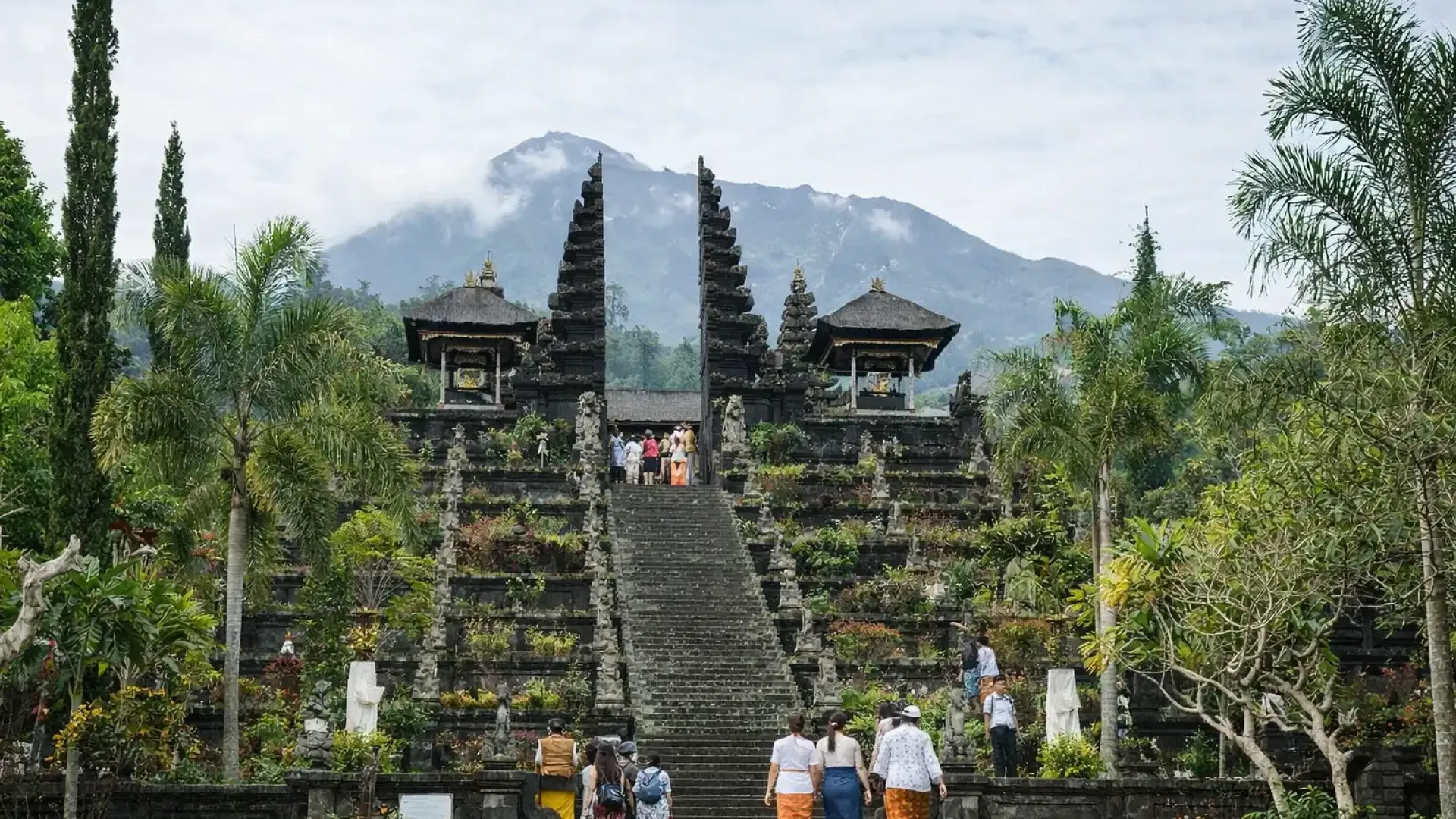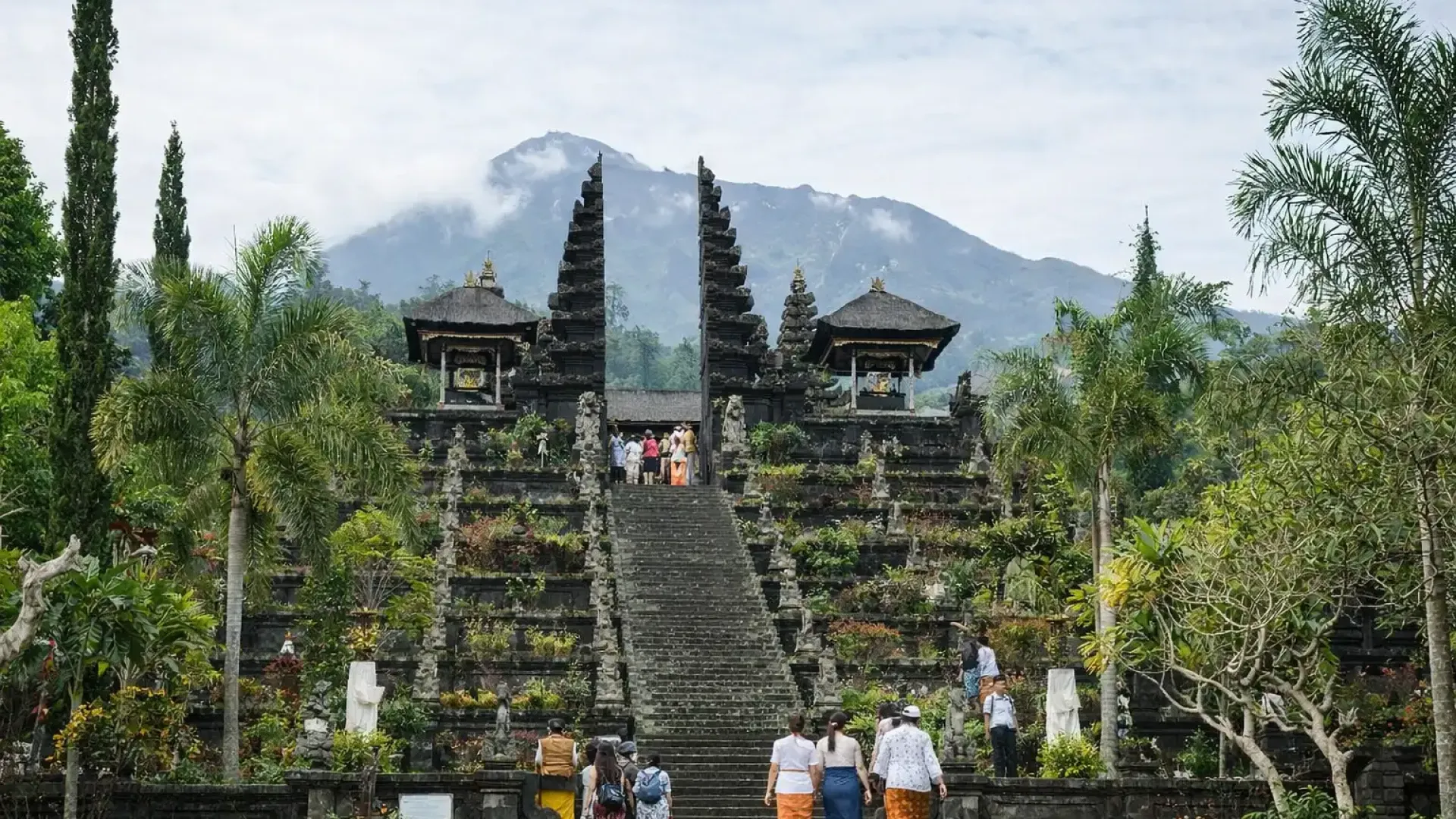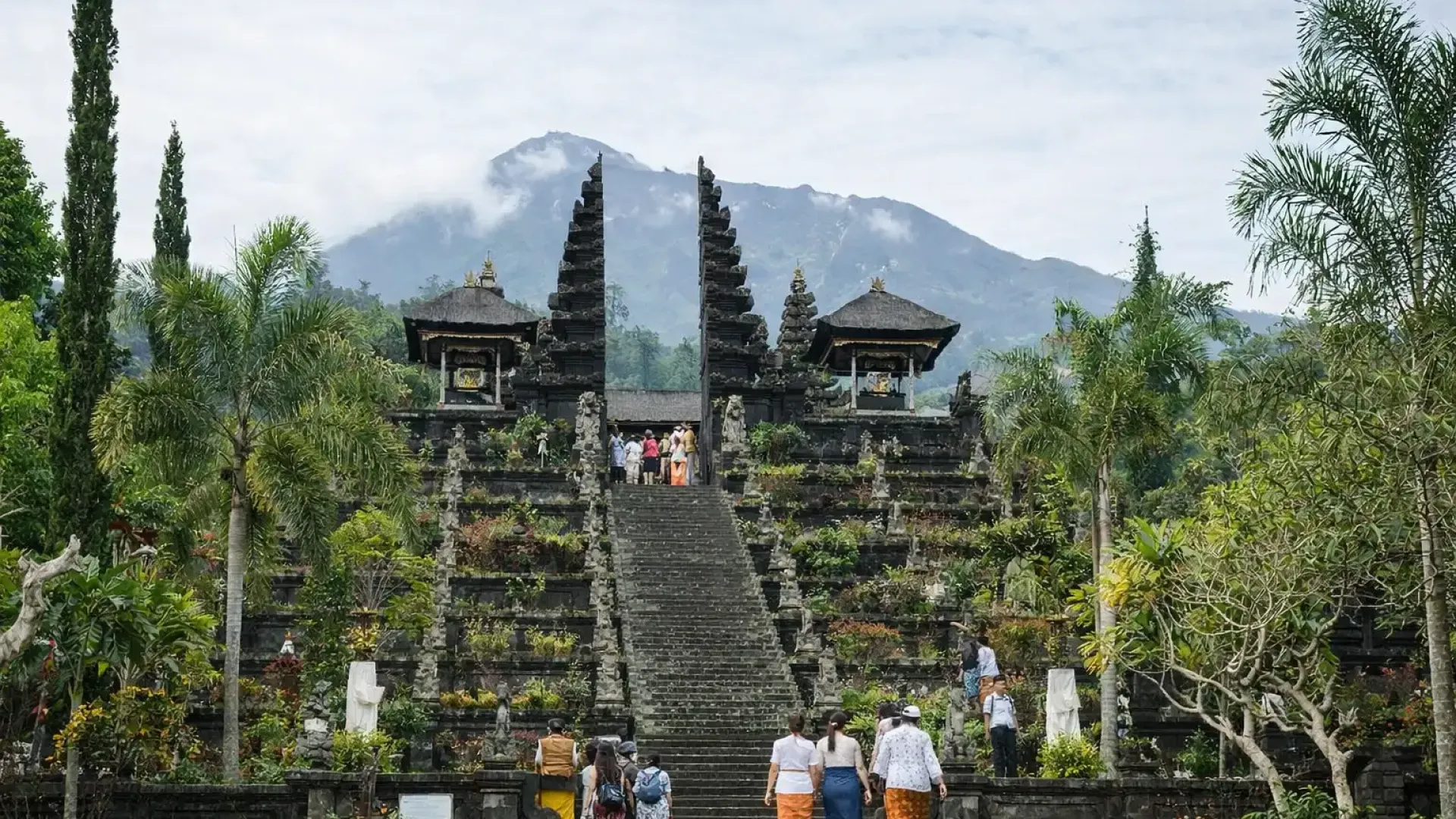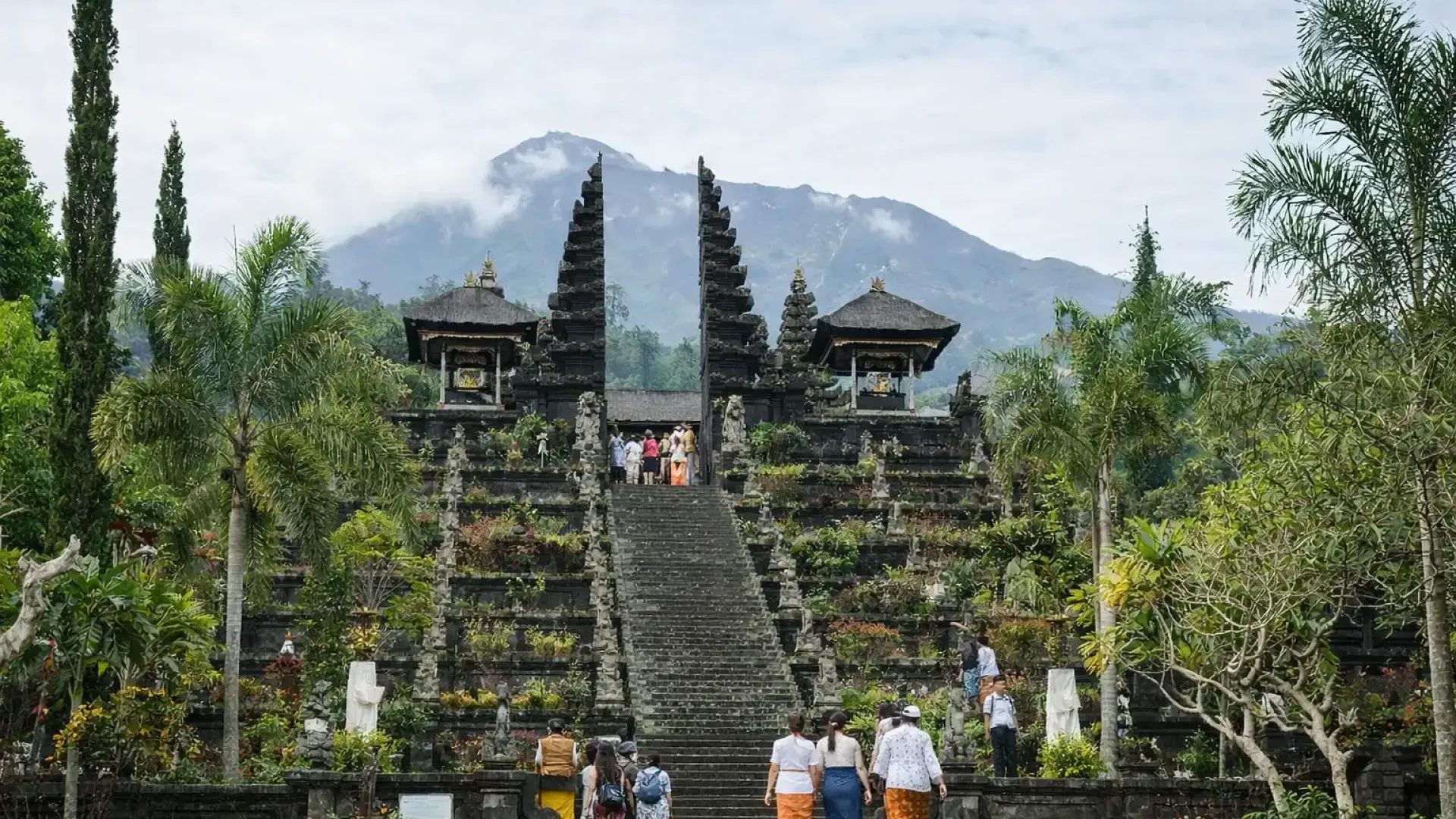
Long before Bali became a global travel destination, Besakih Temple already stood as the island’s spiritual anchor. Known as the Bali Mother Temple, Besakih is not a single monument frozen in time, but a living chronicle of Balinese faith shaped by centuries of belief, ritual, and resilience.
To walk through Besakih is to walk through Bali’s history itself.
The Ancient Origins of Besakih Temple
Pura Besakih is believed to predate most Hindu temples in Bali. Archaeological and spiritual records suggest the site was already sacred long before Hinduism arrived from Java and India.
Early communities worshipped here because:
- The location aligned with natural spiritual forces
- The mountain was seen as divine
- High ground symbolized closeness to the gods
When Hindu influence arrived, Besakih evolved rather than disappeared, absorbing new philosophy while preserving local reverence.
Mount Agung: The Sacred Backbone of Bali
Everything about Besakih is inseparable from Mount Agung.
In Balinese cosmology:
- Mount Agung represents Mount Meru, the center of the universe
- Gods and ancestors are believed to reside here
- Temples orient themselves toward the mountain
This is why Besakih sits precisely on its slopes. The mountain is not a backdrop. It is the spiritual source.
Evolution Through Kingdoms and Dynasties
As Balinese kingdoms rose and fell, Besakih expanded.
Key historical phases include:
- Early megalithic worship
- Hindu-Javanese influence during Majapahit era
- Expansion of temple compounds and shrines
- Establishment of Penataran Agung as the central temple
Rather than being rebuilt as a single structure, Besakih grew organically, resulting in today’s vast complex of more than 80 temples.
Surviving Eruptions and Natural Disasters
One of Besakih’s most remarkable historical moments came during Mount Agung’s major eruption in 1963.
- Lava flows narrowly missed the main temple
- The event was seen as spiritual protection
- Besakih became a symbol of divine balance
For many Balinese, this reinforced the belief that Besakih is not just sacred by tradition, but by lived experience.
A Temple That Lives With Its People
Unlike historical monuments elsewhere, Besakih never stopped functioning.
Today:
- Ceremonies follow ancient calendars
- Families return for generational rituals
- Temples are renewed, not replaced
This continuity is what keeps Besakih relevant. It adapts without losing its soul.
To understand current rituals, explore The Most Sacred Ceremonies at Pura Besakih.
Visiting with Historical Awareness
Knowing the history changes how you experience the site.
You begin to notice:
- Why temples are layered
- Why certain areas are restricted
- Why silence is respected
Modern facilities like shuttle buses and sarong-inclusive tickets help visitors move respectfully without disturbing this historical flow.
What You Need for a Meaningful Visit
- Sarong and sash (included in ticket)
- Willingness to walk and observe
- Respect for ceremonies and signs
Local guides can connect historical facts with living traditions. Be clear and polite regarding tips.
For practical planning, see Complete Breakdown of Besakih Temple Entrance Fees & Facilities.
Conclusion
Besakih Temple is not important because it is old. It is important because it has never stopped being relevant. Its history is still unfolding, carried by prayer, ritual, and belief beneath Mount Agung.