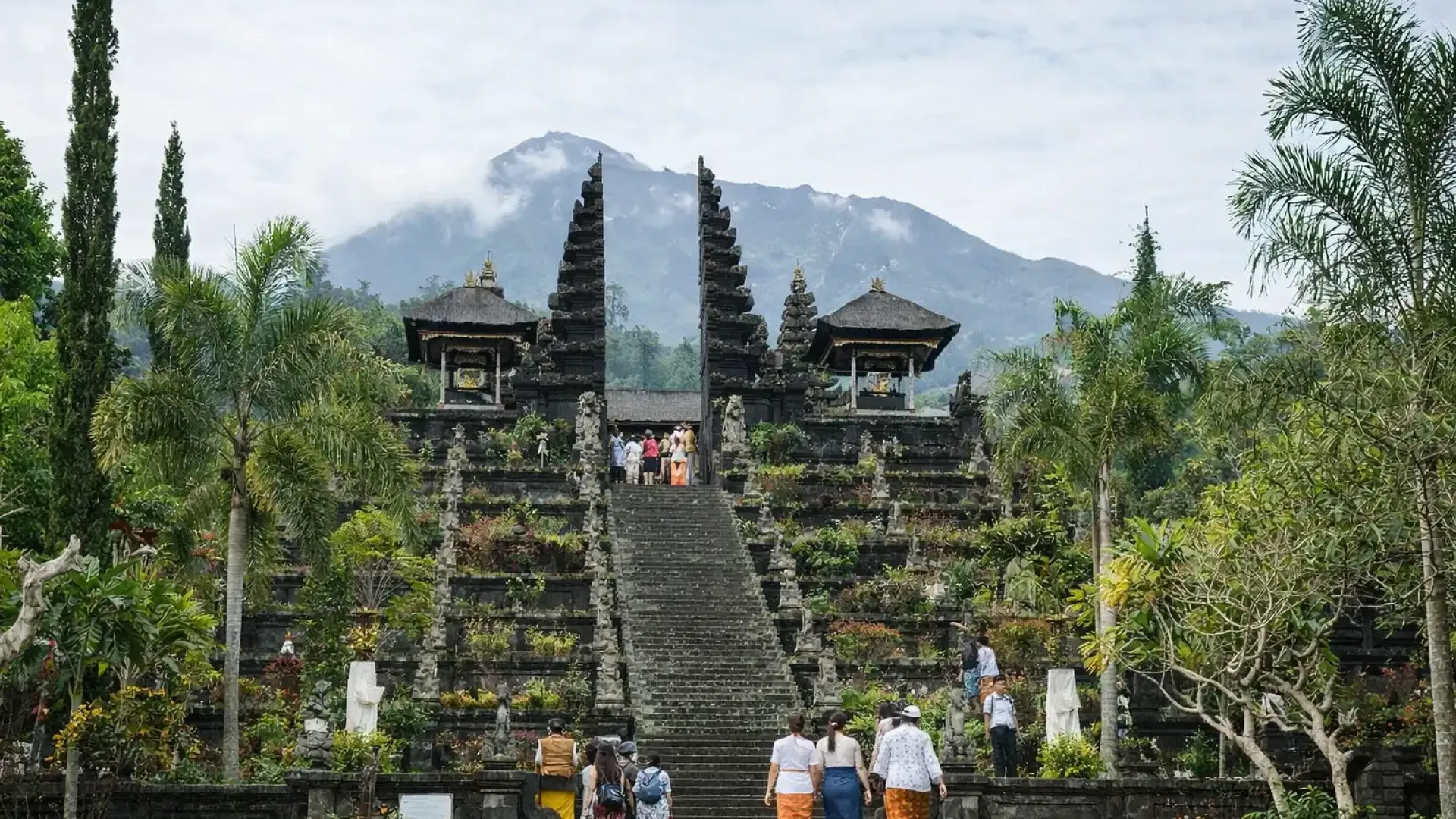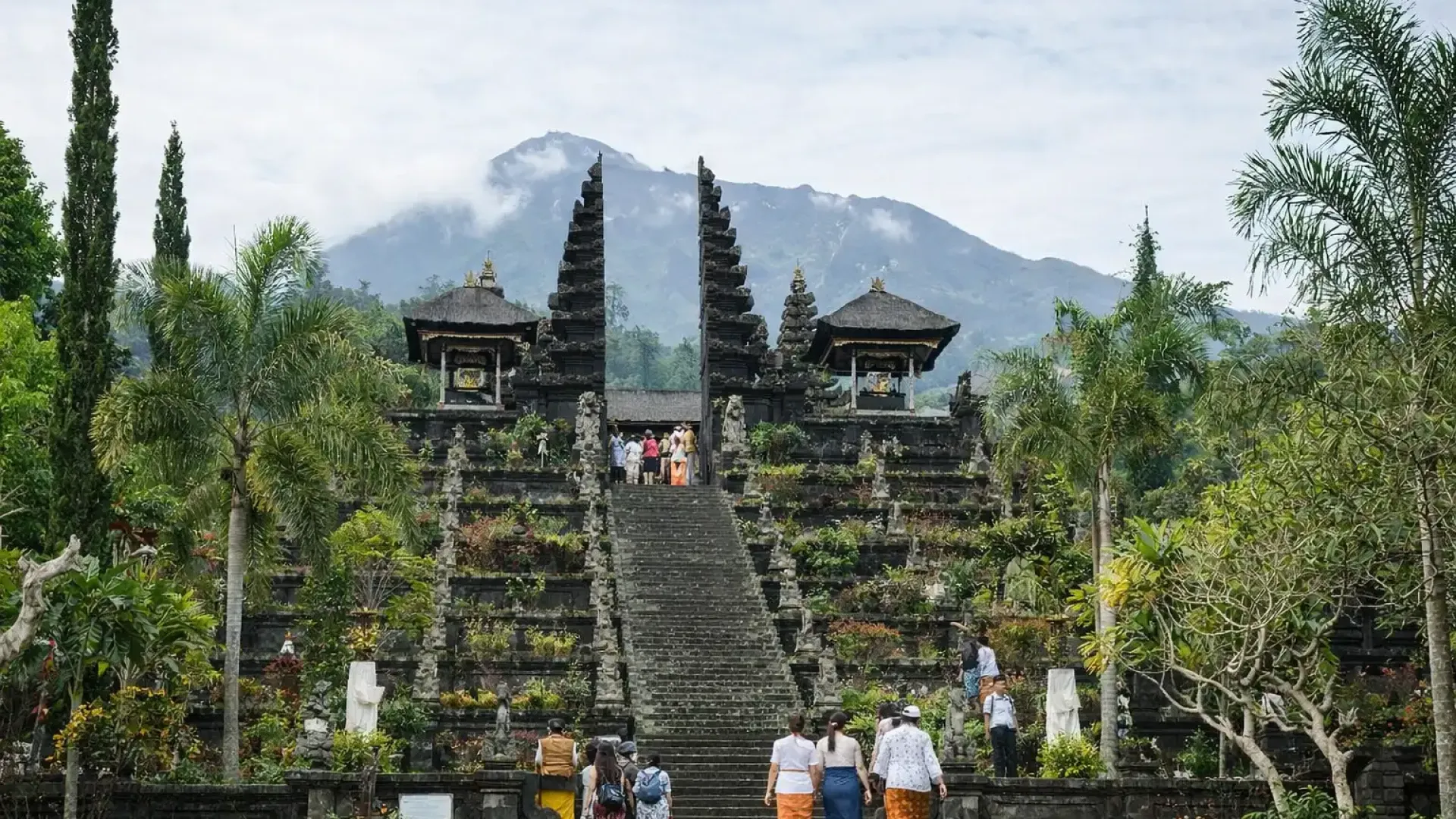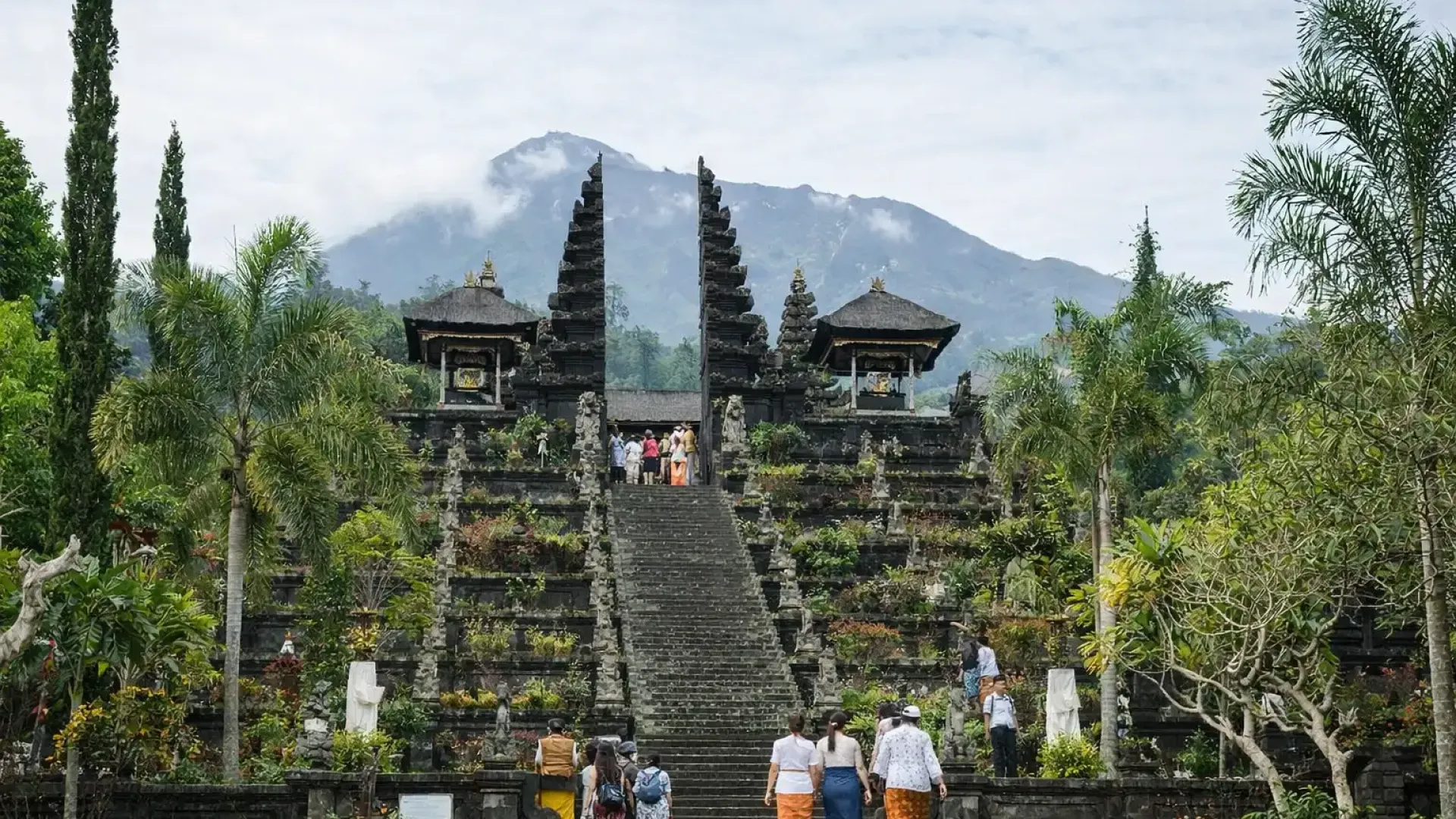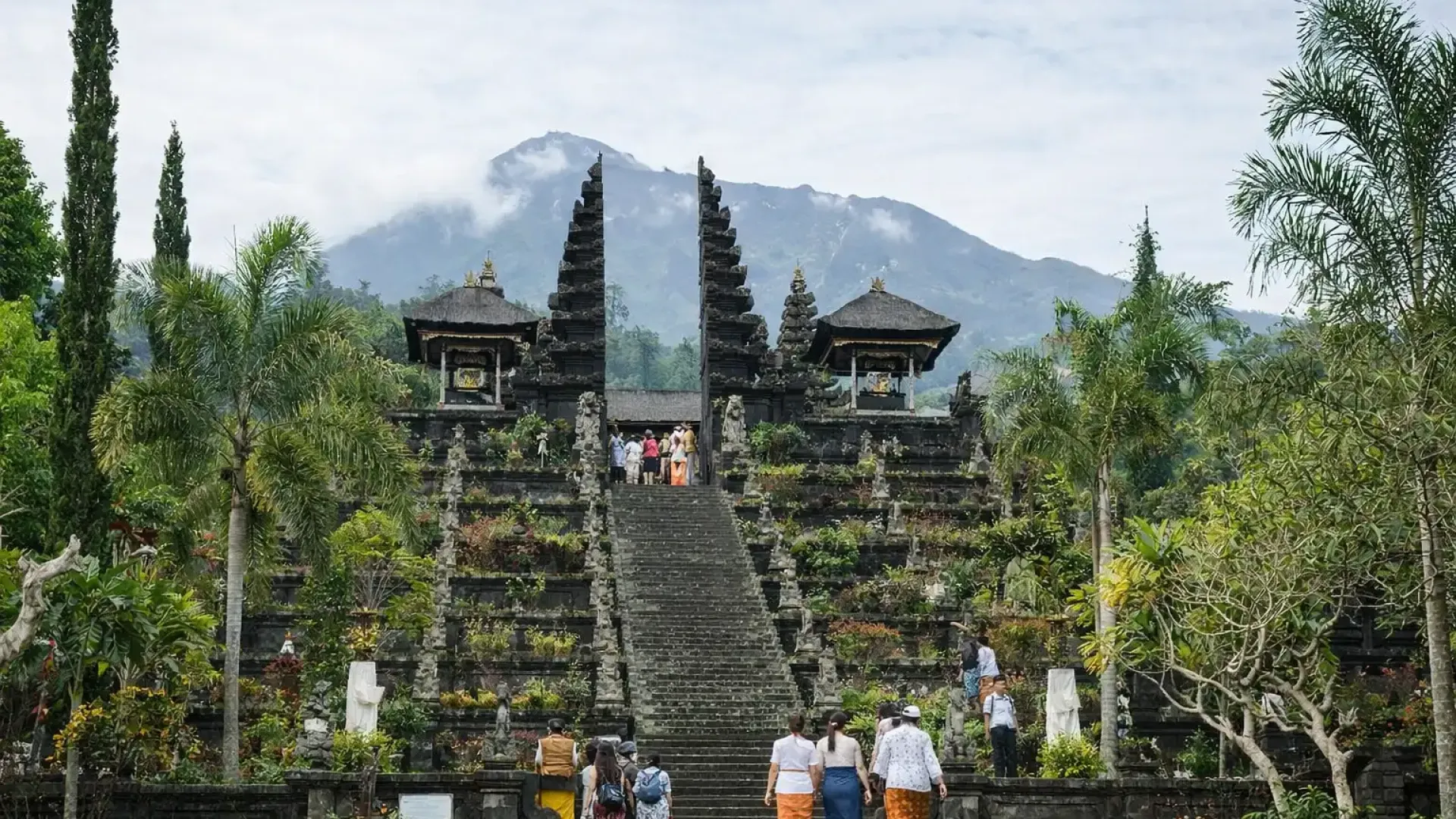
To understand Besakih Temple, you must understand its ceremonies. As the Bali Mother Temple, Besakih is not only a place of prayer but the ceremonial heart of the island. Rituals held here are not symbolic performances for visitors. They are living expressions of devotion that connect communities, ancestors, and the gods.
For travelers, witnessing these ceremonies offers a rare and meaningful glimpse into Bali’s spiritual rhythm.
Why Ceremonies at Besakih Are Different
Pura Besakih hosts ceremonies that affect the entire island.
What makes them unique:
- Participation from villages across Bali
- Scale far larger than local temples
- Alignment with Mount Agung and sacred calendars
Ceremonies here are considered spiritually central, not regional.
Odalan: Temple Anniversary Ceremony
The most important and frequent ceremony is Odalan, celebrating the temple’s anniversary based on the Balinese Pawukon calendar.
What you will see:
- Processions of devotees in white
- Towering offerings carried uphill
- Gamelan music and chanting
Odalan at Besakih can last several days and transforms the entire complex into a living ritual landscape.
Eka Dasa Rudra: The Grand Purification Ceremony
This is one of the rarest and most powerful ceremonies held at Besakih.
Meaning:
- Island-wide purification
- Restoration of cosmic balance
- Performed only during spiritually significant periods
Thousands of devotees attend, and preparations can take months. Even witnessing a small part of this ceremony is considered deeply auspicious.
Daily Rituals You Might Encounter
Not all ceremonies are grand. Many are quiet and personal.
Common sights:
- Families offering flowers and incense
- Priests blessing individuals
- Small prayer groups at side temples
These moments often leave the strongest impression because they happen naturally and without spectacle.
The Role of Mount Agung in Ceremonies
Ceremonies at Besakih are inseparable from Mount Agung.
You will notice:
- Temples oriented toward the mountain
- Prayers directed uphill
- Offerings aligned with its presence
Mount Agung is believed to amplify the spiritual energy of every ritual performed here.
Can Travelers Watch the Ceremonies?
Yes, respectfully.
Guidelines for visitors:
- Wear proper attire with sarong and sash
- Observe from designated areas
- Do not step in front of praying devotees
- Avoid flash photography
If unsure, ask temple staff or guides before moving closer.
For dress guidance, see Article #9: What to Wear to Besakih Temple.
Best Time to Witness Ceremonies
Ceremonies often occur:
- Early morning
- Late afternoon
- On auspicious calendar days
Arriving early also helps avoid crowds. For planning, refer to How to Visit Pura Besakih Without the Crowds.
What You Need When Visiting During Ceremonies
- Sarong and sash (included in entrance ticket)
- Extra patience and time
- Willingness to observe quietly
Facilities like shuttle buses help manage the increased number of visitors during ceremonial days.
Why These Ceremonies Matter to Bali
These rituals are not traditions kept alive for tourism. They are how Bali maintains balance between humans, nature, and the divine. Seeing them helps travelers understand why temples are treated with such reverence.
Conclusion
Witnessing ceremonies at Besakih Temple is not about watching an event. It is about being present in a sacred moment that has shaped Bali for centuries.