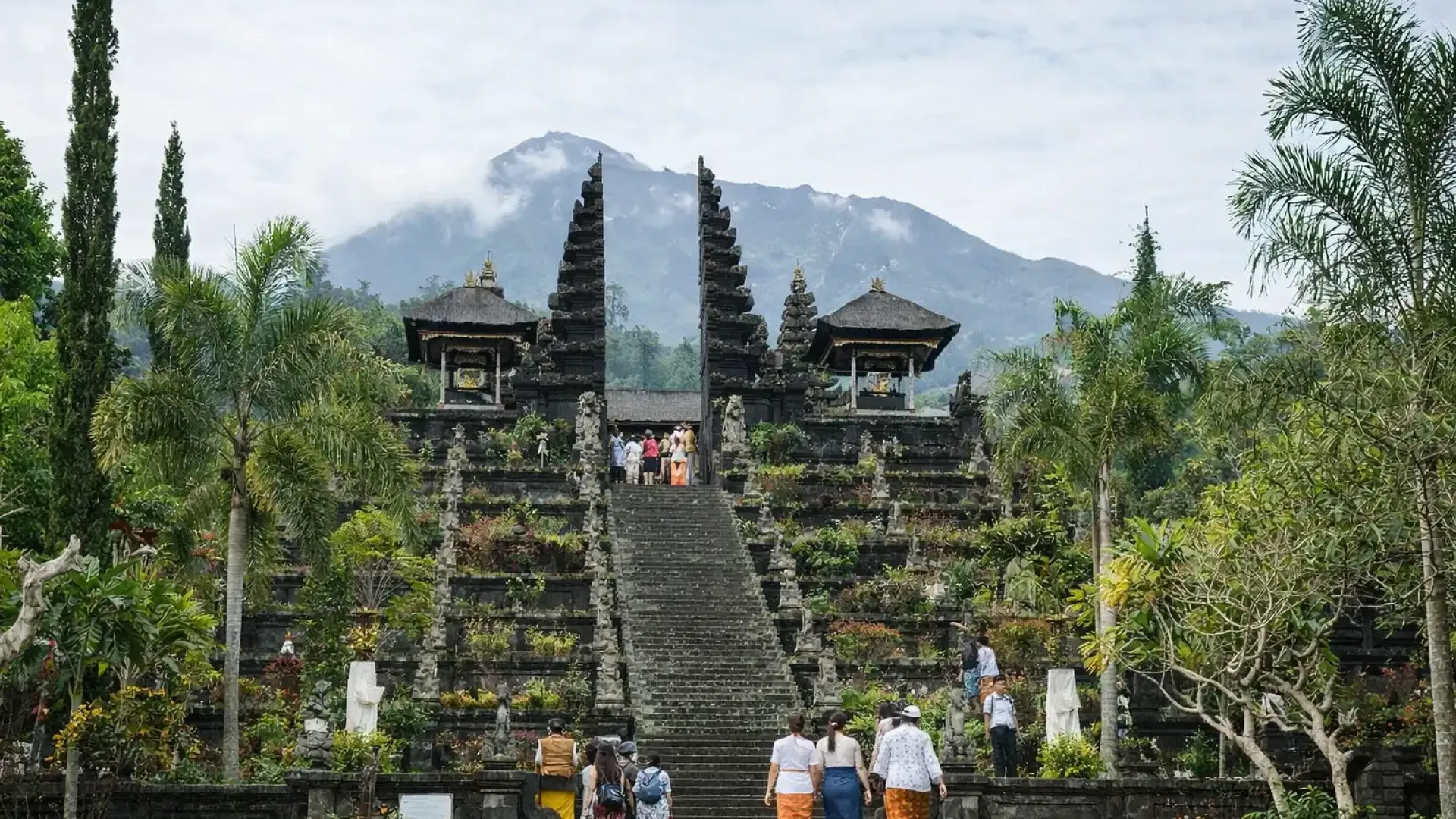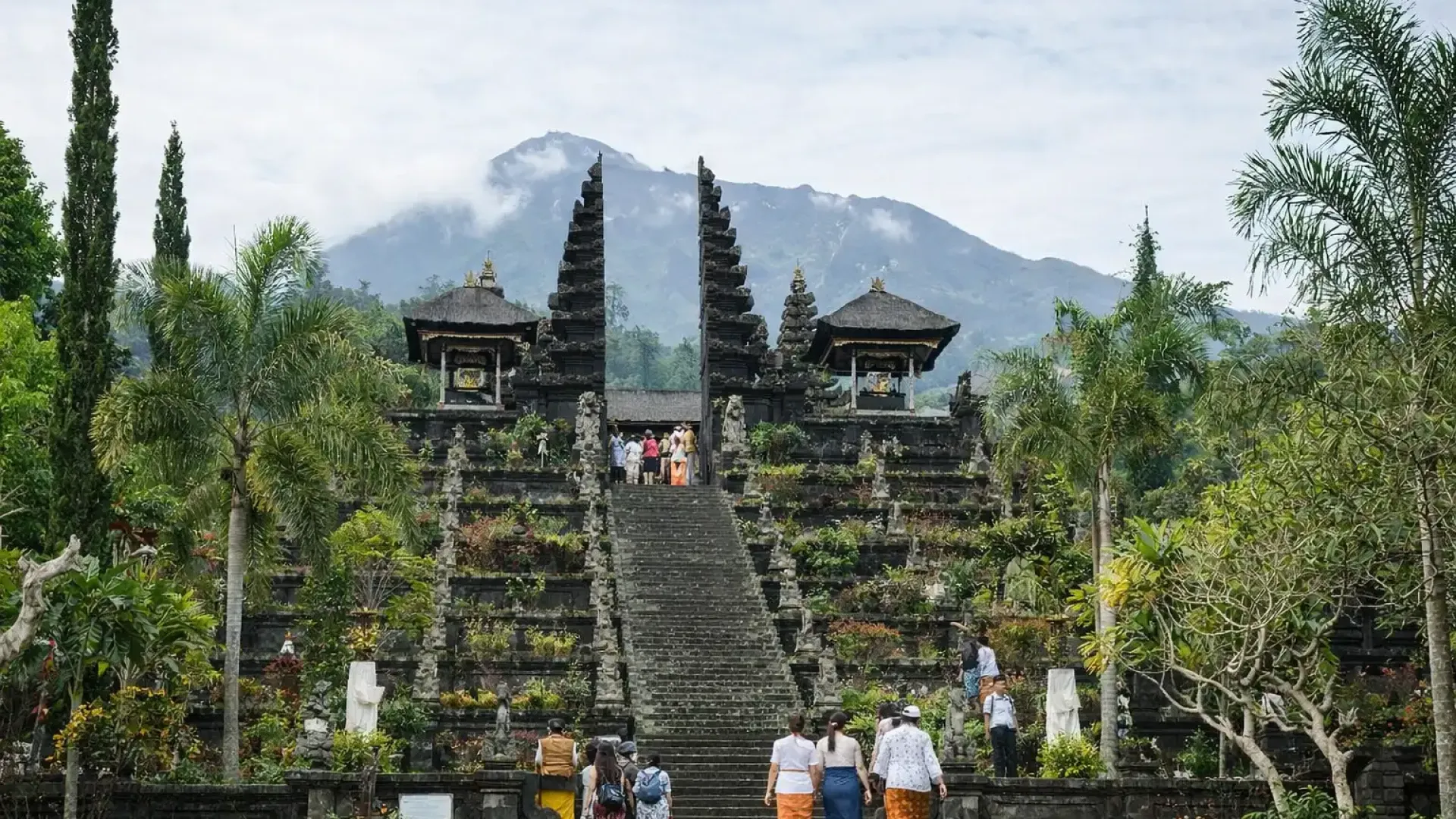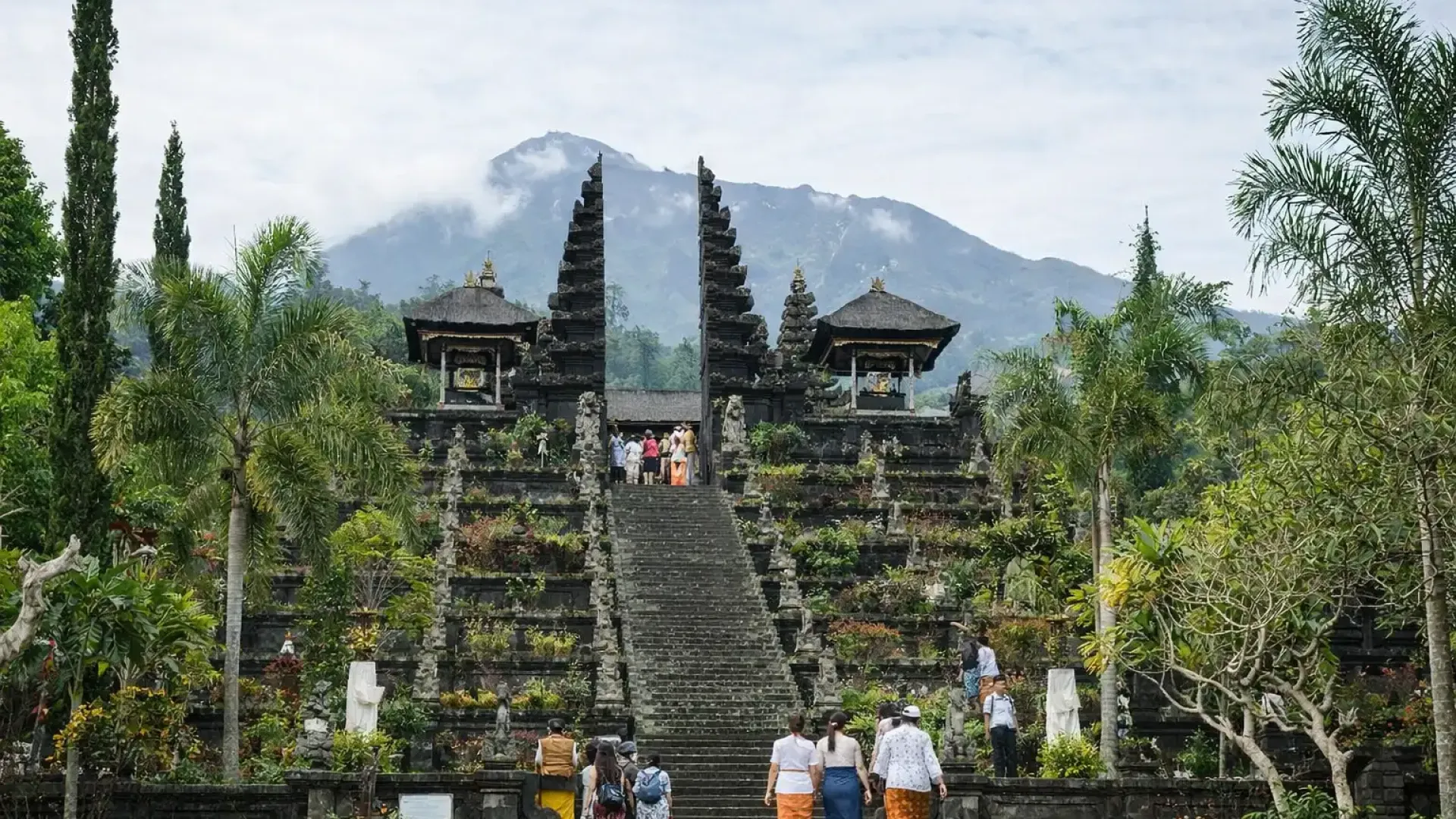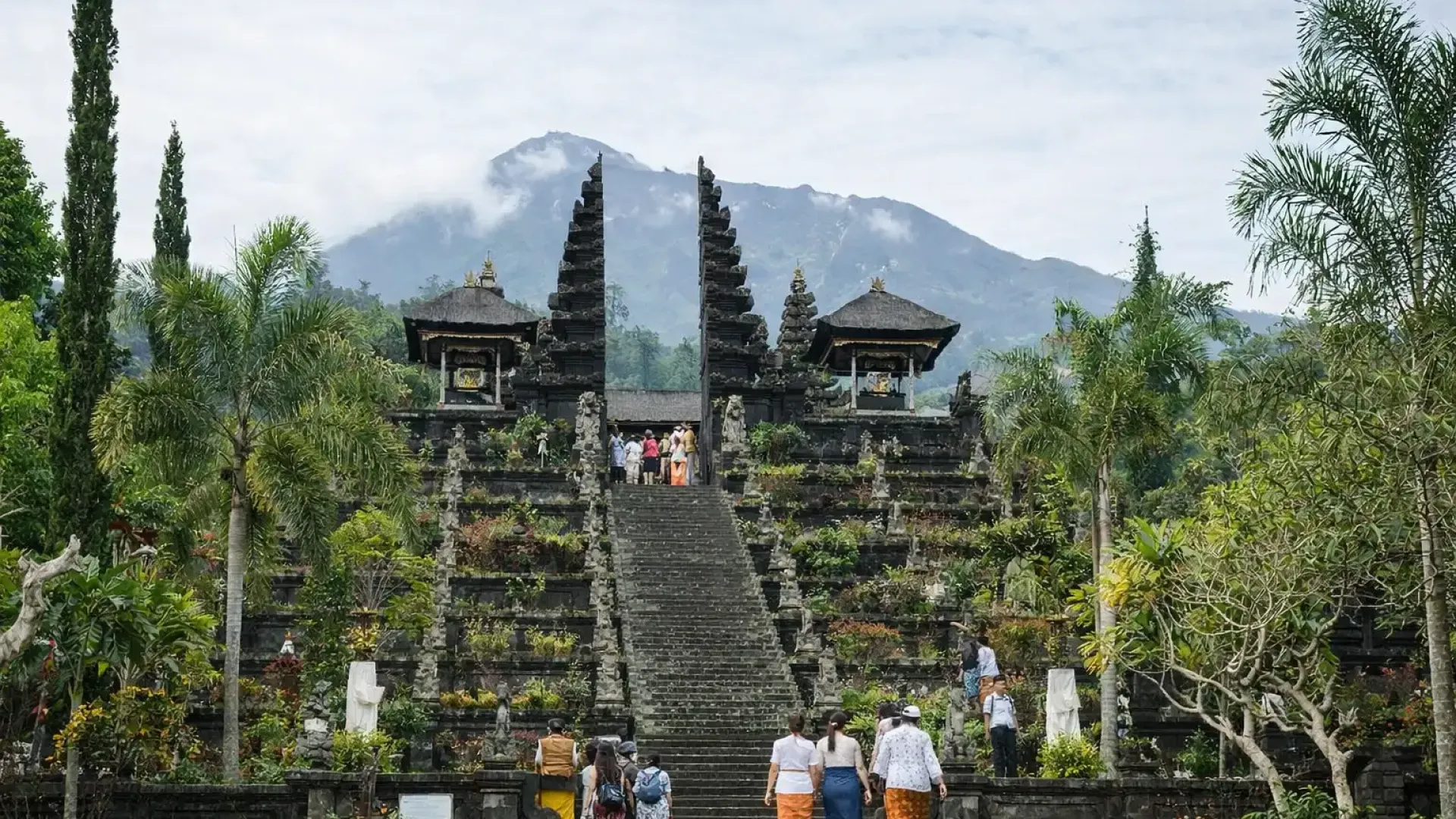
Besakih Temple is not just another landmark in Bali. It is the spiritual axis of the island, known worldwide as the Bali Mother Temple. Nestled on the slopes of Mount Agung, this sacred complex is where Balinese Hinduism breathes, prays, and celebrates life.
As someone born and raised in Bali, I still remember my first visit here as a child, walking behind elders in ceremonial white, feeling small beneath towering shrines and the looming presence of Mount Agung. For travelers, visiting Besakih Temple is not about ticking a box, but about understanding Bali at its core.
If this is your first time, this guide will help you experience Besakih Temple respectfully, comfortably, and meaningfully.
Why Besakih Temple Is So Special
Pura Besakih is the largest and holiest temple complex in Bali, consisting of more than 80 individual temples spread across terraced hillsides.
What makes it unique:
- It is considered the mother temple of all Balinese temples
- Every major Balinese ceremony is spiritually connected to Besakih
- It sits directly below Mount Agung, Bali’s most sacred mountain
- The architecture reflects centuries of Balinese spiritual philosophy
Standing here, you don’t just see temples, you feel layers of history, devotion, and ritual.
Atmosphere & Experience
Expect a mix of serenity and grandeur.
- Morning: Misty, cool, and deeply peaceful
- Midday: Clear views of Mount Agung and ceremonial activity
- Afternoon: Softer light, fewer large tour groups
On ceremony days, the temple becomes alive with offerings, incense, and traditional attire. On quieter days, the vastness of the complex reminds you how small we are in the presence of belief.
Entrance Fees & Facilities (What Visitors Love)
One of the biggest improvements in recent years is visitor comfort.
What’s Included in Your Ticket
- Entrance fee (includes sarong rental)
- Insurance coverage
- Access to the main temple zones
New Facilities You’ll Appreciate
- Shuttle bus / buggy service from parking area
- Clean restrooms
- Organized pathways reducing chaotic walking
Best Time to Visit Besakih Temple
- Best Months: April – October (dry season)
- Best Days: Weekdays
- Best Time of Day:
- 08:00–10:00 AM for calm atmosphere
- After 15:30 for softer crowds and light
Avoid national holidays and major Balinese holy days unless you specifically want to witness ceremonies.
👉 To avoid crowds completely, read our insider tips in How to Visit Pura Besakih Without the Crowds.
What You Need Before You Go
Essentials Checklist
- Sarong & sash (included, but bring your own if preferred)
- Comfortable walking shoes
- Water & sun protection
- Cash for donations or local guide tips
About Local Guides
Local guides at Besakih are knowledgeable and often very insightful about rituals and temple hierarchy.
Tips for travelers:
- Be clear if you want a guide or not
- Agree on tipping politely but firmly
- A short guided walk can greatly enrich your visit
How Long Should You Spend Here?
- Quick visit: 1.5–2 hours
- In-depth experience: Half day
- Combined trip: Besakih + East Bali highlights
Respectful Dress & Behavior
Besakih is not a photo park, it is a living temple.
- Cover shoulders and knees
- Follow restricted area signs
- Do not climb shrines
- Be respectful during ceremonies
👉 Unsure what to wear? Read What to Wear to Besakih Temple.
Conclusion: Why You Should Visit Besakih Temple
Visiting Besakih Temple is not about seeing Bali. It is about understanding Bali.
Here, the island’s spirituality, history, and identity converge under the shadow of Mount Agung. Whether you come for culture, photography, or personal reflection, Besakih leaves a quiet but lasting imprint.