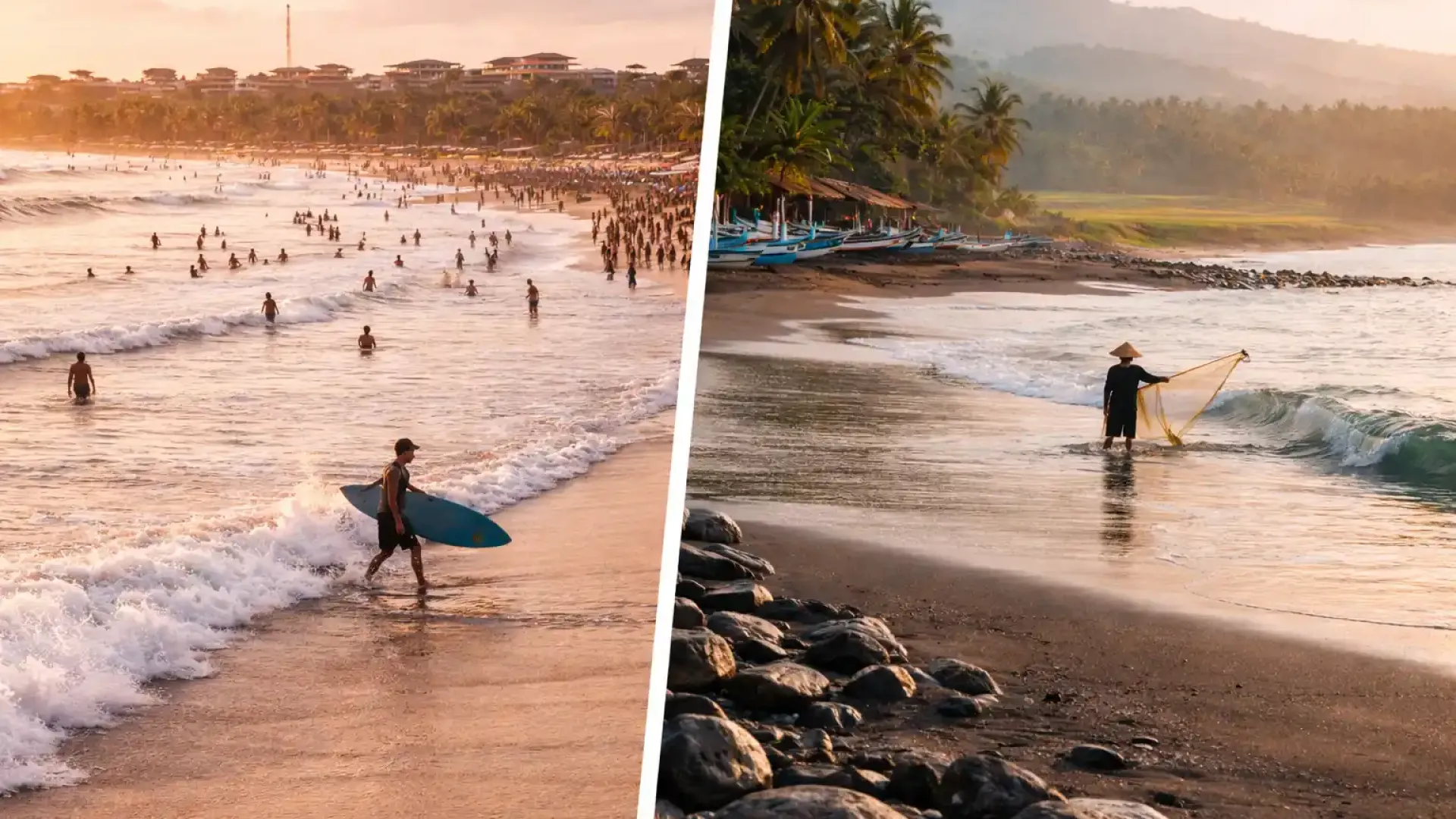
Surfing Medewi Beach is not about trendy cafés or sunrise yoga. It is about chasing Bali Longest Left, a wave that stretches your ride, your patience, and your skill. Tucked away on Bali’s lesser-known west coast, Medewi is where experienced surfers come when they want rhythm, space, and a real connection with the ocean.
Located in western Bali, far from the buzz of Canggu and Seminyak, Medewi Beach has earned its reputation quietly. The wave speaks for itself.
Why Surfing Medewi Beach Is Special
Bali Longest Left Wave Explained
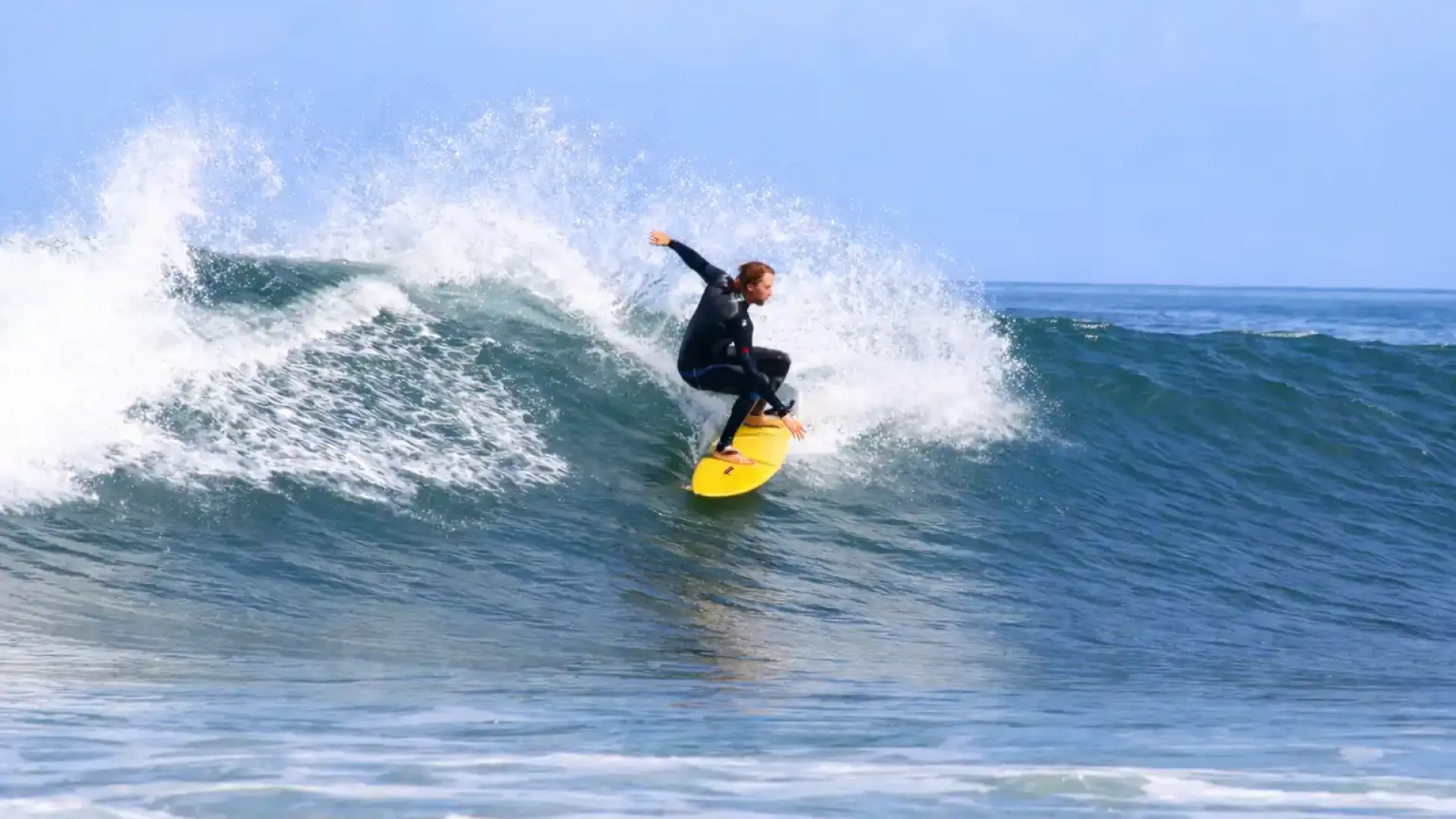
Medewi is famous for one thing above all else: a long, continuous left-hand wave. On a good day, the ride can stretch 300 to 500 meters, making it one of the longest left-hand waves in Bali.
This is not a hollow, fast-breaking wave. Medewi’s wave is smoother and more playful, perfect for surfers who enjoy trimming, carving, and linking turns rather than chasing barrels. The wave breaks over a rocky river-mouth reef, peeling patiently along the shoreline.
For many surfers, Surfing Medewi Beach feels less like a battle and more like a conversation with the sea.
Who Should Surf Medewi Beach
Medewi is not beginner-friendly. The rocky bottom and the wave’s length demand control and confidence.
Medewi is best suited for:
- Intermediate surfers who can handle reef breaks
- Advanced surfers looking for long, technical rides
- Longboarders and mid-length surfers who enjoy flow and style
If you are still learning how to read waves or manage wipeouts, this beach is better admired from the shore.
Safety Tips for Surfing Medewi Beach
Rocky Reef and Booties Are Essential
The seabed at Medewi is rocky, not sandy. Slippery stones and sharp coral make surf booties highly recommended. Many injuries here happen not during wipeouts, but while walking in and out of the water.
Key safety tips:
- Always wear reef booties
- Enter and exit the water carefully
- Avoid surfing at very low tide if you are unfamiliar with the spot
- Watch local surfers before paddling out
Respecting the reef is part of respecting Medewi itself.
Understanding the Lineup
Medewi’s lineup is usually calm and friendly, but etiquette matters. The wave is long, and dropping in can ruin someone’s entire ride. Take your time, observe the takeoff zone, and wait your turn.
More Than Surfing: Photography and Atmosphere
A Hidden Gem for Coastal Photography
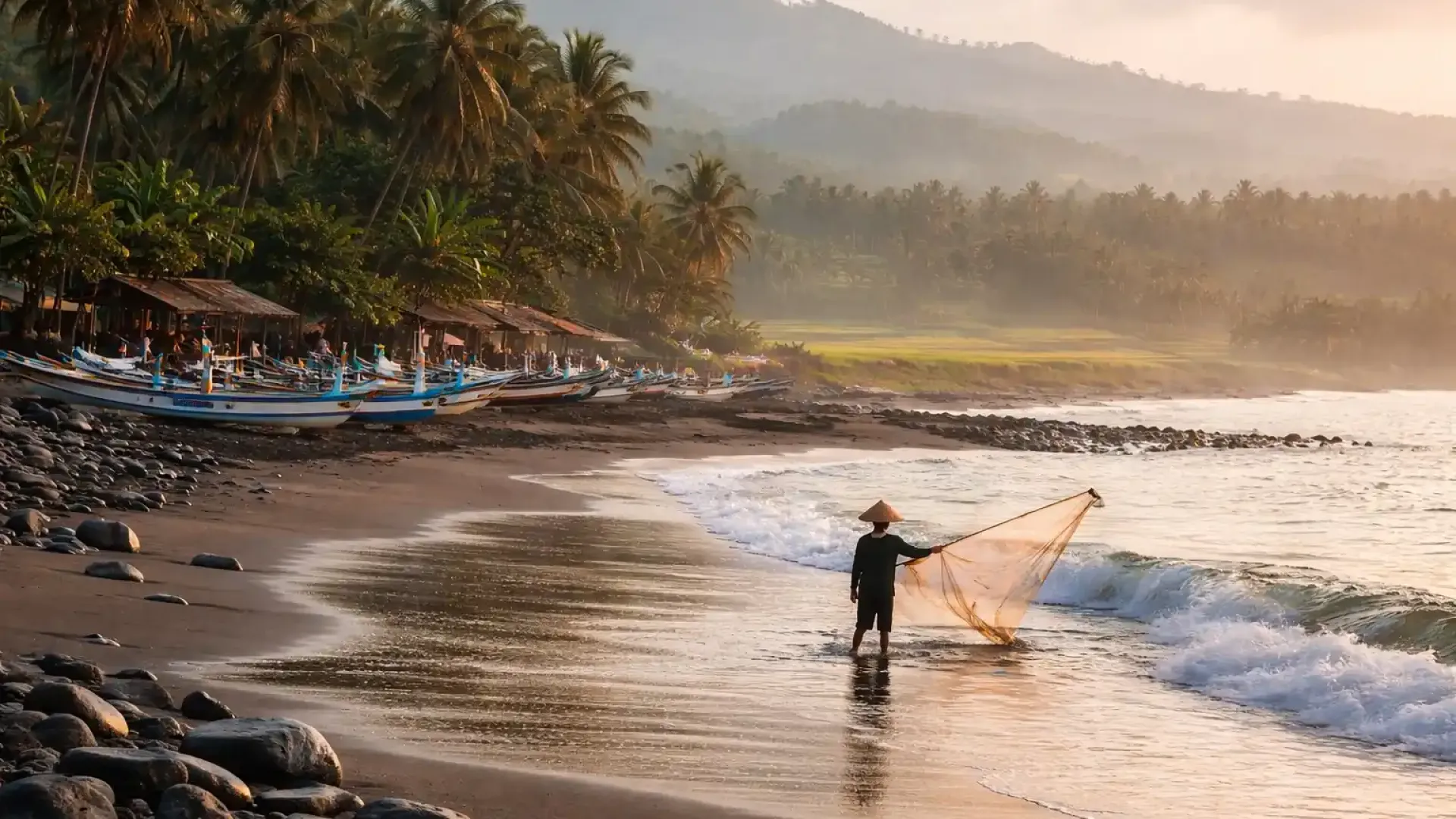
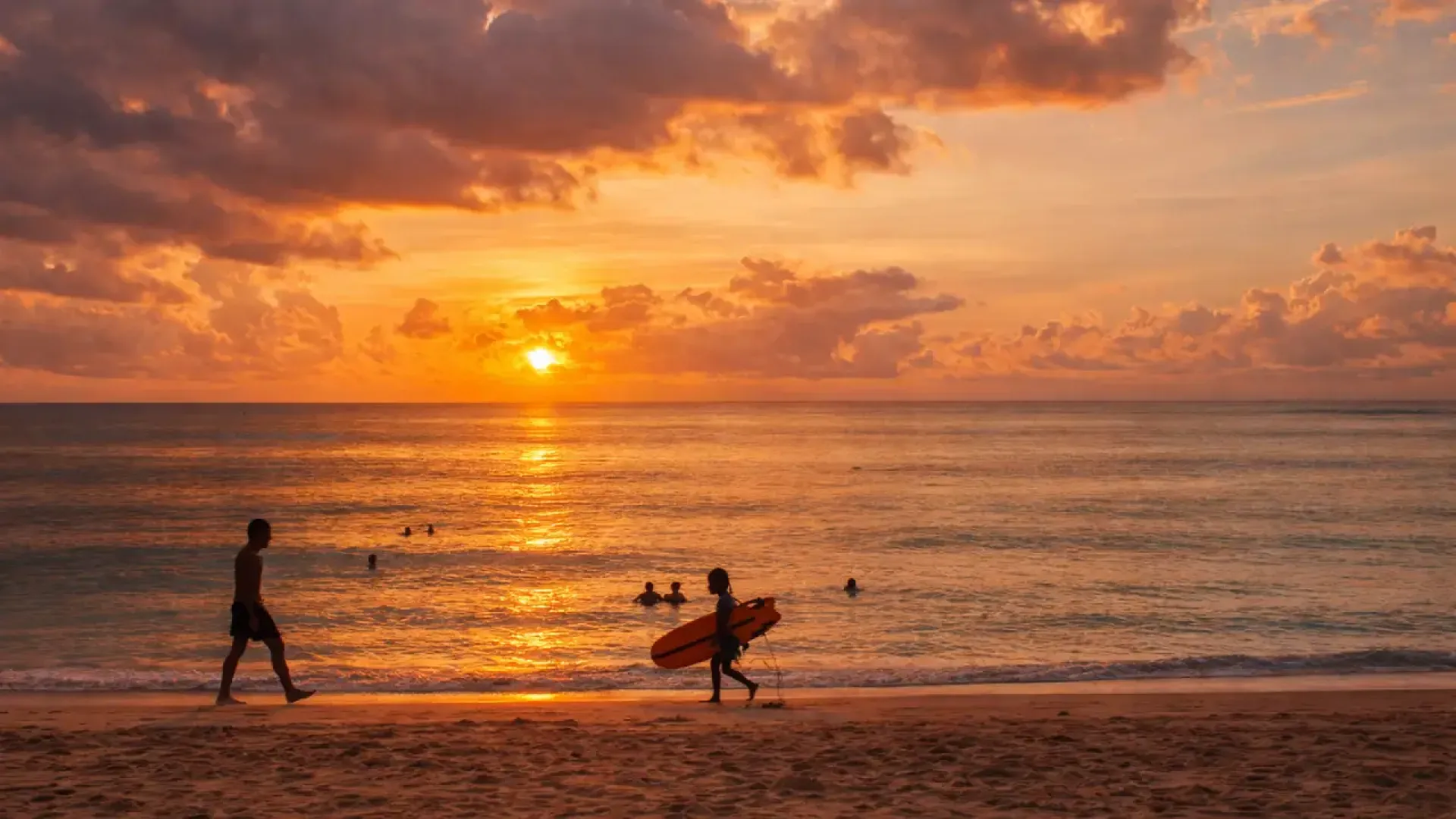
Even if you are not surfing, Medewi is a beautiful place to photograph. The coastline curves gently, framed by river stones, palm trees, and distant mountains. Late afternoon light creates dramatic shadows and soft reflections on the water.
Photographers love:
- Surfers gliding endlessly on a single wave
- Golden-hour light over the west coast
- Quiet village life along the shoreline
Medewi feels raw and honest, a side of Bali that still breathes slowly.
Where Is Medewi Beach Located?
Medewi Beach sits in Jembrana, Bali’s westernmost regency. This region is often skipped by tourists rushing between the airport and the island’s southern hotspots, which is exactly why Medewi remains uncrowded.
The surrounding area is rural and relaxed, with small homestays, local warungs, and a strong village atmosphere.
How to Get to Medewi Beach
Driving from Canggu or Seminyak
From Canggu or Seminyak, the drive to Medewi takes approximately 3 hours, depending on traffic.
The most common route follows the Gilimanuk main road, which connects southern Bali to the ferry port in western Bali.
Travel tips:
- Start early to avoid city traffic
- Expect scenic coastal and countryside views
- Fuel up before leaving urban areas
Once you arrive, the slower pace of Medewi makes the journey feel worthwhile.
Best Time for Surfing Medewi Beach
Medewi works best during the dry season from May to September, when southwest swells light up Bali’s west coast. Morning sessions are usually cleaner, with lighter winds and fewer people in the water.
Tides play an important role, so checking local surf forecasts is essential.
Surfing Medewi Beach as an Experience
Surfing Medewi Beach is not about ticking a box on a Bali checklist. It is about committing to the journey, respecting the reef, and earning every meter of that long left-hand wave.
This is Bali before hashtags. Bali before shortcuts. Bali where the reward comes only if you paddle for it.
For surfers chasing Bali Longest Left, Medewi is not just a destination. It is a reminder of why you started surfing in the first place.