Siwaratri is not a festival of noise or spectacle. It is a night of silence, vigilance, and deep inner reckoning. In Bali, Siwaratri is remembered as the most intimate night in the Hindu calendar, a night when darkness is not feared but embraced as a doorway to awareness. This article explains the meaning of Siwaratri, its spiritual practice in Bali, and the timeless story of Lubdaka that gives this night its deepest human lesson.
A Night When the World Slows Down
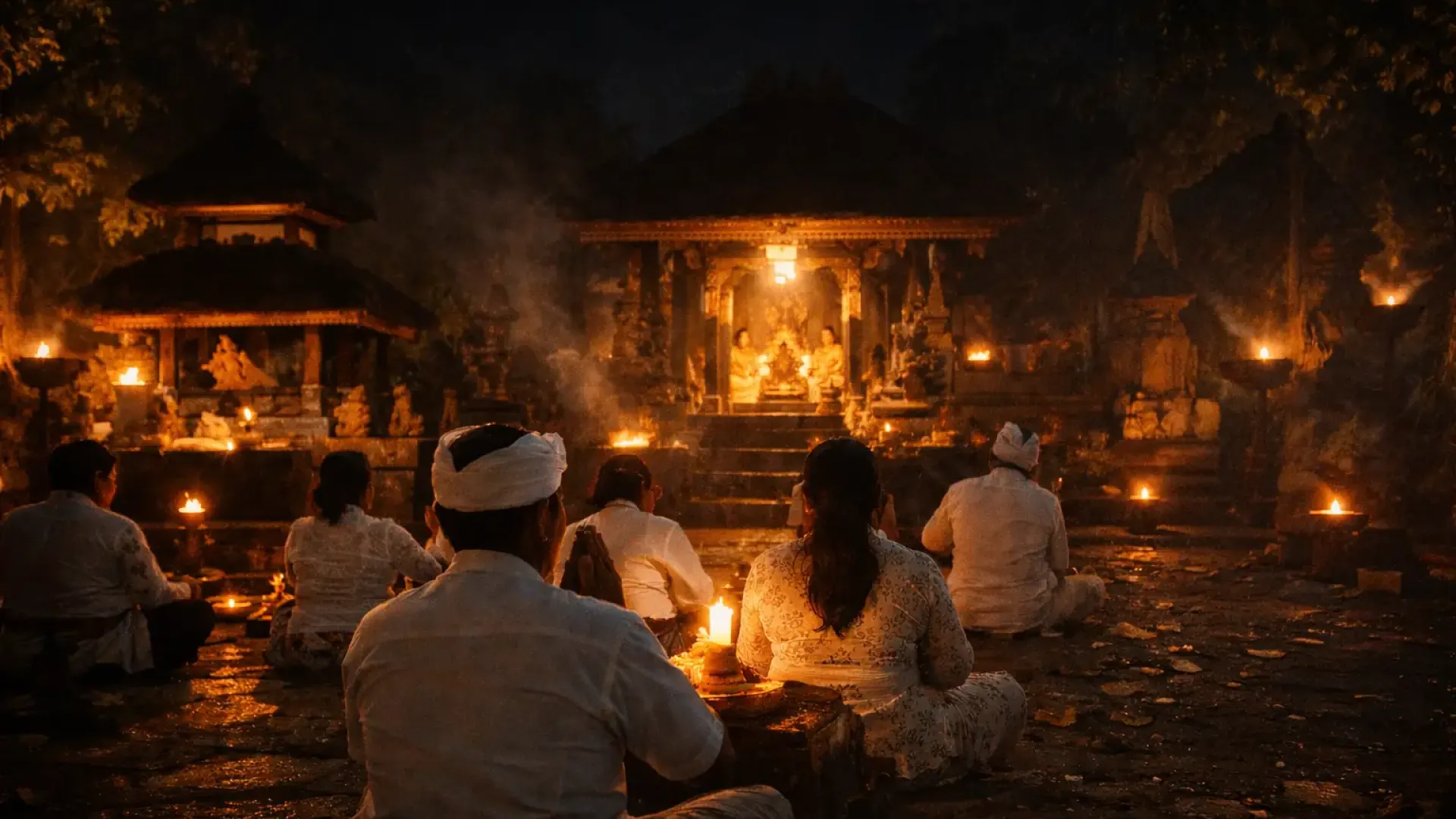
Siwaratri literally means the night of Siwa. In Balinese Hindu understanding, this night is not about worshiping a distant god but about meeting oneself. As the island settles into darkness, temples remain open, lamps glow softly, and people sit longer with their thoughts.
Unlike celebratory holy days, Siwaratri feels restrained. The air is quieter. Conversations are softer. For many families, this is the night to step away from routine pleasures and confront habits, regrets, and unspoken intentions. Siwaratri is about awareness rather than appearance.
The Brata of Siwaratri in Bali
Traditionally, Siwaratri is observed through self discipline known as brata. Some people stay awake through the night. Others limit food, drink, or sensory distractions. Yet in Bali, elders often remind the young that the heart of Siwaratri is not endurance but sincerity.
You may sleep and still honor Siwaratri. You may eat and still reflect. What matters is whether the night is used to recognize mistakes, restrain harmful impulses, and restore clarity of mind. This is why Siwaratri resonates across generations. It is not about perfection but honesty.
The Story of Lubdaka: An Accidental Awakening
The soul of Siwaratri is inseparable from the story of Lubdaka.
Lubdaka was a hunter, far from the image of a saint. One night, lost in the forest and surrounded by danger, he climbed a tree beside a lake to save himself from wild animals. Fear kept him awake. Hunger and thirst kept him alert. To stay conscious, he plucked leaves and dropped them into the water below.
Unbeknownst to him, beneath the water stood a sacred symbol of Siwa. Each falling leaf became an offering. All night long, Lubdaka remained awake, fasting, alert, and inwardly shaken by the thought of death. That night was Siwaratri.
Lubdaka did not intend to pray. He did not plan a ritual. Yet in that vulnerable state, stripped of habit and arrogance, he became fully aware of his life. According to tradition, that single night of awareness outweighed years of unconscious living. Lubdaka attained liberation not through status or learning, but through presence.
Why Lubdaka Still Matters Today
The story of Lubdaka explains why Siwaratri is so deeply personal in Bali. It teaches that spiritual transformation does not require ideal conditions. It can arise from fear, confusion, or crisis, as long as awareness is present.
In a modern world filled with distractions, Lubdaka feels closer than ever. Many people encounter Siwaratri not in temples, but in moments of exhaustion, loss, or emotional pause. The lesson remains the same. One honest night of reflection can shift the direction of a lifetime.
Experiencing Siwaratri as a Visitor
For travelers in Bali, Siwaratri is often invisible at first glance. Shops stay open. Streets remain active. Yet behind closed doors and inside temple courtyards, a quieter Bali emerges. If you notice lights glowing late in family shrines or people sitting still longer than usual, you are witnessing Siwaratri.
Visitors are not expected to participate in rituals. Respect is shown simply by understanding the atmosphere. Keep noise low near temples at night. Observe rather than intrude. Siwaratri is not performed for an audience.
The Meaning That Lingers After Dawn
When morning arrives, Siwaratri ends without fanfare. There are no parades, no fireworks. The change is internal. For those who truly observe it, Siwaratri leaves a subtle trace. A pause before reacting. A softer tone in speech. A renewed awareness of intention.
That is the quiet power of Siwaratri. It does not demand transformation. It invites it.