Kecak Dance in Bali: When Fire, Chanting, and Sunset Become a Sacred Performance
If you hear the word kecak dance for the first time, you might imagine a typical cultural show with costumes, music, and choreography. But standing on a cliff in southern Bali, as the sun melts into the Indian Ocean, you realize this is something entirely different. The kecak dance is not performed to entertain alone. It is chanted, breathed, and shared. It is one of the most visceral cultural experiences you can witness in Bali.
I was born and raised on this island, and no matter how many times I hear the rhythmic “cak… cak… cak…” echo through the air, it still sends a quiet shiver down my spine.
The First Sound You Never Forget
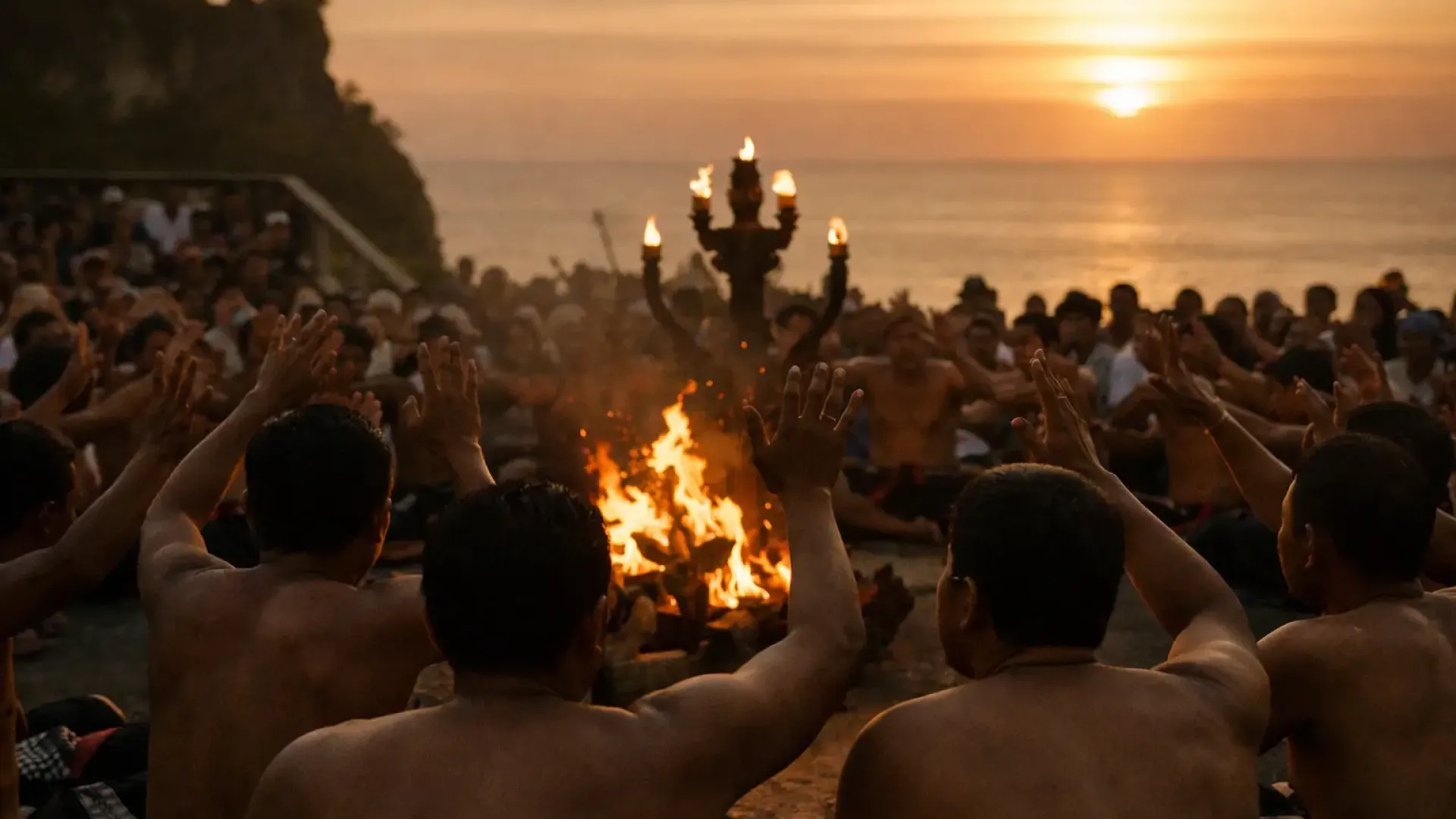
Your first encounter with the kecak dance rarely begins with sight. It begins with sound. A low, pulsating chant rises from a circle of men, bare-chested, seated shoulder to shoulder. There are no instruments. No drums. No gamelan. Only voices. Human breath becomes rhythm, rhythm becomes energy.
As dusk settles, torches flicker. Shadows stretch across ancient stone. When the fire is lit, the atmosphere shifts. This is not a stage performance in the modern sense. It feels closer to a ritual that happens to allow visitors to observe.
Why the Kecak Dance Is Different From Other Balinese Dances
Most traditional Balinese dances are accompanied by gamelan orchestras and refined hand gestures learned over years of disciplined training. The kecak dance breaks that rule entirely.
Its roots lie in ancient trance rituals known as sanghyang, where chanting was used to invite spiritual protection. Over time, this sacred vocal rhythm merged with episodes from the Ramayana epic, transforming the ritual into the performance travelers recognize today.
There is no orchestra because the human voice is the orchestra. Each “cak” acts like a drumbeat, building tension, releasing it, then pulling you back in. The absence of instruments makes the performance feel raw and primal, something that belongs to the earth rather than a palace.
Watching Kecak at Uluwatu: Bali’s Most Iconic Setting
Today, the most famous place to experience the kecak dance is at Uluwatu Temple. Perched on a dramatic limestone cliff, the open-air amphitheater faces the sea, allowing sunset to become part of the choreography.
As the sky turns orange and then deep violet, the chanting intensifies. Flames dance higher. When Hanuman leaps through fire, sparks drift into the night air, carried by ocean wind. It is cinematic, yes, but it never feels artificial.
This setting is why Uluwatu dominates search results, ticket pages, and travel itineraries. Yet even here, the performance still carries echoes of something older than tourism.
Beyond the Cliff: Kecak as Living Tradition
What many visitors do not realize is that the kecak dance is not exclusive to Uluwatu. In villages across Bali, kecak is still practiced in community spaces, often with fewer performers and no grand backdrop. These versions feel more intimate, sometimes closer to ritual than spectacle.
In these settings, the chanting is slower, the fire smaller, and the audience often sits just meters away. You begin to notice individual voices, subtle rhythms, and the communal focus that defines Balinese culture. Kecak, at its core, is about togetherness. No single dancer dominates. The power lies in collective movement and sound.
Fire, Trance, and the Human Voice
Fire plays a crucial role in the kecak dance, not as a special effect, but as a symbol. In Balinese belief, fire represents purification and transformation. When performers step through flames, it reflects a spiritual passage rather than a stunt.
The chanting itself can induce a trance-like state, not only for performers but also for viewers. Many visitors describe losing track of time, feeling absorbed by rhythm and repetition. This is no accident. Kecak was never designed to be passive entertainment. It was meant to involve everyone present, if only emotionally.
Why the Kecak Dance Leaves a Lasting Impression
Long after the final chant fades, silence lingers. People do not rush to speak. They stand, look at the dark ocean, and breathe. That pause is important. It is the moment when performance ends and reflection begins.
The kecak dance stays with you because it bypasses language. You do not need to understand the Ramayana to feel its intensity. You do not need cultural knowledge to sense its power. It communicates through sound, fire, and shared presence.
A Local Reflection
As someone who grew up seeing kecak performed not for cameras, but for community, I believe its strength lies in its honesty. Even in its most touristic form, it retains a pulse that cannot be scripted.
In Bali, culture is not something locked behind glass. It adapts, breathes, and sometimes performs at sunset for strangers. The kecak dance is proof that tradition can survive modern attention without losing its soul.
Closing Thoughts
If you plan to experience the kecak dance in Bali, come with open senses. Watch the fire, listen to the voices, and allow yourself to feel rather than analyze. This is not merely a show you check off a list.
In Bali, the Kecak Dance is not something you simply watch.
It is something you carry with you, long after the chanting ends.