If you are planning your first trip to the island, the Ogoh Ogoh Parade in Bali is something you should experience at least once in your lifetime. This is not a performance staged for tourists, not a ticketed show, and not something you can easily replicate elsewhere. Ogoh-ogoh exists only in Bali, and it belongs to the people who live here.
I was born and raised on this island. Long before travelers started searching for Ogoh Ogoh on Google, the sound of bamboo being cut and laughter echoing from village halls was already part of my childhood. Ogoh-ogoh is not an event you attend. It is a night you step into.
A Night That Belongs Only to Bali
Ogoh-ogoh appears only once a year, on the eve of Nyepi, the Balinese Day of Silence. Across the island, almost every banjar, the smallest traditional community unit in Bali, builds its own ogoh-ogoh. There is no single center. The parade unfolds everywhere at once.
For travelers, this is what makes the experience unforgettable. One street may erupt in cheers as a towering demon sways above the crowd, while just a few meters away another banjar prepares its own creation, completely different in shape, expression, and story. No two ogoh-ogoh are the same.
This tradition exists nowhere else. It was born in Bali, shaped by local values, and carried forward by each generation.
Built from Bamboo, Paper, and Collective Energy
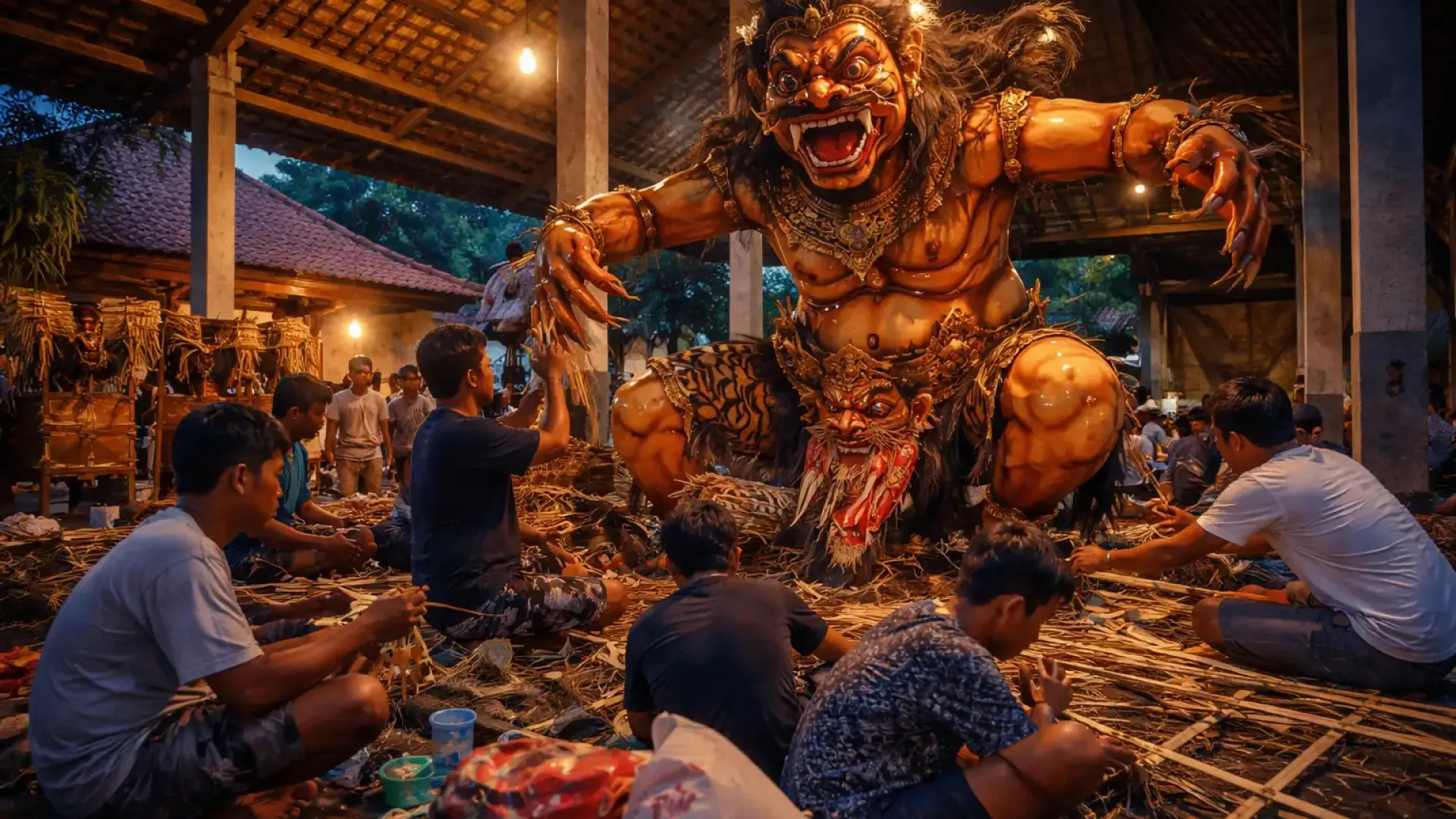
Months before the parade, ogoh-ogoh begins as raw bamboo frames tied together by hand. Paper, paint, and recycled materials slowly give the figures their dramatic forms. Despite their massive size, most ogoh-ogoh are intentionally temporary, fragile, and handmade.
Local artists often guide the design, but the work itself belongs to the community. Night after night, villagers gather to build, paint, argue, laugh, and refine every detail. What you see on parade night is the result of collective patience, not factory production.
For travelers used to polished cultural shows, this rawness is part of the magic. You are witnessing living culture, not a finished product designed for consumption.
Funded by the Community, Not by Spectacle
Ogoh-ogoh is not sponsored in the commercial sense. Some banjar receive limited support from local authorities. Many rely on voluntary donations from residents, small fundraisers, and personal contributions.
This matters because it explains the atmosphere. No one is being paid to perform. Everyone involved has given time, energy, and money because the tradition matters to them. As a visitor, you are stepping into something deeply personal.
The Role of Sekaa Truna Truni
At the heart of ogoh-ogoh are the sekaa truna truni, the youth groups of each banjar. These young men and women carry the responsibility of building, funding, and parading the ogoh-ogoh.
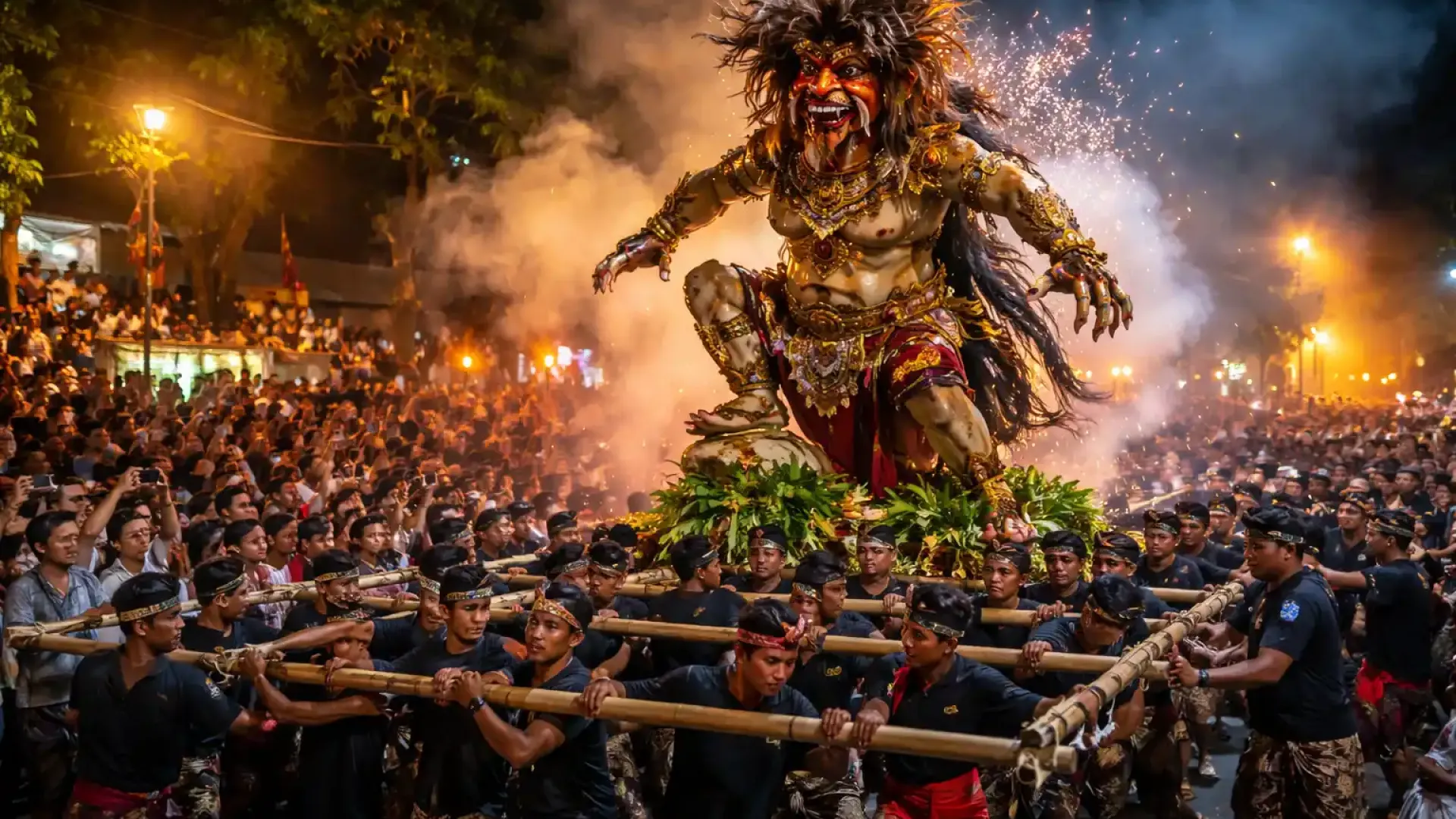
On parade night, they lift the statues onto bamboo platforms and move them through the streets with synchronized steps, spinning them at crossroads to confuse negative forces according to tradition. The energy is intense, emotional, and sometimes chaotic.
For first-time visitors, this is often the moment when Bali reveals itself beyond beaches and resorts. You see pride, discipline, creativity, and youthful fire all moving together under torchlight and street lamps.
What Travelers Should Know Before Watching
There are no grandstands and no assigned viewing areas. You stand among families, children, elders, and other travelers. Traffic stops. Streets fill. Patience is essential.
Respect matters. This is a sacred cultural moment tied to Nyepi, not a carnival. Dress modestly, follow local guidance, and observe before raising your camera.
And remember, the next day the island will fall completely silent. That contrast is intentional. The loudest night leads into the quietest day.
Why This Night Stays with You
Long after travelers forget beach clubs and sunset bars, many still remember the Ogoh Ogoh Parade in Bali. Not because it was comfortable or polished, but because it felt real.
It is the sound of bamboo on asphalt. The sight of young villagers sweating under massive statues. The knowledge that this tradition exists only here, carried forward by communities who expect nothing in return.
If you experience it once, you will understand why no photo or video ever feels complete.