Travel, at its most profound level, is the ultimate classroom. While textbooks can describe history and geography can show boundaries, a living culture must be felt to be truly understood. For parents planning a family holiday, Bali presents a rare opportunity to move beyond passive sightseeing. The island does not hide its culture behind museum glass or theatrical stages; its ancient traditions, spiritual rhythms, and deep philosophies are woven directly into the fabric of everyday life.
By introducing your children to these traditions, you offer them far more than a tropical vacation. You give them a front-row seat to a community grounded in mindfulness, respect, and deep environmental connection. Bali becomes a magical playground where children learn how to walk through the world with a curious mind and an open heart.
Overview: Educational Travel Bali Traditions for Kids
- The Core Philosophy: Introduce your children to Tri Hita Karana, the foundational Balinese blueprint for happiness based on three harmonious relationships: with the spiritual realm, with fellow human beings, and with the natural environment.
- Daily Rituals & Observances: Teach kids the meaning behind the vibrant canang sari (flower offerings), the towering penjor (bamboo poles), and the sacred lunar alignment of Purnama (Full Moon) and Tilem (New Moon).
- First Cultural Classroom: Use your arrival at the airport to teach your family about Candi Bentar (split gateways) and the beautiful, respectful gesture of the Om Swastiastu greeting.
- Sacred Space Etiquette: Foster global respect by teaching children how to dress appropriately in traditional sarongs, manage their voices, and navigate temples safely.
The Core Concept: Tri Hita Karana for Kids
At the heart of everything you see in Bali is a philosophical compass known as Tri Hita Karana. Translated from Sanskrit, it means the "Three Causes of Prosperity or Well-being." It is the invisible thread that keeps Balinese society balanced, peaceful, and deeply connected.
For a child, this complex sounding concept can be broken down into three beautiful, simple rules for living a good life:
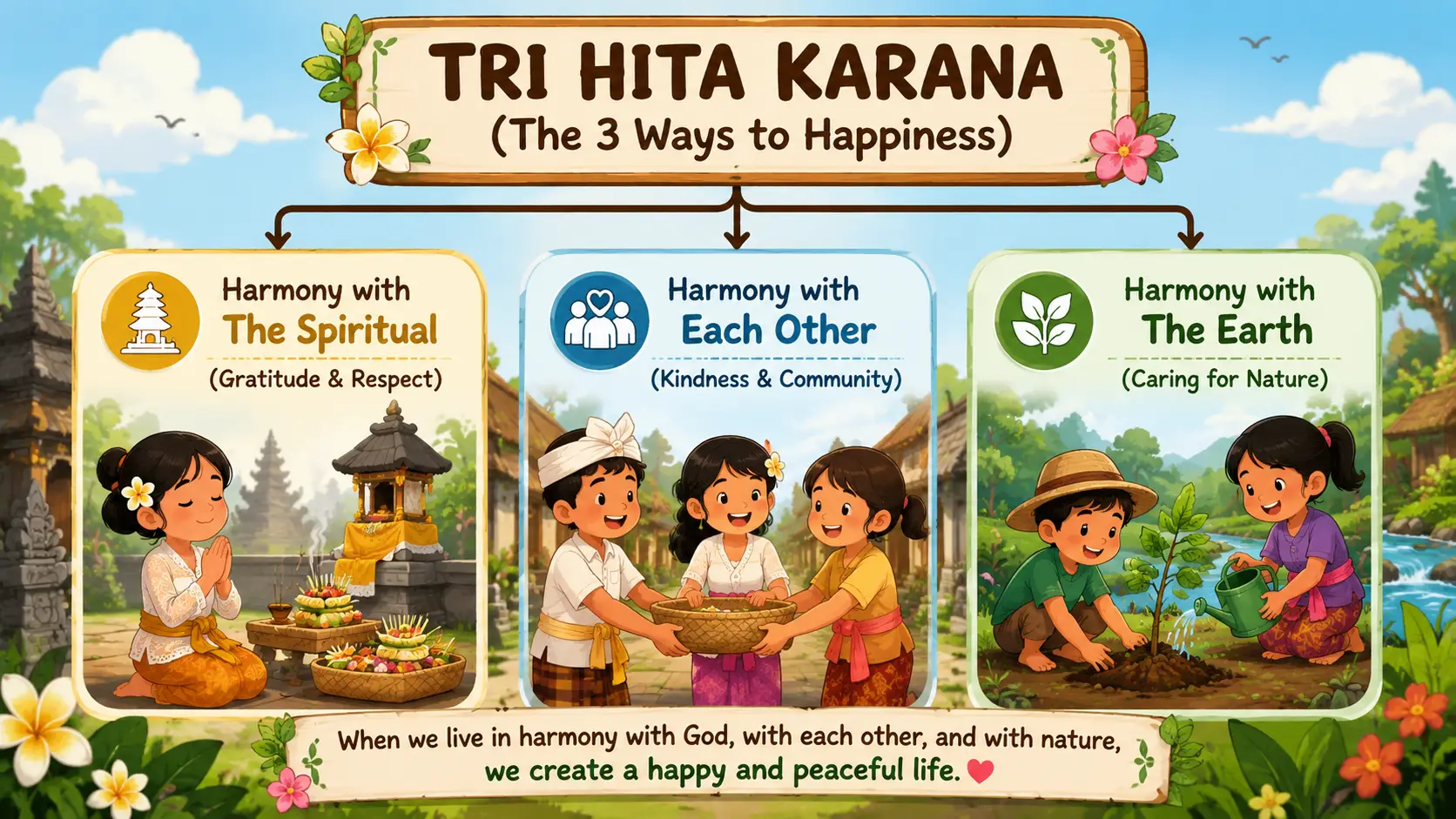
- Harmony with the Spiritual: Expressing gratitude for life, the universe, and the unseen world around us. Children see this daily in the quiet moments when locals place offerings and light incense.
- Harmony with Each Other: Treating every person you meet with kindness, respect, and a helpful spirit. This is visible in the strong, tight-knit village communities (banjar) across the island.
- Harmony with Nature: Caring for the animals, trees, rivers, and fields. You can see this directly in the pristine preservation of ancient sacred forests and the ingenious subak water-sharing systems in the emerald rice terraces.
Teaching this simple blueprint to your children gives them a framework to understand why the island feels so warm and welcoming, encouraging them to think about how they balance these three relationships in their own lives back home.
Magical Traditions to Explore Together
1. The Rhythms of Daily Rituals & Sacred Moon Cycles
Every morning, Balinese families assemble canang sari—delicate, square-shaped baskets hand-woven from palm leaves. They are filled with carefully arranged, colorful flowers, a pinch of rice, and a single stick of burning incense. Children will also notice penjor, the towering, gracefully curved bamboo poles decorated with woven palm leaves, fruits, and cakes that line the streets during major festival seasons like Galungan.
These elements are beautiful visual reminders of the cosmic clock. Life in Bali is deeply tied to the lunar cycle. The days of Purnama (the Full Moon) and Tilem (the New Moon) are treated as sacred times of reflection, cleansing, and gratitude. During these lunar phases, you will see villagers dressing in elegant, pure white temple attire, holding large communal processions to honor the natural cycles of our planet.
The Lesson in Local Wisdom: These rituals teach children that time isn't just something to be rushed through—it is a sacred, natural cycle that deserves pauses for gratitude and celebration.
To help your family dive deeper into the celestial calendar and understand how the moon shapes island life, explore our specialized cultural feature:
2. Local Etiquette: The Meaning of Om Swastiastu
Long before you step inside a stone temple courtyard, your child's cultural education begins with language. The traditional Balinese greeting is accompanied by the Sembah gesture—pressing your palms together gently at chest level, just like a prayer, and bowing your head slightly.
As you do this, you say: "Om Swastiastu." This phrase translates beautifully to: "May God bless you and may you be in a continuous state of peace and wellness."
Teaching your children to use this greeting when meeting hotel staff, drivers, or local shop owners instantly changes the energy of an interaction. It transforms a simple transaction into a mutual moment of human connection, teaching children that respect is a universal language.
3. Architectural Storytelling: Your Very First Classroom Entrance
Your family's cultural education starts the exact moment your flight touches down. As you navigate I Gusti Ngurah Rai International Airport, look closely at the stunning traditional architecture built directly into the modern terminals.
The most striking feature is the massive, towering Candi Bentar-the iconic split gateway that frames the airport's main entrances. In traditional Balinese architecture (Asta Kosala Kosali), these gateways mirror the form of a holy mountain split perfectly into two symmetrical halves.
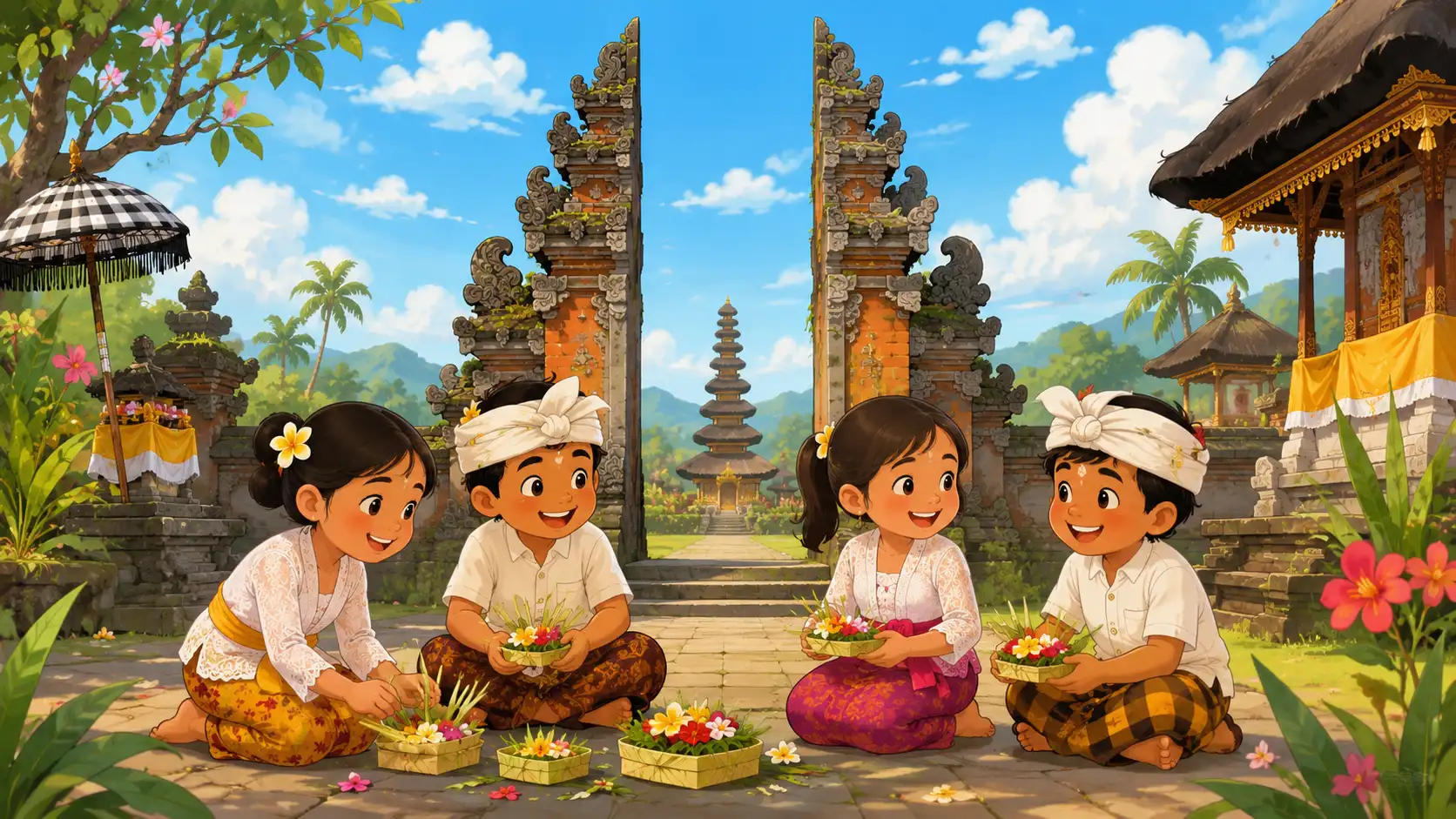
Historically and spiritually, the Candi Bentar represents a clear boundary line. Passing through it marks your transition from the chaotic, busy outside world into a place of peace, sanctuary, and clean energy. Pointing this architectural detail out to your kids turns a standard airport walk into an exciting entryway into a magical realm.
To discover the fascinating history, hidden architectural engineering, and design secrets of the island's main gateway, dive into our comprehensive traveler’s handbook: