Why Ogoh-Ogoh exist in Bali is a question many travelers ask after witnessing the island’s loudest, wildest night. On the eve of Nyepi, Bali erupts in fire, noise, and towering demon statues paraded through the streets. Then, suddenly, everything stops. Silence takes over the next day. To understand Ogoh-Ogoh is to understand how Balinese culture confronts darkness, not by denying it, but by acknowledging it openly.
I grew up in Bali, and for us, Ogoh-Ogoh were never just scary statues built to impress tourists. They were mirrors. Reflections of human chaos, ego, anger, and imbalance, brought into physical form so they could be faced together as a community.
The Origin Story of Ogoh-Ogoh
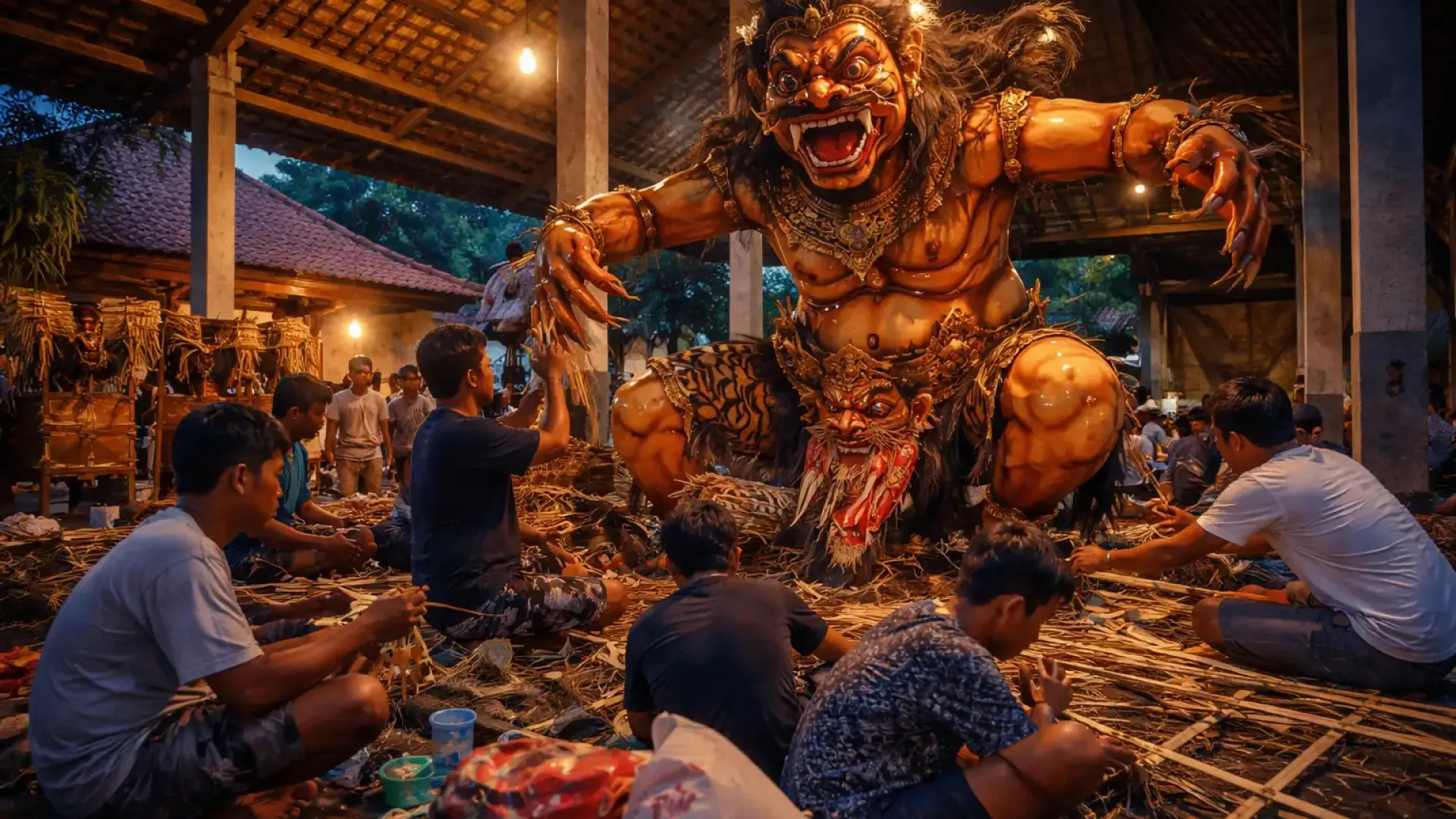
Ogoh-Ogoh are giant effigies traditionally made from bamboo, paper, foam, and paint. They usually depict Bhuta Kala, symbolic beings that represent negative forces, uncontrolled desires, and destructive energy. In Balinese belief, these forces are not evil in the Hollywood sense. They are part of nature, part of humans, and part of the universe.
The tradition is closely tied to Tawur Kesanga, a purification ritual held one day before Nyepi, Bali’s Day of Silence. The goal is not to eliminate darkness, but to restore balance between the seen world and the unseen world. Ogoh-Ogoh exist because balance cannot be achieved by pretending chaos does not exist.
Why They Are Paraded at Night
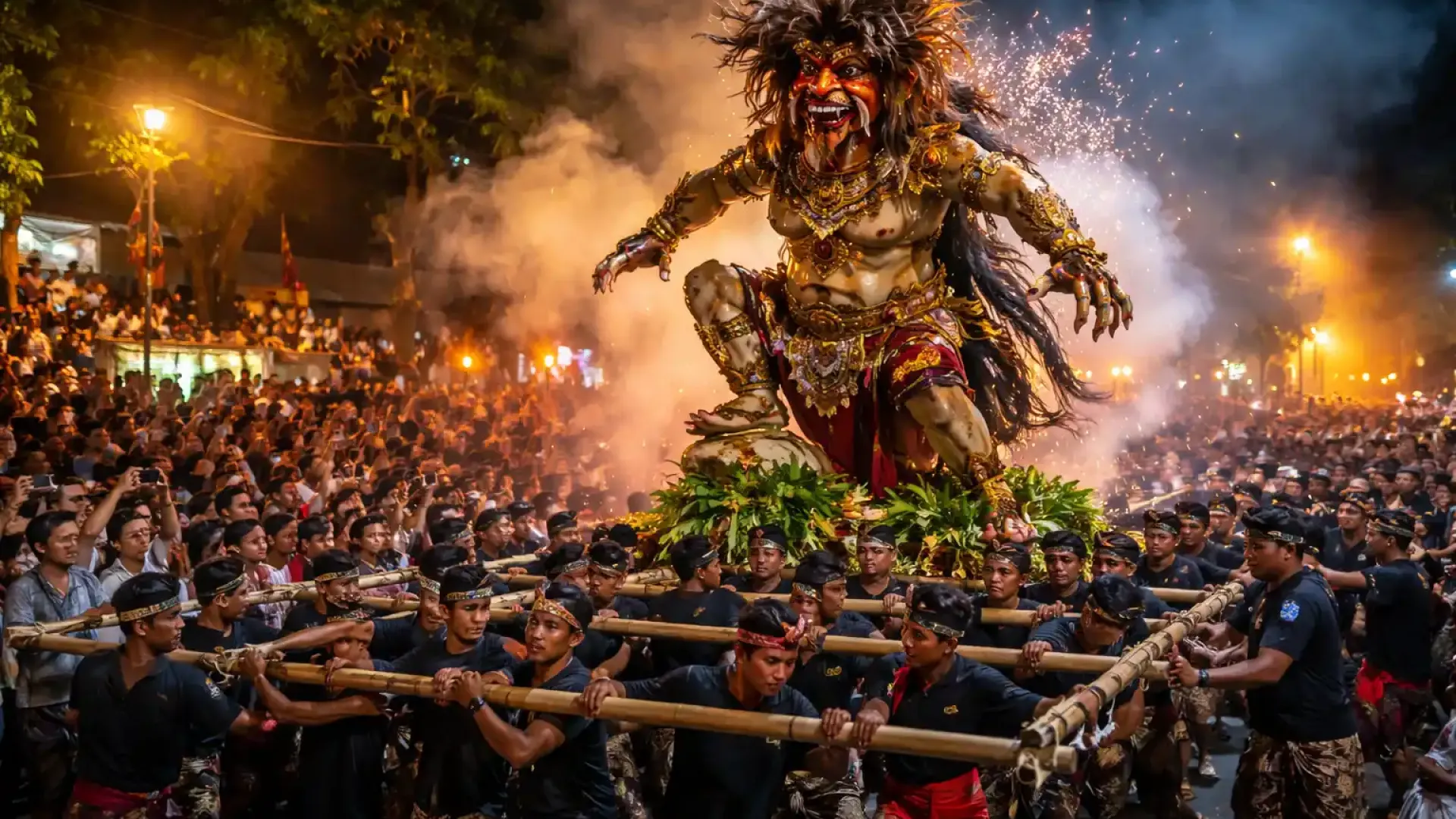
The Ogoh-Ogoh parade always takes place after sunset. There is a reason for this. Night symbolizes the unseen realm. It is when emotions feel heavier, fears feel louder, and instincts take over logic. By parading Ogoh-Ogoh through villages at night, accompanied by gamelan, shouting, and fire, the community symbolically calls out negative energy.
The statues are often shaken violently, spun at crossroads, and carried with exaggerated movements. This is not for spectacle alone. Crossroads are believed to be spiritually significant points where energies intersect. The chaos is intentional. It confuses and neutralizes negative forces before Nyepi begins.
If you want to understand how powerful this night feels as a lived experience, this article captures it vividly: Experience the Ogoh Ogoh Parade in Bali, a Once-in-a-Lifetime Night
Why Ogoh-Ogoh Are Destroyed
One of the most misunderstood aspects is why Ogoh-Ogoh are burned or dismantled after the parade. Months of work are destroyed in a single night. For outsiders, this feels wasteful. For Balinese people, it is the point.
Ogoh-Ogoh symbolize impermanence. They remind us that anger, pride, and ego are temporary if we choose not to cling to them. Burning the effigies is an act of release. It is a declaration that negativity has been acknowledged and let go, not stored or celebrated.
In some villages today, Ogoh-Ogoh are not burned but stored or exhibited due to regulations or tourism considerations. While practical, this shift also sparks debate among locals about preserving meaning versus preserving objects.
From Sacred Ritual to Cultural Expression
Ogoh-Ogoh as we know them today are relatively modern. The tradition expanded significantly in the 1980s, when Balinese youth groups, known as banjar, began turning the ritual into a form of artistic competition. Creativity exploded. Demons became more elaborate, dynamic, and expressive.
This evolution does not weaken the tradition. It reflects Balinese adaptability. Culture here is not frozen in time. It evolves while keeping its philosophical core intact. Ogoh-Ogoh exist not only to scare spirits, but to teach cooperation, discipline, and collective responsibility among young people.
The Silence That Follows
To truly understand Ogoh-Ogoh, you must see them in contrast with Nyepi. After the loudest night of the year comes a full day of silence. No flights. No traffic. No entertainment. Even the internet slows down.
The chaos of Ogoh-Ogoh empties the emotional container. Nyepi refills it with stillness. This contrast is deliberate. You cannot appreciate silence without noise. You cannot reset without release.
Ogoh-Ogoh exist so Nyepi can exist meaningfully.
What Ogoh-Ogoh Really Symbolize Today
For locals, Ogoh-Ogoh symbolize self-awareness. They ask us to identify what we need to let go of before entering a new year. For visitors, they are an invitation to look beyond surface-level spectacle and witness how spirituality, art, and community intersect in Bali.
Ogoh-Ogoh are not about fear. They are about honesty. About admitting that darkness exists within us all, and that balance comes not from denial, but from acknowledgment and release.
When you watch an Ogoh-Ogoh parade, you are not just seeing a tradition. You are seeing a philosophy in motion.