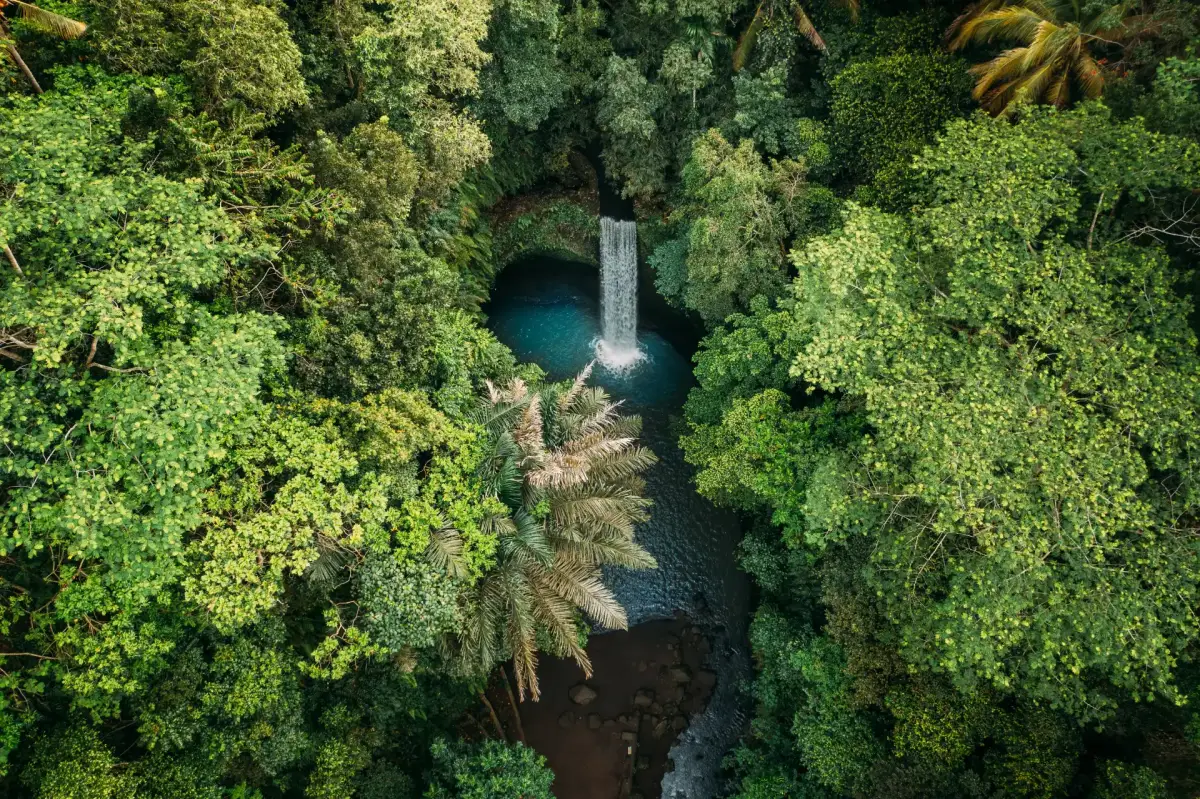
From cliffside infinity pools overlooking the Indian Ocean to cascading private villa plunge pools in Ubud, water appears everywhere in Bali. In Balinese culture, water—revered as Tirta—is divine, sacred, and the foundation of all spiritual cleansing rituals, as seen in holy water Melukat ceremonies. Yet beneath this surface abundance, environmental scientists and hydrology institutes are raising an urgent alarm: Bali is in the grip of a silent, accelerating freshwater crisis.
Driven by rapid hospitality expansion, unmetered deep-well extraction by commercial resorts, and shifting rainfall patterns, the island’s southern groundwater table is being pumped out far faster than monsoon rains can replenish it. This comprehensive investigation examines the scientific data behind Bali's water crisis, its socioeconomic consequences for local Balinese communities, and how conscious travelers can dramatically lower their freshwater footprint.
1. The Hydrological Reality: How Bali’s Water Balance Collapsed
Historically, Bali enjoyed a self-sustaining hydraulic ecosystem. Rain falling upon the central volcanic mountains—Mount Agung, Mount Batur, and Mount Batukaru—percolated through volcanic porous rock into vast subterranean aquifers, feeding hundreds of natural mountain springs, rivers, and the celebrated UNESCO-recognized Subak irrigation network.
However, field studies conducted by the IDEP Foundation and the Environmental Engineering Department of Politeknik Negeri Bali reveal alarming statistics:
- Over 65% of Bali’s freshwater catchment is consumed by the tourism and hospitality sector, leaving only 35% for local agriculture and indigenous households.
- A single luxury hotel guest in South Bali consumes an average of 1,500 to 2,000 liters of water per day—compared to just 150 to 200 liters per day consumed by an average local Balinese resident.
- Deep-well extraction: Thousands of hotels, guest houses, and private villas have drilled unlicensed subterranean wells (sumur bor) exceeding 60 to 100 meters in depth, bypassing local municipal water grids (PDAM) to avoid commercial water tariffs.
2. The Disastrous Consequences: Saltwater Intrusion and Dry Wells
When subterranean freshwater pressure drops below a critical hydraulic threshold, physics dictates that coastal seawater rushes inward to fill the void. This phenomenon—known as saline intrusion—has already permanently damaged coastal aquifers across Southern Bali.
Contamination of Domestic Wells in Sanur, Kuta, and Seminyak
In densely developed tourism corridors like Sanur, Kuta, Kerobokan, and Seminyak, thousands of local family compounds that relied on shallow neighborhood wells for generations now pump up brackish, corrosive, salty water. This water ruins plumbing, kills domestic vegetable crops, and cannot be used for drinking or cooking, forcing local families to purchase expensive commercial water gallons for everyday life.
Land Subsidence and Soil Instability
As subterranean aquifers collapse due to excessive water drainage, the porous volcanic soil compacts. Structural geologists have begun monitoring localized land subsidence in low-lying coastal floodplains, increasing vulnerability to coastal storm surges and flash flooding during monsoon downpours.
3. The Geology of Volcanic Lake Recharge: Beratan and Batur
Bali's natural water towers are its high volcanic crater lakes: Lake Beratan, Lake Batur, Lake Buyan, and Lake Tamblingan. Situated between 1,000 and 1,200 meters above sea level, these crater lakes act as natural pressurized reservoirs. Over decades, water seeps through deep subterranean basalt faults down to coastal plains.
However, environmental surveys by Universitas Udayana indicate that lake water levels have dropped between 2 and 4 meters over the past twenty years. This drop is attributed to heavy deforestation along caldera rims for vegetable farming and resort construction, combined with rising average temperatures. When lake levels fall, the gravitational hydraulic head driving water south weakens, accelerating the pace of coastal saltwater intrusion.
4. The Impact on Agriculture and Balinese Culture
In Balinese Hindu ontology, water is not an industrial commodity; it is a sacred gift from Dewi Danu, Goddess of the Crater Lakes. The philosophy of Tri Hita Karana dictates that nature (Palemahan) must be treated with reverence and reciprocity.
When massive commercial resorts divert highland springs and pump out deep water, downstream rice farmers (Krama Subak) find their heritage irrigation canals running completely dry. Unable to cultivate rice, generational farmers are frequently forced to sell their ancestral plots to real estate speculators, accelerating the loss of Bali's iconic terraced landscapes and unraveling centuries of community cohesion.
5. Solutions in Action: The Bali Water Protection (BWP) Program
Fortunately, progressive environmental alliances are taking direct action to rescue Bali’s aquifers. The most notable initiative is the Bali Water Protection (BWP) Program, pioneered by the IDEP Foundation and Universitas Udayana.
Recharge Wells (Sumur Resapan)
The BWP project constructs gravity-fed Rapid Infiltration Recharge Wells in highland catchment zones across Bangli, Tabanan, and Gianyar. These 4-meter-deep engineered chambers capture seasonal stormwater runoff, filter out sediment, and direct millions of liters of clean rainwater directly back into the deep subterranean water tables before it escapes into the ocean.
Wastewater Reclamation and Reed-Bed Phyto-Purification
Pioneering sustainable hotels now utilize decentralized Moving Bed Biofilm Reactor (MBBR) systems alongside biological reed-bed wetlands. Greywater from laundry, sinks, and showers flows through gravel and roots of native aquatic plants (canna lilies and vetiver grass) that naturally break down organic matter and phosphates without harsh chemicals, producing crystal-clear water for lush tropical gardens.
6. The Conscious Traveler’s Water Playbook: 6 Practical Rules
As a visitor enjoying Bali's beauty, you have substantial power to minimize your water impact without sacrificing comfort:
| Actionable Habit | Environmental Benefit | Ease of Adoption |
|---|---|---|
| Reuse Hotel Towels & Bed Linens | Saves up to 100 liters of freshwater and eliminates detergent runoff per guest per day. | Effortless (place sign on bed/hanger). |
| Take 4-Minute Showers | Reduces shower water consumption from 120 liters down to 40 liters. | Easy. |
| Turn Off Taps When Brushing Teeth | Saves approximately 12 liters of clean water daily. | Effortless. |
| Book Hotels with Rainwater Harvesting | Supports hospitality operators actively replenishing local aquifers. | Requires brief booking research. |
| Refuse Unnecessary Villa Pool Draining | A typical 8x4m villa pool requires over 45,000 liters of freshwater to refill! | Ask hosts about their eco-filtration. |
| Support the Tourist Levy | Funds from the Bali Tourist Tax support water catchment and environmental infrastructure. | Pay online prior to arrival. |
7. Frequently Asked Questions (FAQ)
Can you drink tap water in Bali hotels?
No. Tap water in Bali is untreated municipal or well water and is not safe for direct drinking without industrial filtration. However, reputable eco-hotels provide large 19-liter dispensers of purified spring water in glass carafes to completely eliminate single-use plastic bottles.
Why do private villas have such huge swimming pools in Bali?
Commercial developers designed private plunge and infinity pools to attract holidaymakers seeking luxury aesthetics. However, forward-thinking eco-villas now utilize saltwater chlorination systems and advanced sand filters that eliminate the need to drain and replace thousands of liters of pool water seasonally.
How does supporting Subak rice terraces help Bali's water crisis?
Flooded terraced rice fields act as gigantic natural sponges. When highland rice terraces are preserved, they slow down monsoon rains, prevent mountain mudslides, and allow rainwater to gradually soak into the earth to recharge the island's groundwater tables.